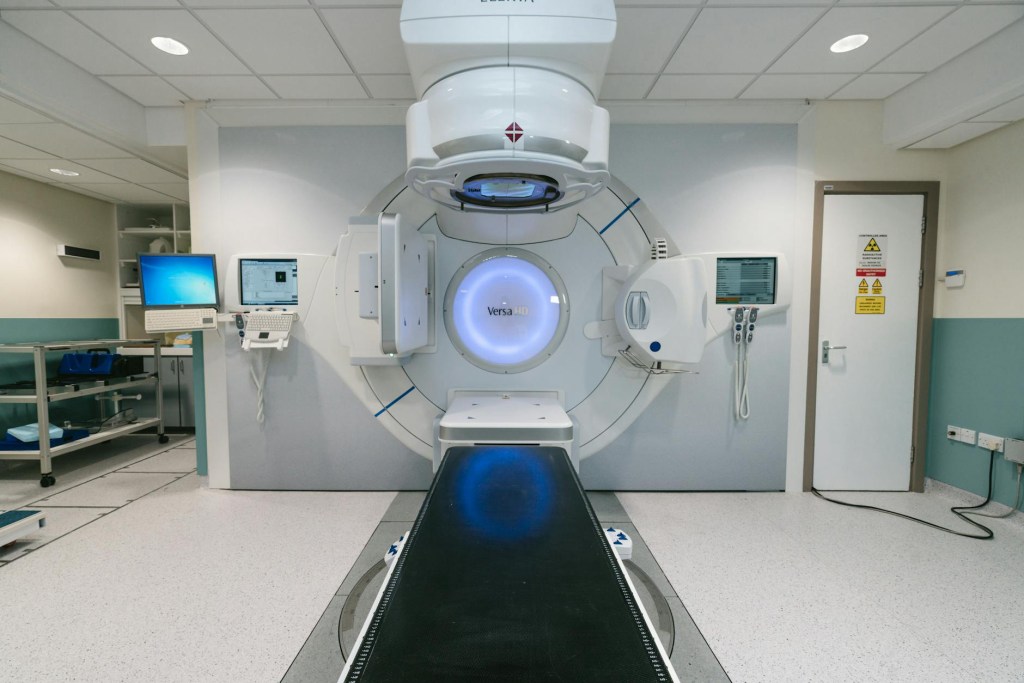
How to make prostate cancer patients better tolerate chemotherapy ?

In patients with incurable & widespread prostate cancer, one of the treatment option is a combination of three treatments (“TRIPLET THERAPY”)

This TRIPLET combination involves CHEMOTHERAPY given with HORMONE INJECTIONS and HORMONE TABLETS.

But many prostate cancer patients are frail and elderly with multiple other medical problems. So chemotherapy is not used in those patients and only Hormone tablets and injections are used .

The DOUBLET combination of HORMONE INJECTIONS and HORMONE TABLETS do a good very job indeed and frail patients are spared the nasty side effects from chemotherapy.

A study presented at the annual congress of European Society for Medical Oncology at BERLIN shows that if chemotherapy at a lower dose and is given every 2 weeks rather the typical every 3 weeks , then chemotherapy is better tolerated. The 2 weekly schedule resulted in statistically significant and clinically meaningful reduction in the incidence of severe side effects.

References

  1. ARASAFE : ESMO daily reporter. Is less more for patients with genitourinary cancers? 17 Oct 2025 Christoph Oing
  2. ESMO . LBA92 – 3-weekly docetaxel 75 mg/m2 vs 2-weekly docetaxel 50 mg/m2 in combination with darolutamide + ADT in patients with mHSPC: Results from the randomised phase III ARASAFE trial

Disclaimer: Please note – This blog is NOT medical advice. This blog is NOT a expert medical opinion on various topics. This blog is purely for information research only and do check the sources where cited. Please DO consult your own doctor to discuss concerns and options, which are relevant and specific to you. The views expressed in this blog are NOT, in any way whatsoever, intended to be a substitute for professional advice. The blog is NOT previewed, commissioned or otherwise endorsed, in any way, by any organisation that the author is associated with. The views expressed in this blog likely represents some of the author’s personal views held at the time of drafting the blog and MAY CHANGE overtime, particularly when new evidence comes to light.
Bladder cancer: Are 3 cycles of chemotherapy as good as 6 cycles – when combined with immunotherapy maintenance?

Yes; 3 is as good as 6.

The annual congress of European Society for Medical Oncology is currently underway at Berlin. Lot of exciting studies are being presented.

One of the interesting studies relate to bladder cancer. The bladder study looked at the optimum number of chemotherapy cycles that needs to be given.

Chemotherapy do cause significantly more side effects the immunotherapy. If fewer cycles are given, treatment might be more tolerable.

This bladder trial looked at giving only 3 cycles of chemotherapy compared to the standard 6 cycles.

The study found that fewer cycles improved quality of life without compromising overall benefits from the treatment

Reference

Grande E, et al. DISCUS: A phase II study comparing 3 vs 6 cycles of platinum-based chemotherapy prior to maintenance avelumab in advanced urothelial cancer. ESMO Congress 2025 – LBA 109

ESMO daily reporter. Is less more for patients with genitourinary cancers? 17 Oct 2025 Christoph Oing

Disclaimer: Please note – This blog is NOT medical advice. This blog is NOT a expert medical opinion on various topics. This blog is purely for information research only and do check the sources where cited. Please DO consult your own doctor to discuss concerns and options, which are relevant and specific to you. The views expressed in this blog are NOT, in any way whatsoever, intended to be a substitute for professional advice. The blog is NOT previewed, commissioned or otherwise endorsed, in any way, by any organisation that the author is associated with. The views expressed in this blog likely represents some of the author’s personal views held at the time of drafting the blog and MAY CHANGE overtime, particularly when new evidence comes to light.

Is it useful to monitor for cancer recurrence after treatment for bowel cancer ?

No; unfortunately routine tests not useful to prolong life.

Logic dictates that early detection of bowel cancer recurrence would lead to prompt treatment and prolong life.

But cancer doesn’t do logic !

A large trial looked at usefulness of routine blood tests and scans for early diagnosis of cancer recurrence in bowel cancer patients.

The trial found that blood tests and scans were useful to diagnose recurrence early; but this early detection of recurrence ultimately did NOT improve life expectancy.

The study used tumour markers in blood [carcinoembryonic antigen CEA ] and Scans [computed tomography CT-scans] during the 5 years after surgery for bowel cancer.

Extra scans and bloods are NOT always useful.

References

  1. ESMO CEA and/or CT-scan Surveillance After Curative Surgery for Patients with Stage II or III CRC Does Not Provide Any Benefit in 5-year OS.
  2. Lepage C, Phelip J-M, Cany L, et al. for PRODIGE 13 investigators/Collaborators. Effect of 5 years of CT-scan and CEA follow-up on survival endpoints in patients with colorectal cancer . Annals of Oncology; Published online 17 September 2025. DOI: https://doi.org/10.1016/j.annonc.2025.09.004

Disclaimer: Please note – This blog is NOT medical advice. This blog is NOT a expert medical opinion on various topics. This blog is purely for information research only and do check the sources where cited. Please DO consult your own doctor to discuss concerns and options, which are relevant and specific to you. The views expressed in this blog are NOT, in any way whatsoever, intended to be a substitute for professional advice. The blog is NOT previewed, commissioned or otherwise endorsed, in any way, by any organisation that the author is associated with. The views expressed in this blog likely represents some of the author’s personal views held at the time of drafting the blog and MAY CHANGE overtime, particularly when new evidence comes to light.

Is radiotherapy to prostate useful even after the cancer has escaped from prostate?

Yes, it can be helpful but only in certain circumstances.

Former US President Biden is in the news this week and multiple media outlets reports that Biden is having  radiation therapy to prostate along with hormone therapy.

The news outlets also indicate that Biden has aggressive prostate cancer which has spread to the bones.

Any spread of prostate cancer to bones is classified as stage 4 prostate cancer.

If cancer has NOT spread outside the prostate, the combination of radiation and hormones could be curative .

But, with stage 4 prostate cancer, radiation is generally not curative. This is because once the cancer cells have spread, it is extremely difficult to eradicate those cancer cells permanently. 

A large UK trial ( STAMPEDE trials) found that “Radiotherapy to the prostate did NOT improve overall survival for unselected patients with newly diagnosed metastatic prostate cancer”

So if radiation does not improve survival, why did the oncologists offer radiation therapy to Biden?

Full medical details are not available and so it is difficult to give a definitive answer in Biden’s case.

There are few possibilities.

In the above mentioned STAMPEDE trial , in a smaller select group of patients, Radiation therapy did improve overall survival in men with a low metastatic burden. ( ie fewer cells have spread).

One can only speculate whether that’s been the case with regards to Mr Biden.

References

  1. CNN. Biden starts radiation therapy for aggressive form of prostate cancer. By Kevin Liptak, Fadel Allassa. UPDATED OCT 11, 2025, 11:28 AM PUBLISHED OCT 11, 2025, 10:01 AM
  2. BBC news. Biden receiving radiation therapy for prostate cancer. By Jaroslav Lukiv. Published 11 October 2025.
  3. Lancet. Stampede trial. Radiotherapy to the primary tumour for newly diagnosed, metastatic prostate cancer (STAMPEDE): a randomised controlled phase 3 trial.

Disclaimer: Please note – This blog is NOT medical advice. This blog is NOT a expert medical opinion on various topics. This blog is purely for information research only and do check the sources where cited. Please DO consult your own doctor to discuss concerns and options, which are relevant and specific to you. The views expressed in this blog are NOT, in any way whatsoever, intended to be a substitute for professional advice. The blog is NOT previewed, commissioned or otherwise endorsed, in any way, by any organisation that the author is associated with. The views expressed in this blog likely represents some of the author’s personal views held at the time of drafting the blog and MAY CHANGE overtime, particularly when new evidence comes to light.

Can Gerson therapy or alternative treatment cure cancer ?

No !

No one has published any reliable scientific evidence to prove alternative therapies such as Gerson therapy can cure cancer.

When some one is diagnosed with cancer, particularly at a young age, the shock is unimaginable!

People are so shocked they start to question everything.

People can be understandably very worried about side effects of conventional treatments such as chemotherapy.

People with cancer can be frightened about everything.

BUT alternative therapy is not the answer to their worries and concerns.

Alternative therapy has not been shown to cure cancer.

There are lot of scams on social media promoting so called alternative or complimentary therapy. Be careful!

Even worse are the misguided people who promote well-intentioned but dangerous unscientific information.

Any one who has been newly diagnosed with cancer should be aware of the enormous amount of misinformation out there.

Some complementary therapies (eg massage, aromatherapy ) can have palliative and psychological benefits but they do not cure or control the cancer.

The recent BBC news article about a young women, who died of a potentially curable cancer, should be a warning to other people.

References

BBC News. ‘Our sister died of cancer because of our mum’s conspiracy theories’. Published 23 June 2025. Marianna Spring. Social media investigations correspondent

Telegraph. Cambridge graduate ‘killed by mother’s anti-medicine conspiracy theories’. Gwyn Wright. 24 June 2025 6:21am BST

Disclaimer: Please note – This blog is NOT medical advice. This blog is NOT a expert medical opinion on various topics. This blog is purely for information research only and do check the sources where cited. Please DO consult your own doctor to discuss concerns and options, which are relevant and specific to you. The views expressed in this blog are NOT, in any way whatsoever, intended to be a substitute for professional advice. The blog is NOT previewed, commissioned or otherwise endorsed, in any way, by any organisation that the author is associated with. The views expressed in this blog likely represents some of the author’s personal views held at the time of drafting the blog and MAY CHANGE overtime, particularly when new evidence comes to light.

Can exercise make cancer patients live longer?

Yes, exercise can make cancer patients live longer.

A recent study of bowel cancer patients showed that people who had a “structured exercise program” had better fitness and a longer life.

The study data was presented at the prestigious annual meeting of the American Society of Clinical Oncology (ASCO) at Chicago.

Dr Sundar is a member of American Society of Clinical Oncology (ASCO) and has been a member for more than 25 years.

References

  1. ASCO abstract. A randomized phase III trial of the impact of a structured exercise program on disease-free survival (DFS) in stage 3 or high-risk stage 2 colon cancer: Canadian Cancer Trials Group (CCTG) CO.21 (CHALLENGE).
  2. CNN news. Exercise may help patients with colon cancer live as long as those who never had it, study suggests
    By Madeline Holcombe, CNN
     4 minute read
    Published 3:02 PM EST, Mon February 24, 2025
  3. CNN. New research presents promising findings on colorectal cancer treatment and prevention
  4. BBC news. Major study shows exercise improves cancer survival.

Disclaimer: Please note – This blog is NOT medical advice. This blog is NOT a expert medical opinion on various topics. This blog is purely for information research only and do check the sources where cited. Please DO consult your own doctor to discuss concerns and options, which are relevant and specific to you. The views expressed in this blog are NOT, in any way whatsoever, intended to be a substitute for professional advice. The blog is NOT previewed, commissioned or otherwise endorsed, in any way, by any organisation that the author is associated with. The views expressed in this blog likely represents some of the author’s personal views held at the time of drafting the blog and MAY CHANGE overtime, particularly when new evidence comes to light.

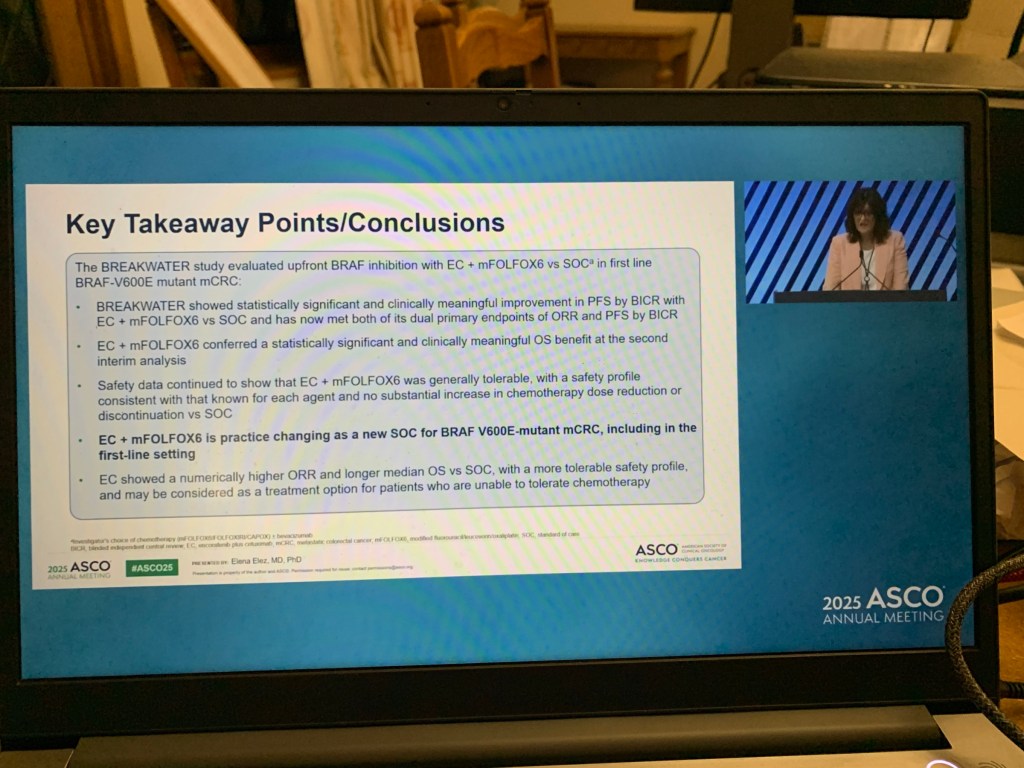
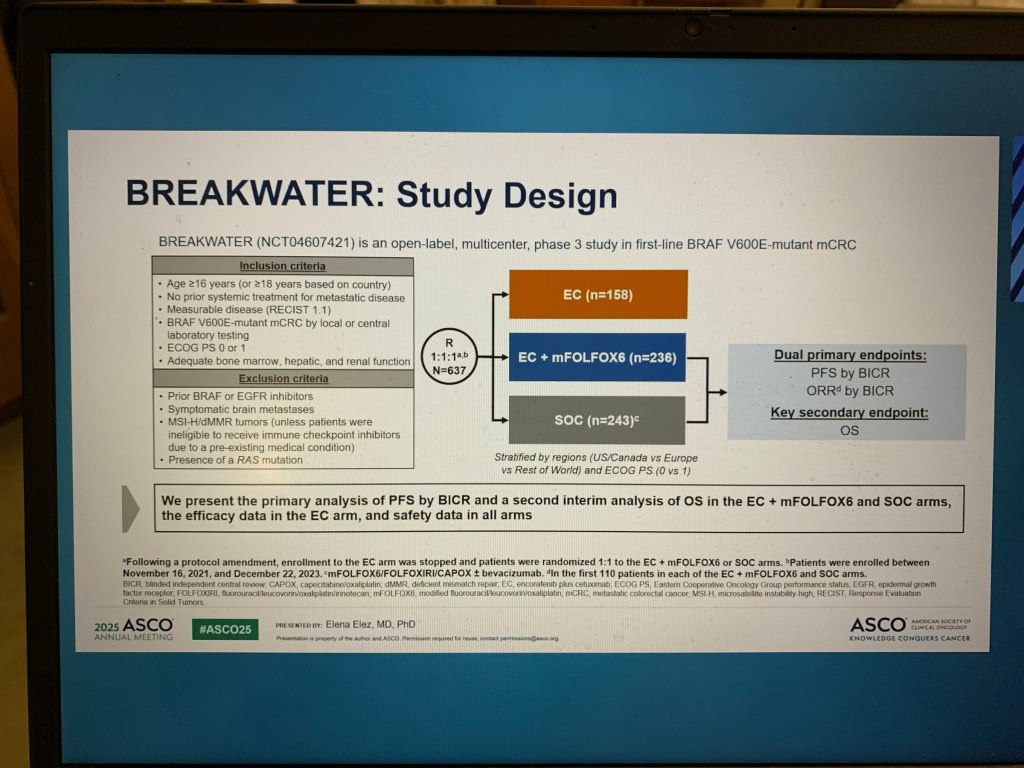
New treatment option for a subset of bowel cancer patients

Advanced bowel cancer is usually treated with chemotherapy.

A subset of bowel cancers carry a genetic change called BRAF V600E mutation.

These patients benefit from addition of a drug called Encorafenib to the chemotherapy drugs.

This treatment regimen will become the standard of care for this sub-group of patients.

The study data was presented at the prestigious annual meeting of the American Society of Clinical Oncology (ASCO) at Chicago.

The results were also published in the prestigious NEJM New England Journal of Medicine.

Dr Sundar is a member of American Society of Clinical Oncology (ASCO) and has been a member for more than 25 years.

References

  1. ASCO. First-line encorafenib + cetuximab + mFOLFOX6 in BRAF V600E-mutant metastatic colorectal cancer (BREAKWATER): Progression-free survival and updated overall survival analyses.
  2. NEJM. Encorafenib, Cetuximab, and mFOLFOX6 in BRAF-Mutated Colorectal Cancer
    Authors: Elena Elez, M.D., Ph.D., Takayuki Yoshino, M.D., Ph.D., Lin Shen, M.D., Sara Lonardi, M.D., Eric Van Cutsem, M.D., Ph.D., Cathy Eng, M.D., Tae Won Kim, M.D., Ph.D., +13 , for the BREAKWATER Trial Investigators*Author Info & Affiliations
    Published May 30, 2025
    DOI: 10.1056/NEJMoa2501912
    Copyright © 2025

Disclaimer: Please note – This blog is NOT medical advice. This blog is NOT a expert medical opinion on various topics. This blog is purely for information research only and do check the sources where cited. Please DO consult your own doctor to discuss concerns and options, which are relevant and specific to you. The views expressed in this blog are NOT, in any way whatsoever, intended to be a substitute for professional advice. The blog is NOT previewed, commissioned or otherwise endorsed, in any way, by any organisation that the author is associated with. The views expressed in this blog likely represents some of the author’s personal views held at the time of drafting the blog and MAY CHANGE overtime, particularly when new evidence comes to light.

New drug for platinum resistant ovarian cancer

Multiple new drugs have been developed lung and breast cancers over the last decade.

But only a few new drugs have been approved for ovarian cancers in the past decade.

Drugs like Olaparib and Niraparib – which have been approved for ovarian cancers recently – are maintenance drugs used after chemotherapy rather than used as an upfront treatment .

So it is very good news that a brand new drug is likely to enter the market in the near future.

The new drug is called Relacorilant.(Rela).

It has been tested in ovarian cancers which have become resistant to the platinum drugs.

Platinum drugs are the standard of care ovarian cancers and most other drugs do not work very well once ovarian cancers have become resistant to carboplatin or cisplatin (platinum resistant ovarian cancers).

So it is very good news that we may have a new option now for this group of patients with platinum resistant ovarian cancers.

Early phase drug trial results of Rela in 2023 were promising but not definitive.

Advanced phase 3 trials of Rela have been positive in improving survival (2025).

The study results were due to presented at the prestigious annual meeting of the American Society of Clinical Oncology (ASCO) at Chicago.( June 2025).

Dr Sundar is a member of American Society of Clinical Oncology (ASCO) and has been a member for more than 25 years.

References

1. Relacorilant + Nab-Paclitaxel in Patients With Recurrent, Platinum-Resistant Ovarian Cancer: A Three-Arm, Randomized, Controlled, Open-Label Phase II Study
Nicoletta Colombo et al. J Clin Oncol. 2023.

2. Targeted oncology. News Article. March 31, 2025. Relacorilant Extends Survival in Platinum-Resistant Ovarian Cancer Mar 31, 2025 . By Jordyn Sava. Fact checked by: Jason M. Broderick

3. ROSELLA: A phase 3 study of relacorilant in combination with nab-paclitaxel versus nab-paclitaxel monotherapy in patients with platinum-resistant ovarian cancer (GOG-3073, ENGOT-ov72).

Disclaimer: Please note – This blog is NOT medical advice. This blog is NOT a expert medical opinion on various topics. This blog is purely for information research only and do check the sources where cited. Please DO consult your own doctor to discuss concerns and options, which are relevant and specific to you. The views expressed in this blog are NOT, in any way whatsoever, intended to be a substitute for professional advice. The blog is NOT previewed, commissioned or otherwise endorsed, in any way, by any organisation that the author is associated with. The views expressed in this blog likely represents some of the author’s personal views held at the time of drafting the blog and MAY CHANGE overtime, particularly when new evidence comes to light.

Can applying some electric current make chemotherapy work better in pancreatic cancer ?

Yes !

Applying electricity to tumours can help to improve control of pancreatic cancer.

The procedure is called TTfFields.

The procedure is not invasive.

The procedure uses low-energy electricity which impedes cancer cells’ ability to grow and divide.

The procedure is done alongside standard chemotherapy .

The TTFields electric treatments has already been tested and has shown promise in brain tumours and lung cancers.

A study presented at the Chicago ASCO meeting shows better survival in patients who had TTFields electricity in addition to their usual chemotherapy regimen of gemcitabine and abraxane (nab-paclitaxel) for pancreatic cancer.

The study data was presented at the prestigious annual meeting of the American Society of Clinical Oncology (ASCO) at Chicago.

Dr Sundar is a member of American Society of Clinical Oncology (ASCO) and has been a member for more than 25 years.

References

  1. Tumour treating fields therapy for glioblastoma: current advances and future directions. British Journal of Cancer volume 124, pages 697–709 (2021)
  2. Weinberg U, Farber O, Giladi M, Bomzon Z, Kirson ED. Tumor treating field concurrent with standard of care for stage 4 non-small cell lung cancer (NSCLC) following platinum failure: Phase III LUNAR study. [abstract]. ESMO, October 2018. Ann Oncol. 2018;29:viii543. doi: 10.1093/annonc/mdy292.120.
  3. Lancet oncology. Tumor Treating Fields therapy with standard systemic therapy versus standard systemic therapy alone in metastatic non-small-cell lung cancer following progression on or after platinum-based therapy (LUNAR): a randomised, open-label, pivotal phase 3 study.
  4. Wiki. Alternating electric field therapy.
  5. PANOVA-3: Phase 3 study of tumor treating fields (TTFields) with gemcitabine and nab-paclitaxel for locally advanced pancreatic ductal adenocarcinoma (LA-PAC) .

Disclaimer: Please note – This blog is NOT medical advice. This blog is NOT a expert medical opinion on various topics. This blog is purely for information research only and do check the sources where cited. Please DO consult your own doctor to discuss concerns and options, which are relevant and specific to you. The views expressed in this blog are NOT, in any way whatsoever, intended to be a substitute for professional advice. The blog is NOT previewed, commissioned or otherwise endorsed, in any way, by any organisation that the author is associated with. The views expressed in this blog likely represents some of the author’s personal views held at the time of drafting the blog and MAY CHANGE overtime, particularly when new evidence comes to light.

Hormone tablet Abiraterone for prostate cancer treated with curative intent

Prostate cancer can be treated with curative intent if it is localised to pelvis.

But in patients with high risk cancers, additional treatments might be needed to improve the odds of controlling the cancer.

Abiraterone is one such add-on treatment that has been shown to improve long term outcomes in a large UK trial.

Unfortunately the drug, abiraterone, even though it is much cheaper now, is not widely available in the UK National Health System ( NHS).

Now an AI (artificial intelligence) test has been developed which selects better those patients who are likely to benefit from Abiraterone.

Hopefully the test will become available for routine use in the near future.

The study data was presented at the prestigious annual meeting of the American Society of Clinical Oncology (ASCO) at Chicago.

Dr Sundar is a member of American Society of Clinical Oncology (ASCO) and has been a member for more than 25 years.

References

BBC news. Hugh Pym and Ian Atkinson. Men denied life-extending prostate cancer drug

UCL. AI test to determine best prostate cancer treatment could save lives and money. 30 May 2025.

Daily Telegraph. Give prostate cancer patients drug that halves risk of death, NHS told.

SUN Newspaper.

Disclaimer: Please note – This blog is NOT medical advice. This blog is NOT a expert medical opinion on various topics. This blog is purely for information research only and do check the sources where cited. Please DO consult your own doctor to discuss concerns and options, which are relevant and specific to you. The views expressed in this blog are NOT, in any way whatsoever, intended to be a substitute for professional advice. The blog is NOT previewed, commissioned or otherwise endorsed, in any way, by any organisation that the author is associated with. The views expressed in this blog likely represents some of the author’s personal views held at the time of drafting the blog and MAY CHANGE overtime, particularly when new evidence comes to light.

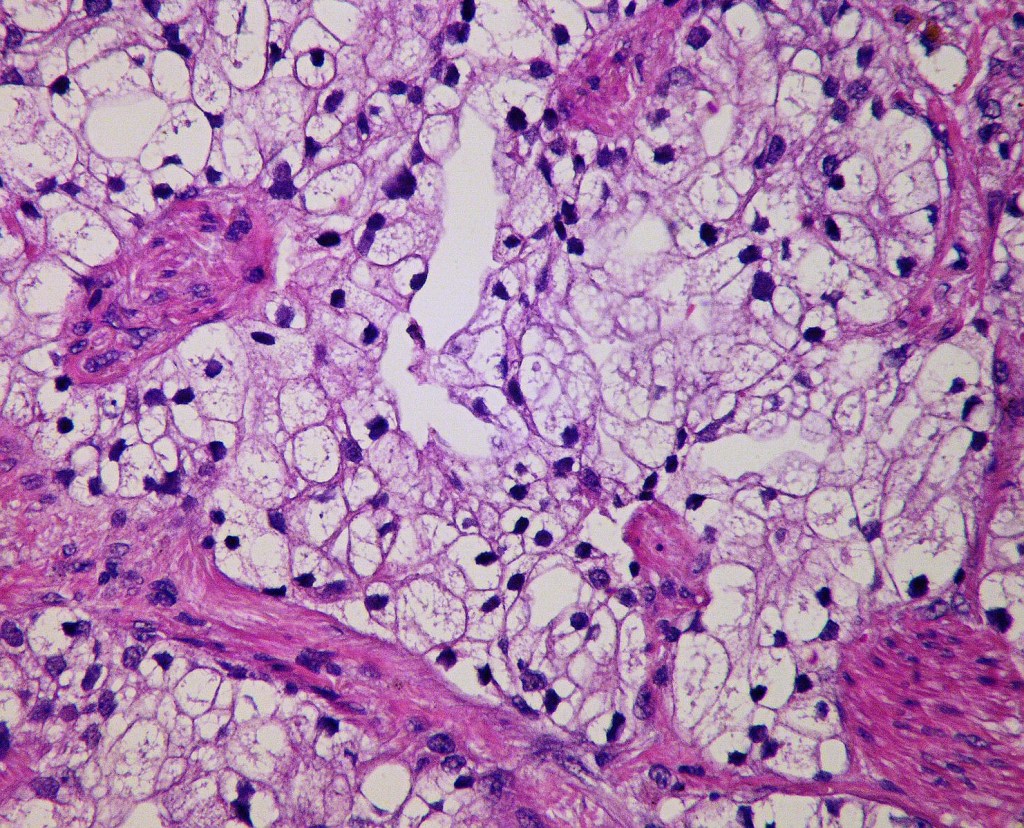
Can some advanced kidney cancer patients be managed by wait and watch only ?

Yes !

When the cancer is advanced , the natural inclination of doctors and patients is chose immediate therapy .

This is the logical and correct thing to do in many cancer patients.

But there are exceptions!

For example, it is well known that some advanced kidney cancer patients can be managed by “active surveillance” or “wait and watch policy” ONLY without any immediate cancer treatment.

A study presented at a Cancer meeting in Chicago confirms that this approach is safe and feasible in “carefully selected” patients.

The study patients who were managed by “active surveillance” or “wait and watch policy” ONLY had preservation of quality of life compared to patients on cancer treatments.

This approach is reassuring but this approach is not for everyone; the study is about kidney cancer patients only. Not other cancers. Patients do need to make an informed choice after discussing the option with their oncologists.

The study data was presented at the prestigious annual meeting of the American Society of Clinical Oncology (ASCO) at Chicago.

Dr Sundar is a member of American Society of Clinical Oncology (ASCO) and has been a member for more than 25 years.

References

American Society of Clinical Oncology (ASCO) 2025. Real-world quality of life (QOL) in patients (pts) with metastatic renal cell carcinoma (mRCC) on active surveillance (AS) in the ODYSSEY prospective observational study. Publication: Journal of Clinical Oncology.

Disclaimer: Please note – This blog is NOT medical advice. This blog is NOT a expert medical opinion on various topics. This blog is purely for information research only and do check the sources where cited. Please DO consult your own doctor to discuss concerns and options, which are relevant and specific to you. The views expressed in this blog are NOT, in any way whatsoever, intended to be a substitute for professional advice. The blog is NOT previewed, commissioned or otherwise endorsed, in any way, by any organisation that the author is associated with. The views expressed in this blog likely represents some of the author’s personal views held at the time of drafting the blog and MAY CHANGE overtime, particularly when new evidence comes to light.

More pancreatic cancer patients may benefit from immunotherapy

Immunotherapy has revolutionised cancer treatment over the last few years . But, sadly, not all cancer patients derive benefit from the costly immunotherapy drugs

For instance, almost, all advanced kidney or skin melanoma cancer patients are eligible to try immunotherapy. But only about 1% of patients with pancreatic cancer are at present eligible for immunotherapy .

A new study suggests more people with pancreatic cancer may be eligible for immunotherapy. 

The preliminary data from a good quality early study (randomized phase II trial) is interesting.

The study compared treatment with gemcitabine (G) and nab-paclitaxel (N) with and without dual immunotherapy treatment with durvalumab (D) and tremelimumab (T) as 1st-line therapy in patients with advanced pancreatic cancer. 

In this study, only a subset of patients derived benefit from the dual combination therapy. 

Subsequent molecular and genetic analysis showed that the presence of certain gene mutations (≥2 DDR) was strongly associated with benefit from the combination of chemotherapy with dual immune checkpoint inhibitor therapy. 

These intriguing exploratory data analysis needs confirmatory data before the combination therapy become the standard of care for advanced pancreatic cancer patients.

The study data was presented at the prestigious annual meeting of the American Society of Clinical Oncology (ASCO) hosted at Chicago.

Dr Sundar is a member of American Society of Clinical Oncology (ASCO) and has been a member for more than 25 years.

References

American Society of Clinical Oncology (ASCO) 2025: Concurrent mutations in DNA damage repair genes BRCA1, POLE, ATM and FANCA to predict overall and progression-free survival for patients (pts) with metastatic pancreatic ductal adenocarcinoma (mPDAC) treated with chemotherapy in combination with dual checkpoint inhibition in the CCTG randomized PA.7 trial.

Evaluating Mismatch Repair Deficiency in Pancreatic Adenocarcinoma: Challenges and Recommendations. Clin Cancer Res (2018) 24 (6): 1326–1336.

Disclaimer: Please note – This blog is NOT medical advice. This blog is NOT a expert medical opinion on various topics. This blog is purely for information research only and do check the sources where cited. Please DO consult your own doctor to discuss concerns and options, which are relevant and specific to you. The views expressed in this blog are NOT, in any way whatsoever, intended to be a substitute for professional advice. The blog is NOT previewed, commissioned or otherwise endorsed, in any way, by any organisation that the author is associated with. The views expressed in this blog likely represents some of the author’s personal views held at the time of drafting the blog and MAY CHANGE overtime, particularly when new evidence comes to light.
Immunotherapy makes advanced head and neck cancer patients live longer

Immunotherapy has revolutionised the care of many patients with kidney, bladder, skin and various other cancers.

Now a UK led study has shown that given the immunotherapy drug- pembrolizumab – before and after surgery– makes people live substantially longer.

Pembrolizumab is a very costly drug with limited affordability in developing countries.

In western countries, only people with private medical insurance or people having a publicly funded health systems such as NHS can afford it.

The fascinating immunotherapy data was presented at the prestigious annual meeting of the American Society of Clinical Oncology (ASCO) at Chicago.

Dr Sundar is a member of American Society of Clinical Oncology (ASCO) for more than 25 years.

References

  1. BBC News. Breakthrough cancer drug doubles survival in trial. Philippa Roxby
    Heath Reporter. May 2025.
  2. American Society of Clinical Oncology (ASCO) 2025: Neoadjuvant and adjuvant pembrolizumab plus standard of care (SOC) in resectable
    locally advanced head and neck squamous cell carcinoma (LA HNSCC): Exploratory
    efficacy analyses of the phase 3 KEYNOTE-689 study
    . ( Distant Metastasis-Free Survival (DMFS) data:
    Median DMFS was 51.8 months with pembrolizumab + SOC versus 35.7 months with SOC (HR 0.71, 95% CI 0.56–0.90).
    Estimated DMFS rate at 36 months was 59.1% versus 49.0%, respectively. )
  3. American Association for Cancer Research (AACR) Annual Meeting. 2025. Addition of Perioperative Pembrolizumab to Standard of Care in Newly Diagnosed Locally Advanced Head and Neck Cancer.
  4. Pembrolizumab With or Without Chemotherapy in Recurrent or Metastatic Head and Neck Squamous Cell Carcinoma: Updated Results of the Phase III KEYNOTE-048 Study.

Disclaimer: Please note – This blog is NOT medical advice. This blog is NOT a expert medical opinion on various topics. This blog is purely for information research only and do check the sources where cited. Please DO consult your own doctor to discuss concerns and options, which are relevant and specific to you. The views expressed in this blog are NOT, in any way whatsoever, intended to be a substitute for professional advice. The blog is NOT previewed, commissioned or otherwise endorsed, in any way, by any organisation that the author is associated with. The views expressed in this blog likely represents some of the author’s personal views held at the time of drafting the blog and MAY CHANGE overtime, particularly when new evidence comes to light.
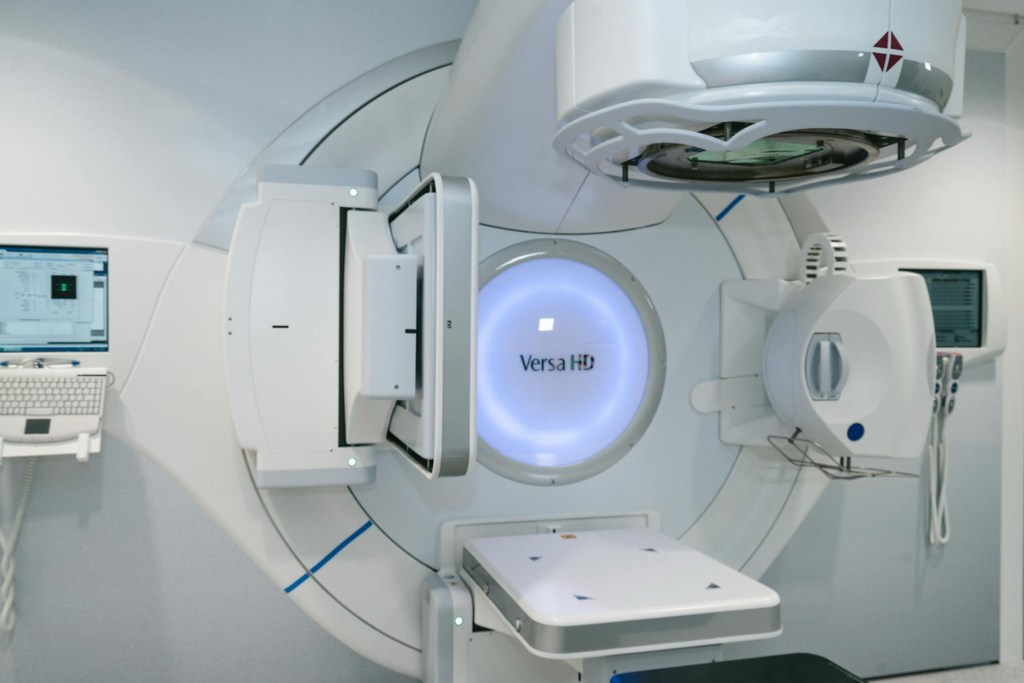
How long can a man with aggressive prostate cancer live?

Many people were shocked by the news that president Joe Biden, aged 82, has been diagnosed with aggressive prostate cancer.

Prostate cancer is quite common in men in their eighties. Nearly two third of men in eighties would have prostate cancer and most of these men do not die of prostate cancer! This is because lot of the cancers in elderly men are low to medium risk.

But men who develop aggressive prostate cancer are at higher risk of death from prostate cancer. Aggressive prostate cancer can spread to bone and other organs.

It has to be pointed out that aggressive prostate cancer is not immediately terminal in vast majority of men, even if the cancer has spread to bone.

With modern hormone treatments, men can have a prognosis of many years.

References

  1. BBC. Joe Biden diagnosed with ‘aggressive’ prostate cancer
  2. CRUK. Prostate Cancer incidence statistics .
  3. CRUK. Prostate cancer survival statistics.
  4. NEJM. Apalutamide for Metastatic, Castration-Sensitive Prostate Cancer.
  5. Lancet. Abiraterone acetate plus prednisolone with or without enzalutamide for patients with metastatic prostate cancer starting androgen deprivation therapy: final results from two randomised phase 3 trials of the STAMPEDE platform protocol.

Disclaimer: Please note – This blog is NOT medical advice. This blog is NOT a expert medical opinion on various topics. This blog is purely for information research only and do check the sources where cited. Please DO consult your own doctor to discuss concerns and options, which are relevant and specific to you. The views expressed in this blog are NOT, in any way whatsoever, intended to be a substitute for professional advice. The blog is NOT previewed, commissioned or otherwise endorsed, in any way, by any organisation that the author is associated with. The views expressed in this blog likely represents some of the author’s personal views held at the time of drafting the blog and MAY CHANGE overtime, particularly when new evidence comes to light.

Are whole-grain foods healthier than refined-grain foods like white rice, bread and pasta?

Yes !

Whole grains are beneficial . They

  • help to control blood sugar levels 
  • keeps you fuller for longer, Young says.

There is a very good article in Guardian Newspaper.

Guardian: Are whole-grain foods really healthier?

Disclaimer: Please note – This blog is NOT medical advice. This blog is NOT a expert medical opinion on various topics. This blog is purely for information research only and do check the sources where cited. Please DO consult your own doctor to discuss concerns and options, which are relevant and specific to you. The views expressed in this blog are NOT, in any way whatsoever, intended to be a substitute for professional advice. The blog is NOT previewed, commissioned or otherwise endorsed, in any way, by any organisation that the author is associated with. The views expressed in this blog likely represents some of the author’s personal views held at the time of drafting the blog and MAY CHANGE overtime, particularly when new evidence comes to light.

Can too much vitamins harm the body ?

Absolutely Yes. Vitamins can cause harm.

Vitamins are very essential for life.

But too much of vitamins is bad.

You can buy paracetamol in a supermarket and it (rightly) comes with a big list of side effects .

You can freely buy various vitamins and supplements in supermarkets and none of them come with any warning what so ever.

Because vitamins are heavily promoted over Social media, newspapers, TV, and internet, many people think vitamins are safe and good. So people overindulge hoping for more benefits. But taking too much of vitamins is risky and can cause health problems due to Hypervitaminosis.

A recent article in Guardian points out the risks from taking too much of vitamin supplements. A man took too much of vitamin B6 and this resulted in damage to his nerves!

So be very careful with extra vitamins and supplements. Check whether you need the supplements at all. Try natural products rather than factory produced artificial supplements.

Reference

Guardian newspaper: Simon never linked the pain in his hands and feet to multivitamins – but a pathology test did. Natasha May and Sharlotte Thou. Published Sat 4 Jan 2025 19.00 GMT. Last modified on Sun 5 Jan 2025 01.55 GMT

Wiki. Hypervitaminosis

Disclaimer: Please note – This blog is NOT medical advice. This blog is NOT a expert medical opinion on various topics. This blog is purely for information research only and do check the sources where cited. Please DO consult your own doctor to discuss concerns and options, which are relevant and specific to you. The views expressed in this blog are NOT, in any way whatsoever, intended to be a substitute for professional advice.

The blog is NOT previewed, commissioned or otherwise endorsed, in any way, by any organisation that the author is associated with. The views expressed in this blog likely represents some of the author’s personal views held at the time of drafting the blog and MAY CHANGE overtime, particularly when new evidence comes to light.

Is dark chocolate good for You ?

Is dark chocolate good?

And is milk chocolate bad?

The answer to both the question is YES.

A recent paper published in British Medical Journal (BMJ) found that “people who consumed ≥5 servings/week of dark chocolate showed a significantly LOWER risk of developing diabetes”.

The study also found that eating milk-chocolate was bad. Milk-chocolate was associated with weight gain, which is not surprising to everyone.

Any study relating to “health benefits of food and drinks” always needs a healthy dose of scepticism because of commercial industry.

But the beneficial effect of dark chocolate found in this study aligns with previous findings and more research is, of course, needed to clarify and define the mechanisms involved.

So add more dark chocolate to the Christmas hampers !

Share your dark chocolate with colleagues and spread the good will !

References

BMJ 2024: Chocolate intake and risk of type 2 diabetes: prospective cohort studies. BMJ 2024; 387 doi: https://doi.org/10.1136/bmj-2023-078386 (Published 04 December 2024). BMJ 2024;387:e078386

BMJ 2012: The effectiveness and cost effectiveness of dark chocolate consumption as prevention therapy in people at high risk of cardiovascular disease: best case scenario analysis using a Markov model. BMJ 2012; 344 doi: https://doi.org/10.1136/bmj.e3657 (Published 31 May 2012). BMJ 2012;344:e3657

BMJ 2011: Chocolate consumption and cardiometabolic disorders: systematic review and meta-analysis. BMJ 2011; 343 doi: https://doi.org/10.1136/bmj.d4488 (Published 29 August 2011). BMJ 2011;343:d4488

BMJ 2023. Christmas 2023: Champagne problems. Chocolate brownies and calorie restriction: the sweetest paradox? BMJ 2023; 383 doi: https://doi.org/10.1136/bmj.p2585 (Published 20 December 2023). BMJ 2023;383:p2585

Disclaimer: Please note – This blog is NOT medical advice. This blog is NOT a expert medical opinion on various topics. This blog is purely for information only and do check the sources where cited. Please DO consult your own doctor to discuss concerns and options relevant to you. The views expressed in this blog are NOT, in any way whatsoever, intended to be a substitute for professional advice. The blog is NOT previewed, commissioned or otherwise endorsed, in any way, by any organisation that the author is associated with. The views expressed in this blog likely represents some of the author’s personal views held at the time of drafting the blog and MAY CHANGE overtime, particularly when new evidence comes to light.

How common is prostate cancer in men under 50?

Sir Chris Hoy, who is six-time Olympic cycling champion stunned the British public recently by revealing that that he has stage 4 incurable prostate cancer.

It was even more shocking because of his young age. He is only 48 years old !

Naturally, many men under 50 yrs would be concerned.

According to CRUK statistics “1 in 6 men in UK will be diagnosed with prostate cancer”.

But majority of cancers occur in men 60 yrs and above. The peak age for prostate cancer is in the 75-79 age range. Prostate cancer is very uncommon before age of 50.

So in most men, screening for prostate cancer is not recommended before the age of 50.

There are some exceptions to this age limit of 50. For example, men with black ethnicity or those with a family history of prostate cancer are at a higher risk. These men can consider requesting a PSA test in their mid 40s.

Please note prostate cancer screening does NOT result in better lives for everyone. Screening has its benefits but it also has drawbacks .

A cancer diagnosis is terrifying but it is important to note that NOT Everyman with prostate cancer will die due to prostate cancer. Lot of men with early prostate cancer will die of something else. Moreover, treatment for early prostate cancer has significant side effects.

That is why every man is NOT routinely and automatically offered screening by their GP surgery in UK.

Even though routine PSA testing is not offered on the NHS, as mentioned in the NHS website “Men aged 50 or over can ask their GP for a PSA test, even if they do not have symptoms”. 

References

1. BBC news. Prostate cancer symptoms and treatment: What to check for.

2. BBC news. NHS to review prostate cancer testing after Chris Hoy call for change

3. NEJM. Fifteen-Year Outcomes after Monitoring, Surgery, or Radiotherapy for Prostate Cancer

Disclaimer: Please note – This blog is NOT medical advice. This blog is NOT a expert medical opinion on various topics. This blog is purely for information only and do check the sources where cited. Please DO consult your own doctor to discuss concerns and options relevant to you. The views expressed in this blog are NOT, in any way whatsoever, intended to be a substitute for professional advice. The blog is NOT previewed, commissioned or otherwise endorsed, in any way, by any organisation that the author is associated with. The views expressed in this blog likely represents some of the author’s personal views held at the time of drafting the blog and MAY CHANGE overtime, particularly when new evidence comes to light.

Prostate cancer : Surgery versus Radiotherapy

The question of whether to chose surgery or radiotherapy is a difficult decision for most patients with early prostate cancer.

Adding to this confusion is the option of wait and watch policy followed by delayed treatment (if needed) as supported by PROTECT trial.

A high quality UK trial called PACE-A compared surgery versus Radiation in men with low- to intermediate-risk localised prostate cancer.

At 2 years , the study found more people in surgery group reported using more urinary pads and also more sexual problems than radiotherapy group. But the surgery group reported fewer bowel problems than radiotherapy group.

At present, efficacy is expected to be equivalent between two modalities and long term results in term of efficacy is eagerly awaited

Further more, long term data needed in terms of toxicity . This is because some surgery related side effects tend to remain stable whereas some radiotherapy side effects can increase over time. Particularly relevant is the risk of radiation induced cancers can increase over time time . This would be relevant for slightly younger people (eg 60s) who have longer life expectancy compared to elderly people ( eg 80s) .

Also radiation could be used as salvage therapy ( kept as reserve just in case if cancer comes back after surgery ). Whereas if radiation is given upfront, then surgery as second option is usually not a viable option. The caveat is the most intermediate risk cancer patients do not have a relapse after 1st line therapy.

Reference

European Urology Journal: Radical Prostatectomy Versus Stereotactic Radiotherapy for Clinically Localised Prostate Cancer: Results of the PACE-A Randomised Trial.

NEJM Protect trial . Fifteen-Year Outcomes after Monitoring, Surgery, or Radiotherapy for Prostate Cancer.

Disclaimer: Please note – This blog is NOT medical advice. This blog is NOT a expert medical opinion on various topics. This blog is purely for information only and do check the sources where cited. Please DO consult your own doctor to discuss concerns and options relevant to you. The views expressed in this blog are NOT, in any way whatsoever, intended to be a substitute for professional advice. The blog is NOT previewed, commissioned or otherwise endorsed, in any way, by any organisation that the author is associated with. The views expressed in this blog likely represents some of the author’s personal views held at the time of drafting the blog and MAY CHANGE overtime, particularly when new evidence comes to light.
New treatment regimen for bladder cancer

Giving chemotherapy before surgical removal of bladder for invasive cancer is the current standard of care.

Immunotherapy is often used in later stages of treatment for bladder cancer. Now it is being tested in early bladder cancers.

A new study has found that adding immunotherapy drug ( Durvalumab) to existing standard treatment improves the survival outcomes .

Reference

NEJM: Perioperative Durvalumab with Neoadjuvant Chemotherapy in Operable Bladder Cancer.

Disclaimer: Please note – This blog is NOT medical advice. This blog is NOT a expert medical opinion on various topics. This blog is purely for information only and do check the sources where cited. Please DO consult your own doctor to discuss concerns and options relevant to you. The views expressed in this blog are NOT, in any way whatsoever, intended to be a substitute for professional advice. The blog is NOT previewed, commissioned or otherwise endorsed, in any way, by any organisation that the author is associated with. The views expressed in this blog likely represents some of the author’s personal views held at the time of drafting the blog and MAY CHANGE overtime, particularly when new evidence comes to light.
New drug approved for ovarian cancer

The European Medical Agency has approved a new drug for Ovarian cancer.

It is not for everyone though !

The drug is called mirvetuximab soravtansine (Brand name: Elahere).

It is approved for people whose cancer has a got a target called folate receptor (“folate receptor α-positive” cancers).

It is to be used in people who had one to three prior chemotherapy treatment regimens.

Reference

ESMO news. EMA Recommends Granting a Marketing Authorisation for Mirvetuximab Soravtansine

Disclaimer: Please note – This blog is NOT medical advice. This blog is NOT a expert medical opinion on various topics. This blog is purely for information only and do check the sources where cited. Please DO consult your own doctor to discuss concerns and options relevant to you. The views expressed in this blog are NOT, in any way whatsoever, intended to be a substitute for professional advice. The blog is NOT previewed, commissioned or otherwise endorsed, in any way, by any organisation that the author is associated with. The views expressed in this blog likely represents some of the author’s personal views held at the time of drafting the blog and MAY CHANGE overtime, particularly when new evidence comes to light.

Can some very early bladder cancer patients avoid BCG treatment?

Yes

Recent Japanese trial data suggests that selected patients can be managed by “wait and watch” policy alone .

Reference

1. Trial design: JCOG1019: An Open-label, Non-inferiority, Randomised Phase 3 Study Comparing the Effectiveness of Watchful Waiting (WW) and Intravesical Bacillus Calmette-Guérin (BCG) in Patients (Pts) with High-grade pT1 (HGT1) Bladder Cancer with pT0 on the 2nd Transurethral Resection (TUR) Specimen

Disclaimer: Please note – This blog is NOT medical advice. This blog is NOT a expert medical opinion on various topics. This blog is purely for information only and do check the sources where cited. Please DO consult your own doctor to discuss concerns and options relevant to you. The views expressed in this blog are NOT, in any way whatsoever, intended to be a substitute for professional advice. The blog is NOT previewed, commissioned or otherwise endorsed, in any way, by any organisation that the author is associated with. The views expressed in this blog likely represents some of the author’s personal views held at the time of drafting the blog and MAY CHANGE overtime, particularly when new evidence comes to light.

Would AI (artificial intelligence) change the treatment of cancer patients?

Artificial intelligence is the current fashionable technology for investors.

Artificial intelligence is getting incorporated in our daily life.

AI is hyped everywhere .

Would AI make a difference in diagnosis and treatment of cancer patients?

Yes, it will play an important role in choosing the right treatments for individual cancer patient.

At present, a blanket treatment approach is used where subgroups of patients are treated in the same way. Not everyone responds to a particular cancer treatment and some people would develop resistance after an initial response to a particular treatment.

AI can help to move from this blanket treatment approach for whole group of patients

AI can help us move towards a personalised approach; it can help us to predict resistance and response to a particular treatment

AI can help in new drug development.

AI seems to the future

A word of caution. AI is not ready for routine clinical use yet. AI Algorithms need to be validated before day to day clinical use.

ESMO 2024 Barcelona Session

Reference

Annals of Oncology. How AI will transform cancer care.

New treatment option for liver cancer

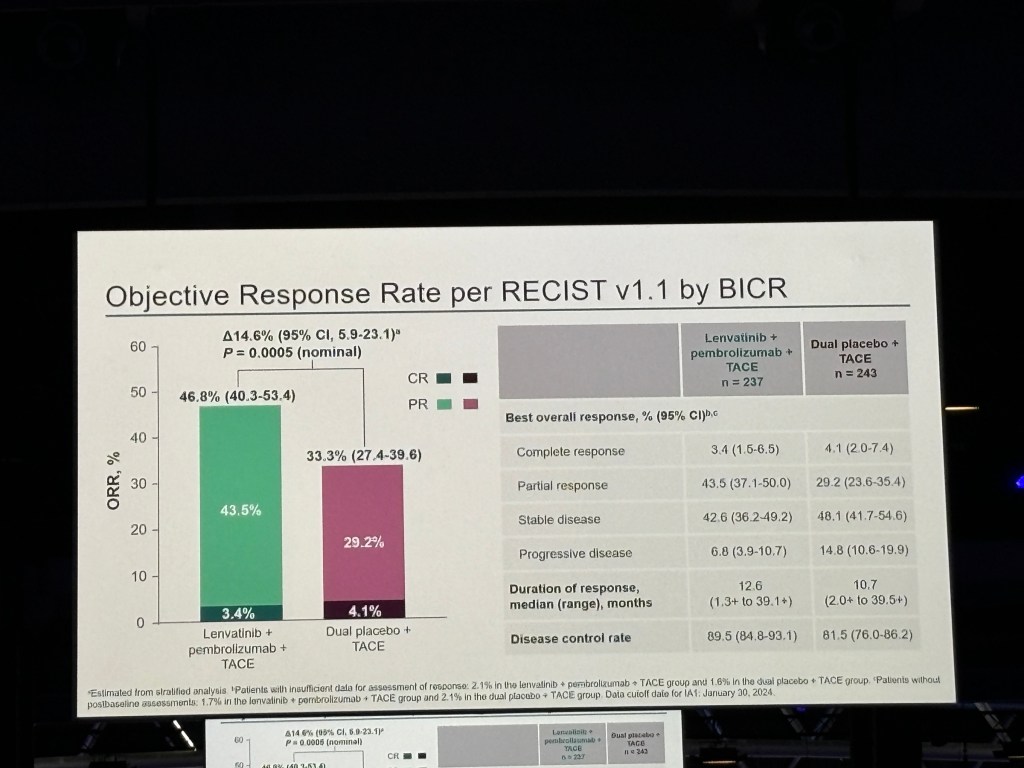
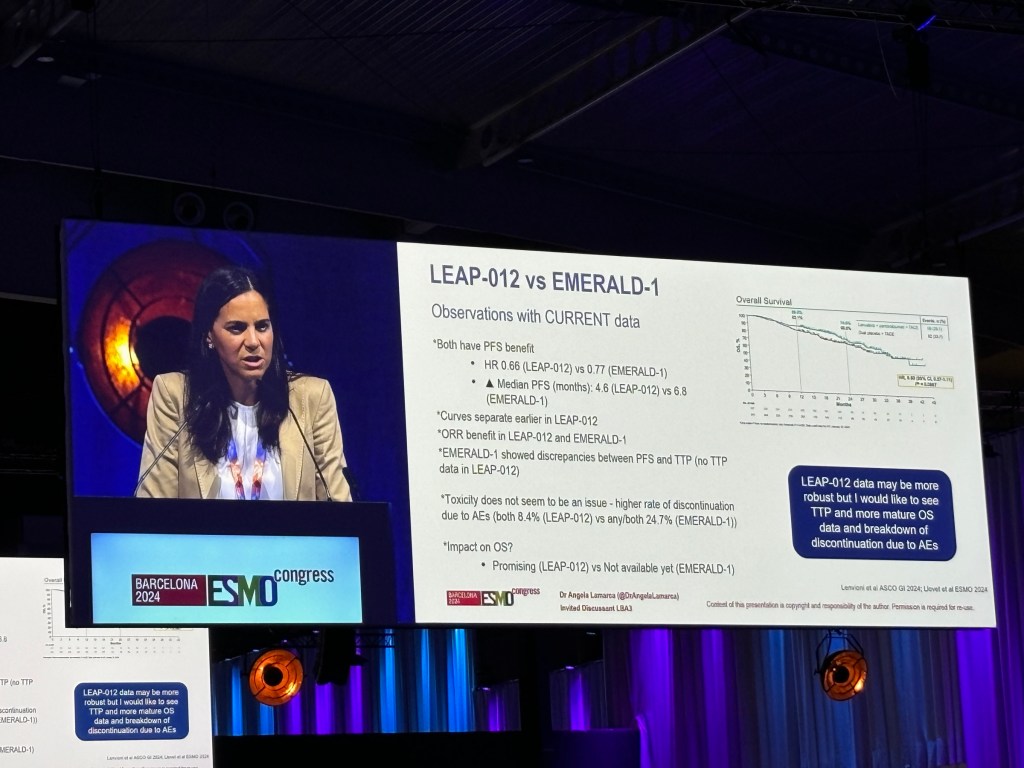
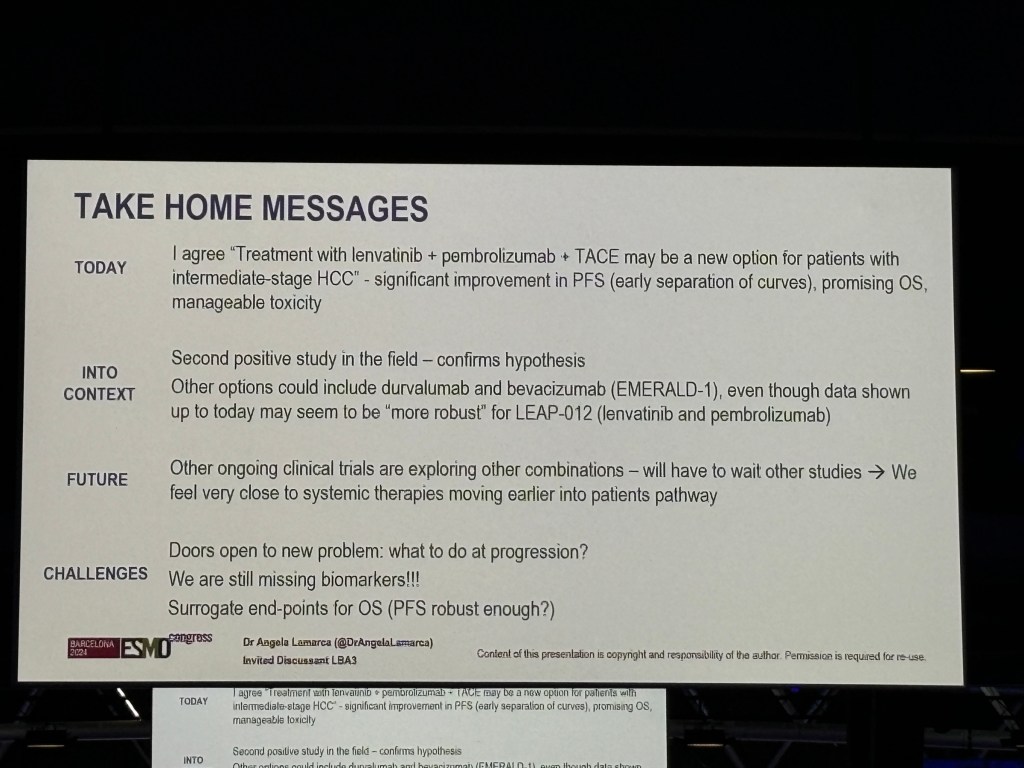
Data presented at the ESMO Congress 2024 (Barcelona, 13–17 September) shows that adding Lenvatinib (tablets) and Pembrolizumab (immunotherapy infusion) to standard treatment has the potential to improve prognosis.

The trial was done in intermediate stage patients.

Adding the combination of Lenvatinib and Pembrolizumab to the other standard treatment TACE seems to work.

The response rates are better with combination and early results are promising but the data is still immature.

Another caveat is that this combination was previously tested in the advanced setting. The combination of Lenvatinib and Pembrolizumab did NOT improve survival in the advanced cancer patient group.

Disclaimer: Please note – This blog is NOT medical advice. This blog is NOT a expert medical opinion on various topics. This blog is purely for information only and do check the sources where cited. Please DO consult your own doctor to discuss concerns and options relevant to you. The views expressed in this blog are NOT, in any way whatsoever, intended to be a substitute for professional advice. The blog is NOT previewed, commissioned or otherwise endorsed, in any way, by any organisation that the author is associated with. The views expressed in this blog likely represents some of the author’s personal views held at the time of drafting the blog and MAY CHANGE overtime, particularly when new evidence comes to light.

Immunotherapy for curative treatment of Cervical cancer

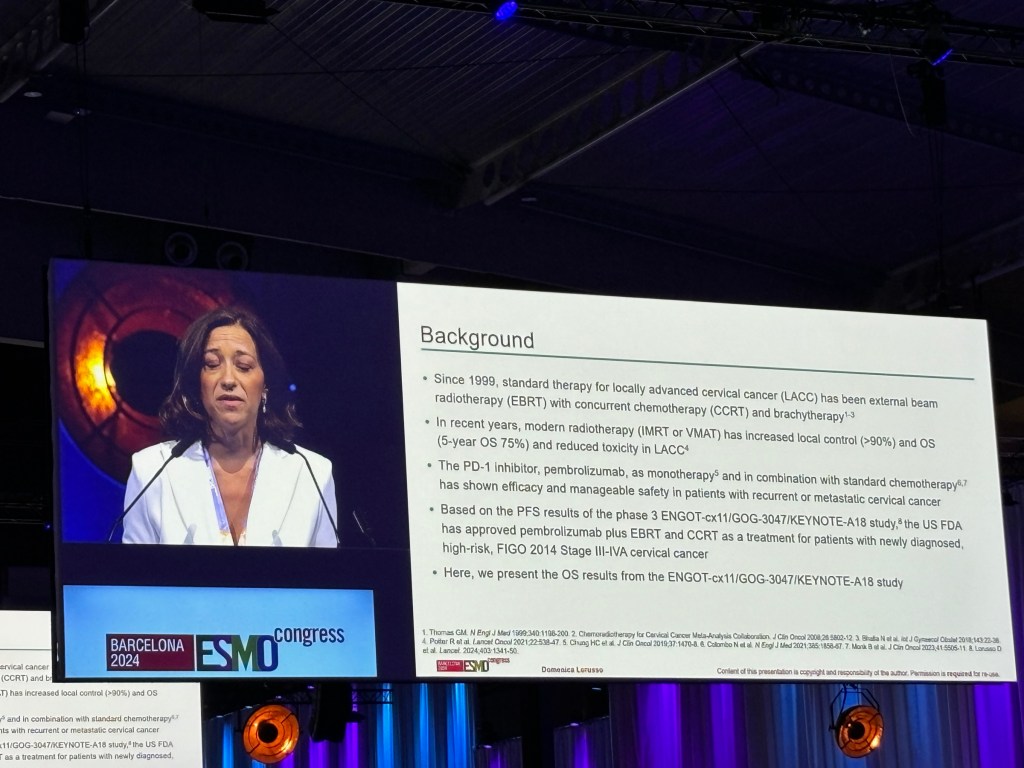
Updated Data presented at the ESMO Congress 2024( Barcelona, 13–17 September) confirms benefit of adding immunotherapy to combination of chemotherapy and radiotherapy for treatment of cervical cancer.

For nearly twenty years, chemo- radiation, which is the practice of giving chemotherapy at the same time as radiotherapy, was the standard of care.

Last year, early results from a large trial suggested that adding immunotherapy to chemo-radiation would improve outcome .

Updated results confirm that the additional immunotherapy is of significant benefit.

Reference

Lancet. Pembrolizumab or placebo with chemoradiotherapy followed by pembrolizumab or placebo for newly diagnosed, high-risk, locally advanced cervical cancer (ENGOT-cx11/GOG-3047/KEYNOTE-A18): overall survival results from a randomised, double-blind, placebo-controlled, phase 3 trial.

Disclaimer: Please note – This blog is NOT medical advice. This blog is NOT a expert medical opinion on various topics. This blog is purely for information only and do check the sources where cited. Please DO consult your own doctor to discuss concerns and options relevant to you. The views expressed in this blog are NOT, in any way whatsoever, intended to be a substitute for professional advice. The blog is NOT previewed, commissioned or otherwise endorsed, in any way, by any organisation that the author is associated with. The views expressed in this blog likely represents some of the author’s personal views held at the time of drafting the blog and MAY CHANGE overtime, particularly when new evidence comes to light.
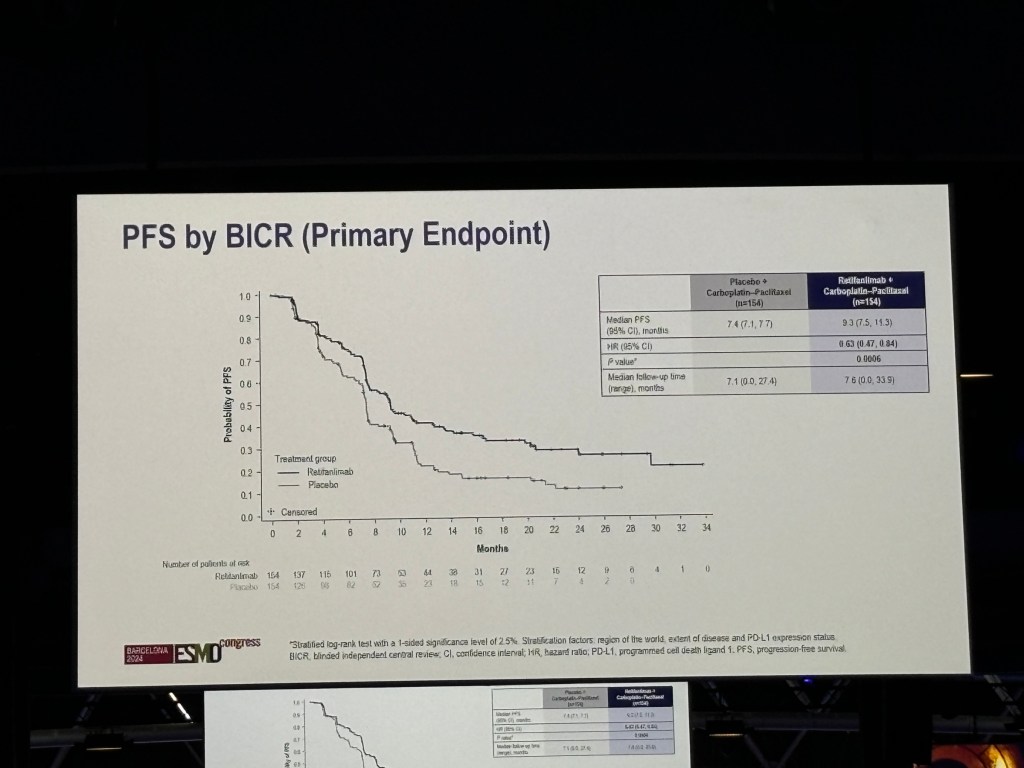
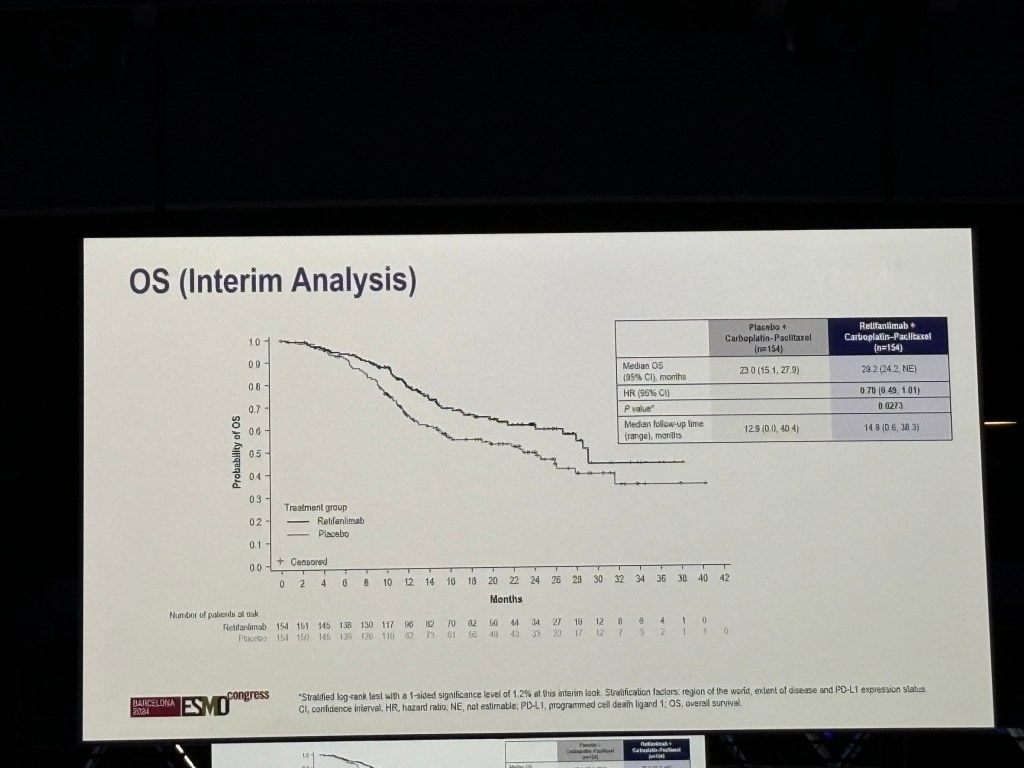
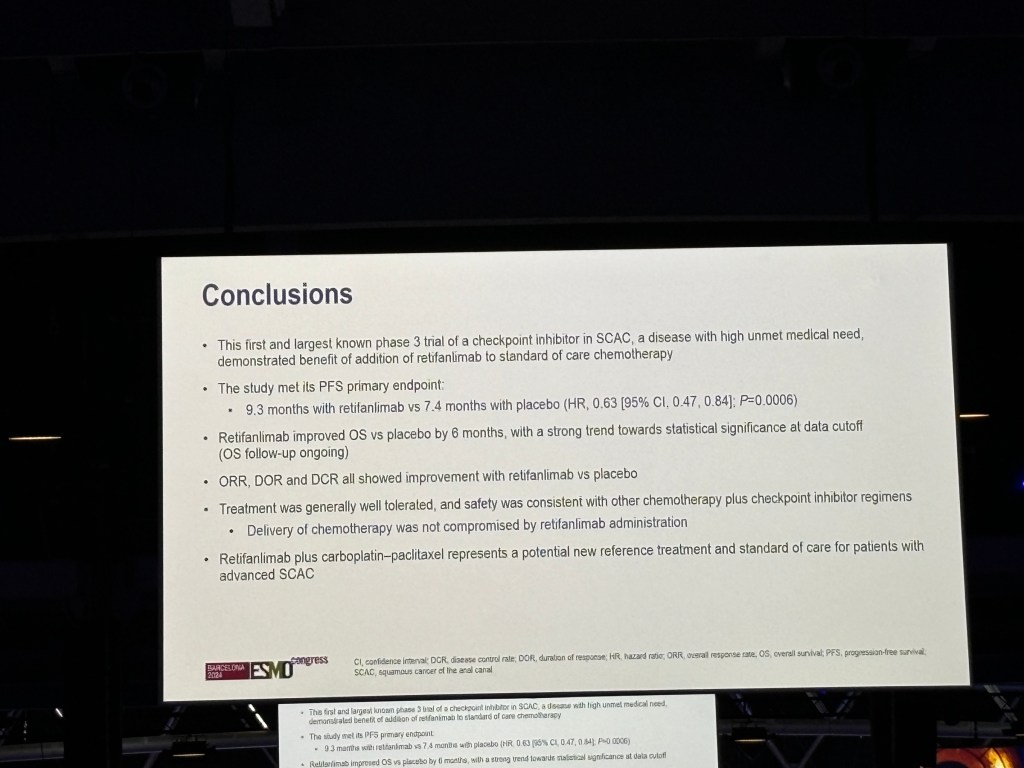
New standard of care for advanced anal cancer patients

Data presented at the ESMO Congress 2024 (Barcelona, 13–17 September) demonstrated the potential of combining immunotherapy with chemotherapy for advanced anal cancer patients.

Addition of immunotherapy drug retifanlimab to the chemotherapy combination carboplatin and paclitaxel significantly improved the outcomes.

Disclaimer: Please note – This blog is NOT medical advice. This blog is NOT a expert medical opinion on various topics. This blog is purely for information only and do check the sources where cited. Please DO consult your own doctor to discuss concerns and options relevant to you. The views expressed in this blog are NOT, in any way whatsoever, intended to be a substitute for professional advice. The blog is NOT previewed, commissioned or otherwise endorsed, in any way, by any organisation that the author is associated with. The views expressed in this blog likely represents some of the author’s personal views held at the time of drafting the blog and MAY CHANGE overtime, particularly when new evidence comes to light.
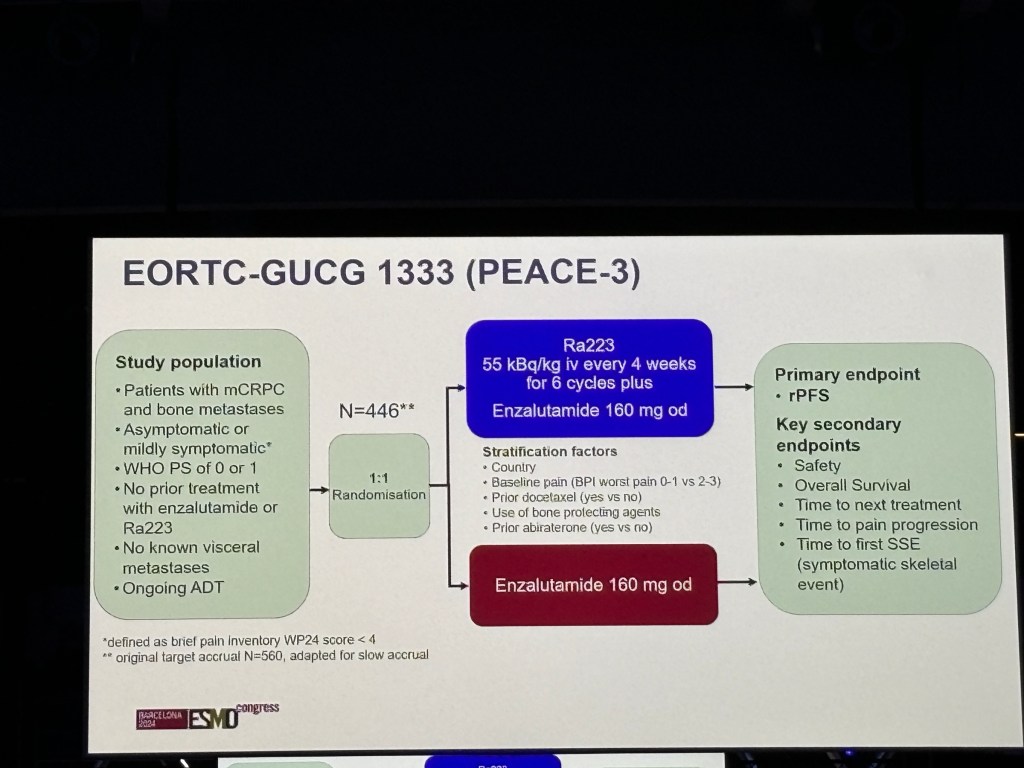
New treatment option for advanced prostate cancer patients

Advanced prostate patients were treated with hormone injections only in the past. When these advanced cancer patients were no longer responding to those hormone injections, tablets such as Enzalutamide , Apalutamide and Abiraterone were added to the hormone injections.

A new combination has become available for use in these patients.

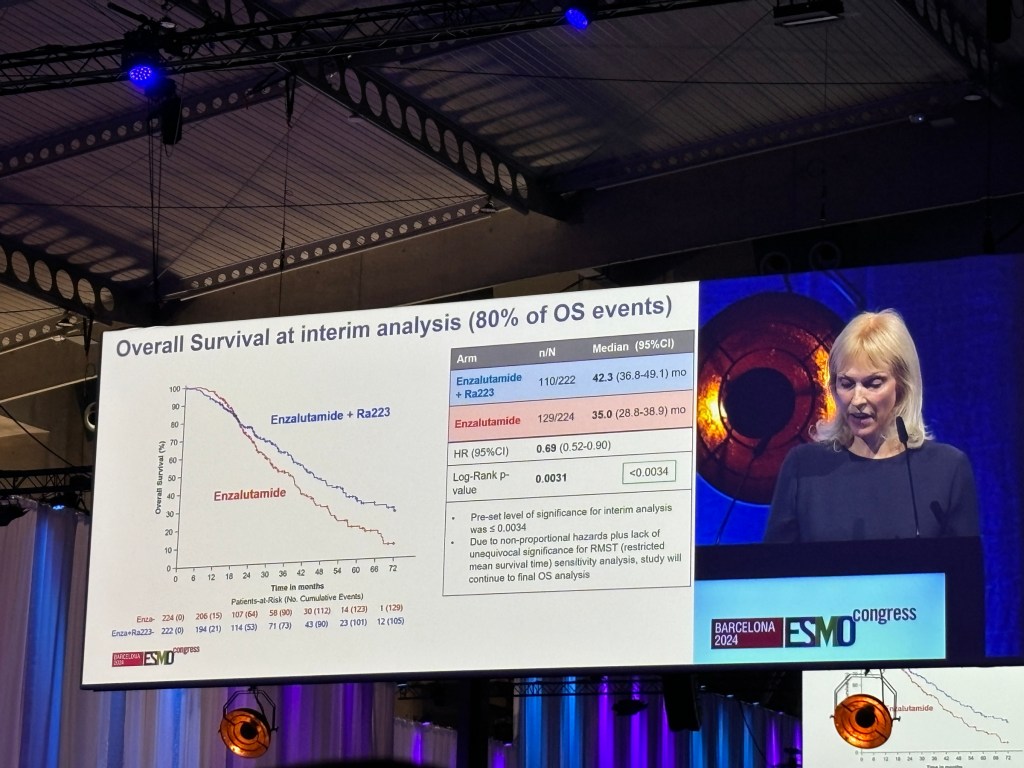
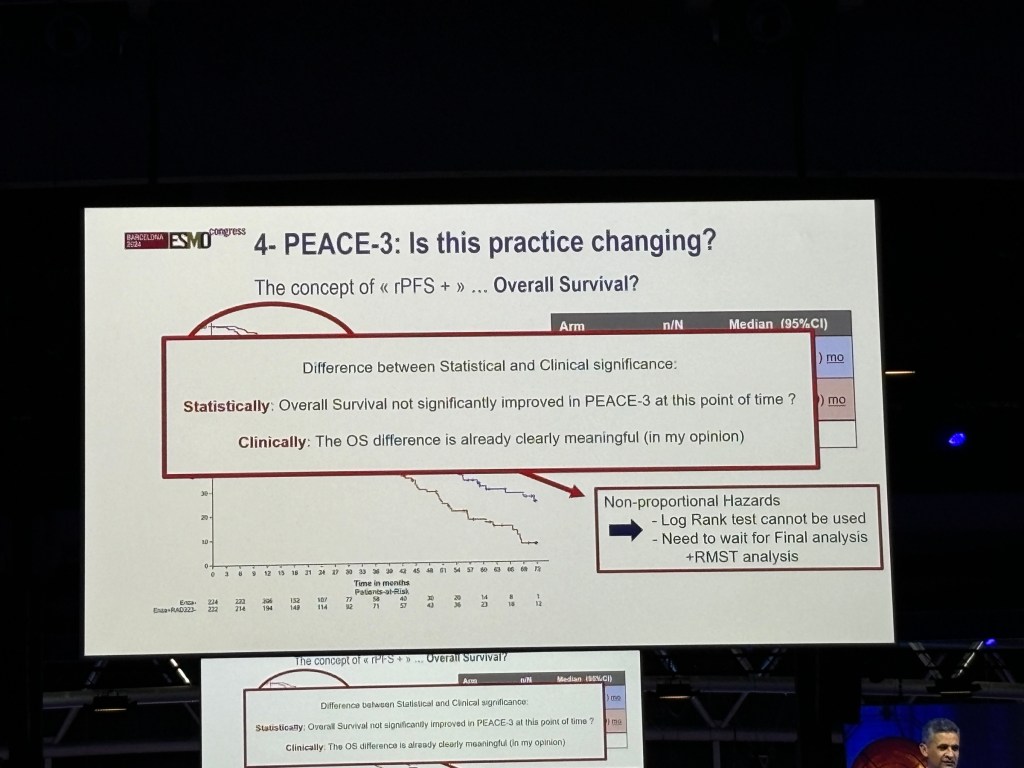
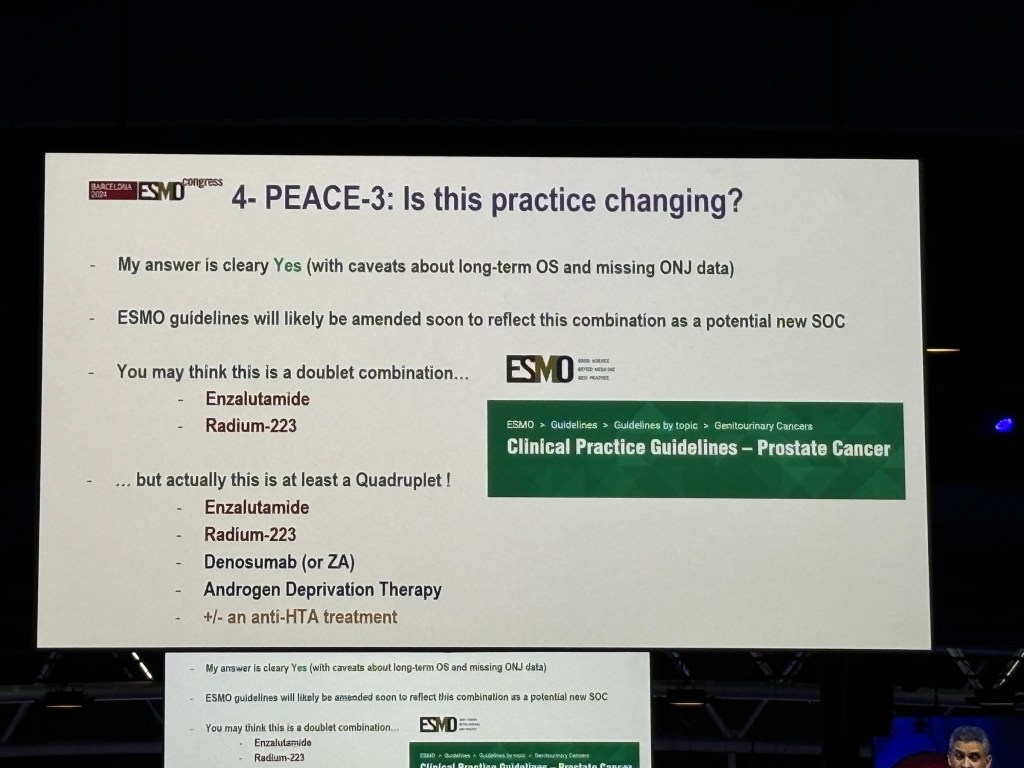
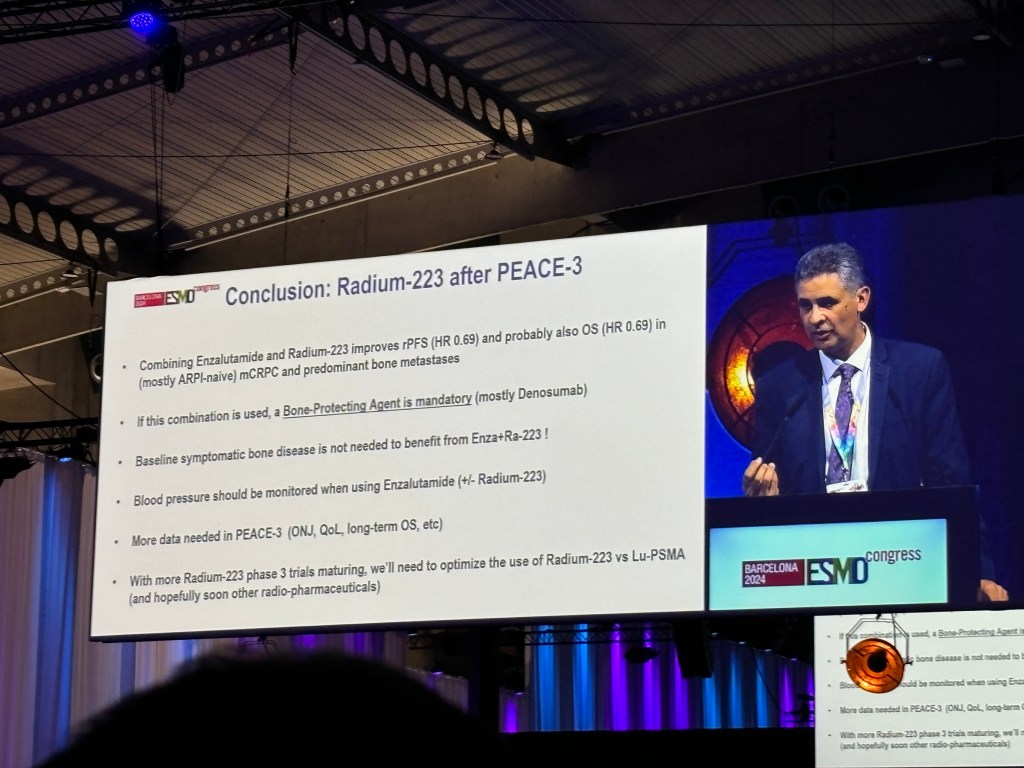
Data presented at the ESMO Congress 2024 (Barcelona, 13–17 September) demonstrated the potential of combining Enzalutamide and Radium 223 injections.

The combination Enzalutamide and Radium 223 injections was better than Enzalutamide tablets alone.

The combination is likely to become a standard of care for these patients.

The only caveat is that a lot of advanced cancer patients are nowadays treated with hormone injections and tablets upfront. This trial data does not directly apply to these patients.

Disclaimer: Please note – This blog is NOT medical advice. This blog is NOT a expert medical opinion on various topics. This blog is purely for information only and do check the sources where cited. Please DO consult your own doctor to discuss concerns and options relevant to you. The views expressed in this blog are NOT, in any way whatsoever, intended to be a substitute for professional advice. The blog is NOT previewed, commissioned or otherwise endorsed, in any way, by any organisation that the author is associated with. The views expressed in this blog likely represents some of the author’s personal views held at the time of drafting the blog and MAY CHANGE overtime, particularly when new evidence comes to light.

New treatment option for patients with Gestational trophoblastic tumours (GTT)

Gestational trophoblastic tumours (GTT) are a rare but pregnancy related tumours arising from the placenta

Methotrexate chemotherapy is the sstandard treatment option for low risk GTT tumours .

A new regimen was unveiled at the ESMO European Society of Medical Oncology Congress-2024, Barcelona.

A French trial reported promising results using combination of chemotherapy ( Methotrexate) and immunotherapy (Avelumab)

Disclaimer: Please note – This blog is NOT medical advice. This blog is NOT a expert medical opinion on various topics. This blog is purely for information only and do check the sources where cited. Please DO consult your own doctor to discuss concerns and options relevant to you. The views expressed in this blog are NOT, in any way whatsoever, intended to be a substitute for professional advice. The blog is NOT previewed, commissioned or otherwise endorsed, in any way, by any organisation that the author is associated with. The views expressed in this blog likely represents some of the author’s personal views held at the time of drafting the blog and MAY CHANGE overtime, particularly when new evidence comes to light.
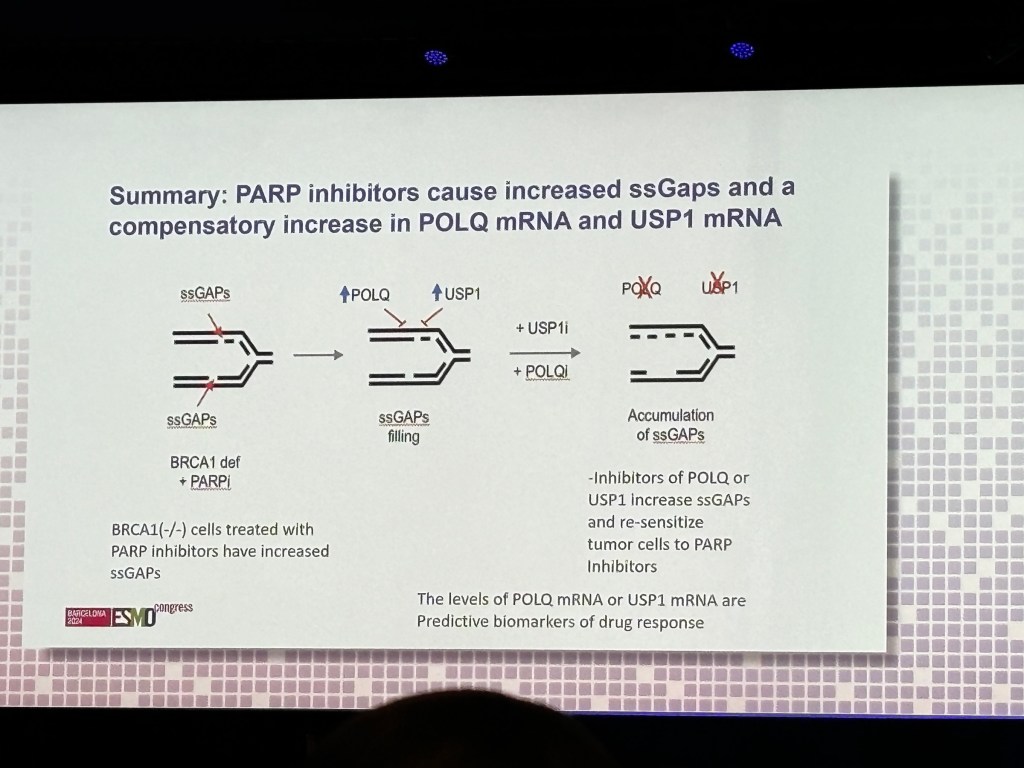
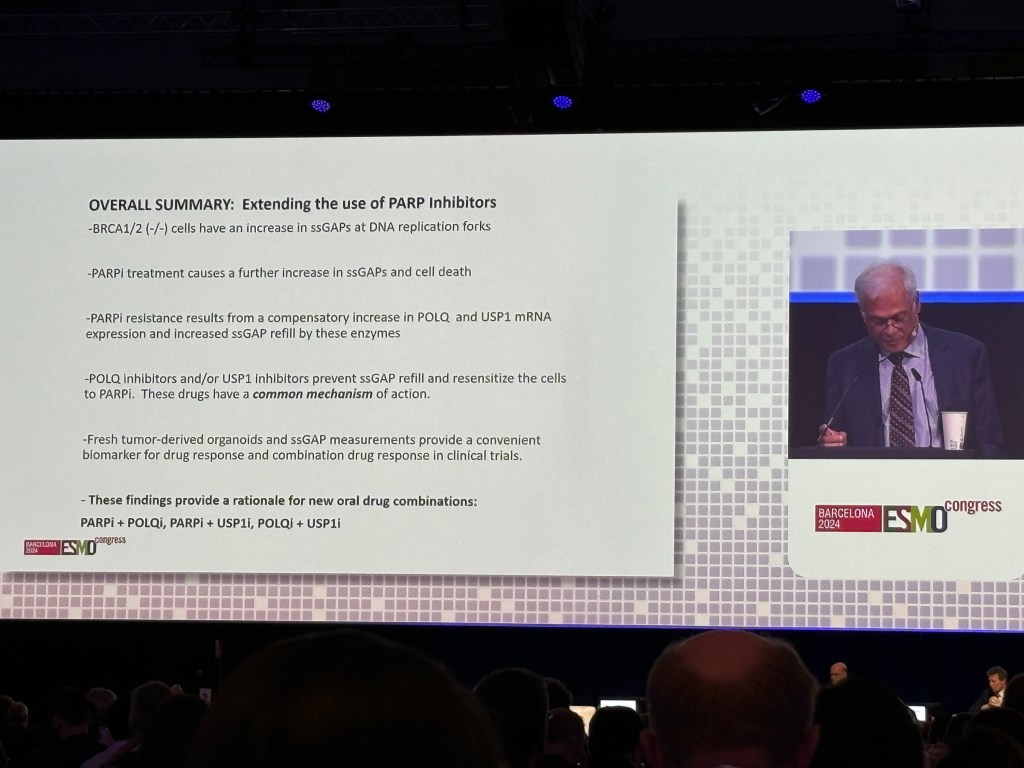
How to overcome resistance to Olaparib and other similar PARP inhibitors ?

Olaparib and similar drugs have revolutionised the treatment of a sub-set of patients with BRCA gene mutations ( eg Ovarian, Prostate, Breast cancers).

But patients can develop resistance to these drugs.

At the ESMO European Society of Medical Oncology Congress-2024, Barcelona), ways to overcome this resistance was discussed.

Targeting the Enzymes USP-1 and POLQ seems to overcome resistance.

The future looks promising!

Disclaimer: Please note – This blog is NOT medical advice. This blog is NOT a expert medical opinion on various topics. This blog is purely for information only and do check the sources where cited. Please DO consult your own doctor to discuss concerns and options relevant to you. The views expressed in this blog are NOT, in any way whatsoever, intended to be a substitute for professional advice. The blog is NOT previewed, commissioned or otherwise endorsed, in any way, by any organisation that the author is associated with. The views expressed in this blog likely represents some of the author’s personal views held at the time of drafting the blog and MAY CHANGE overtime, particularly when new evidence comes to light.

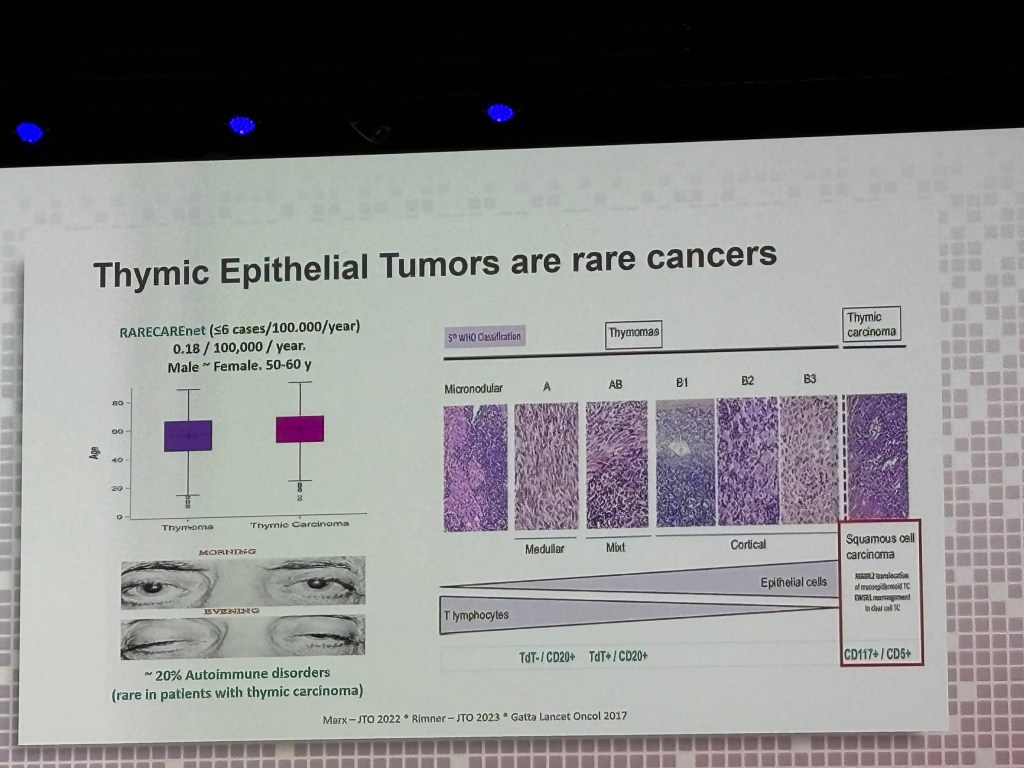
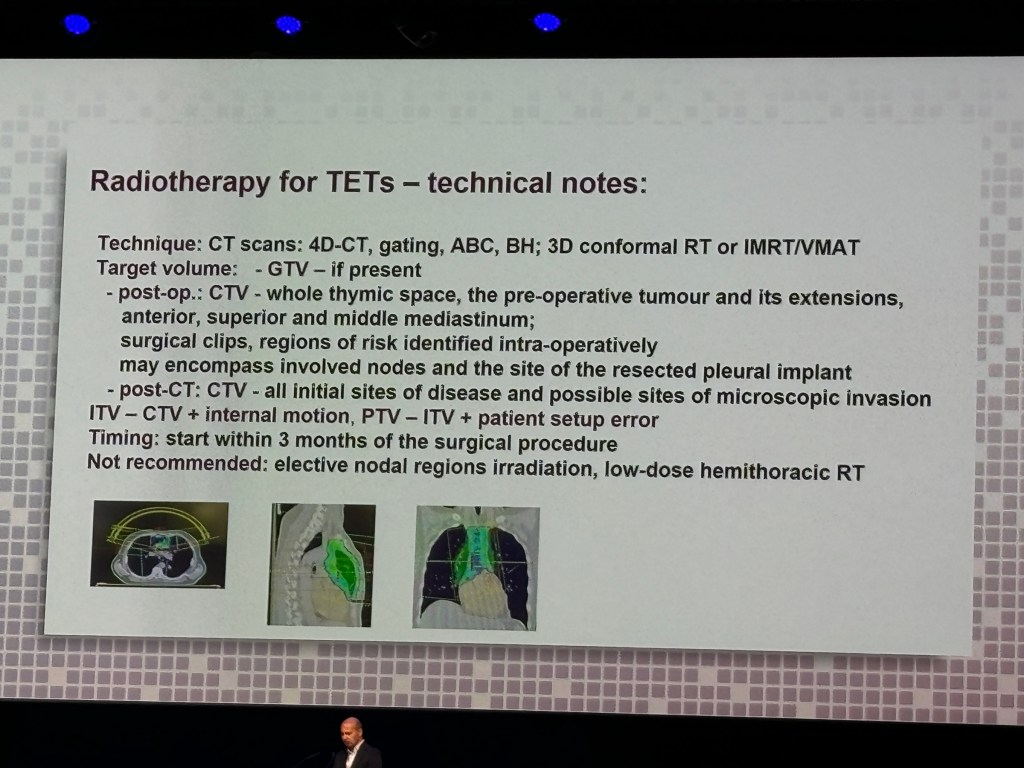
ESMO update on Thymus tumours

Tumours of Thymus are rare. So clinical data is usually spare. Hence they do not feature prominently in International conferences.

So it is interesting and a welcome gesture that ESMO dedicated a morning session to Thymic tumours. (ESMO European Society of Medical Oncology Congress-2024, Fira Barcelona).

Understandably, in a conference hall meant for thousands of delegates only a few hundreds turned up for the rare thymic tumours ( as delegates attended the 12 other massive halls with simultaneous sessions for common cancers such as prostate, breast , bowel etc).

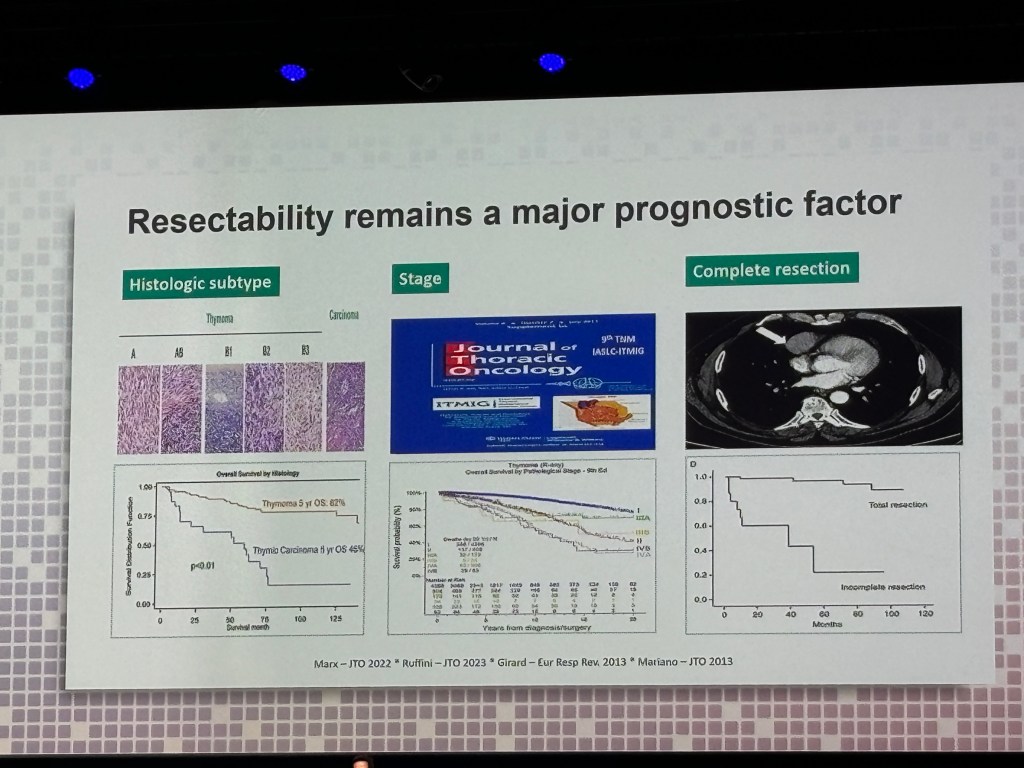
The relevant updates from this session are: 

  1. Surgical resection where feasible is the best treatment.
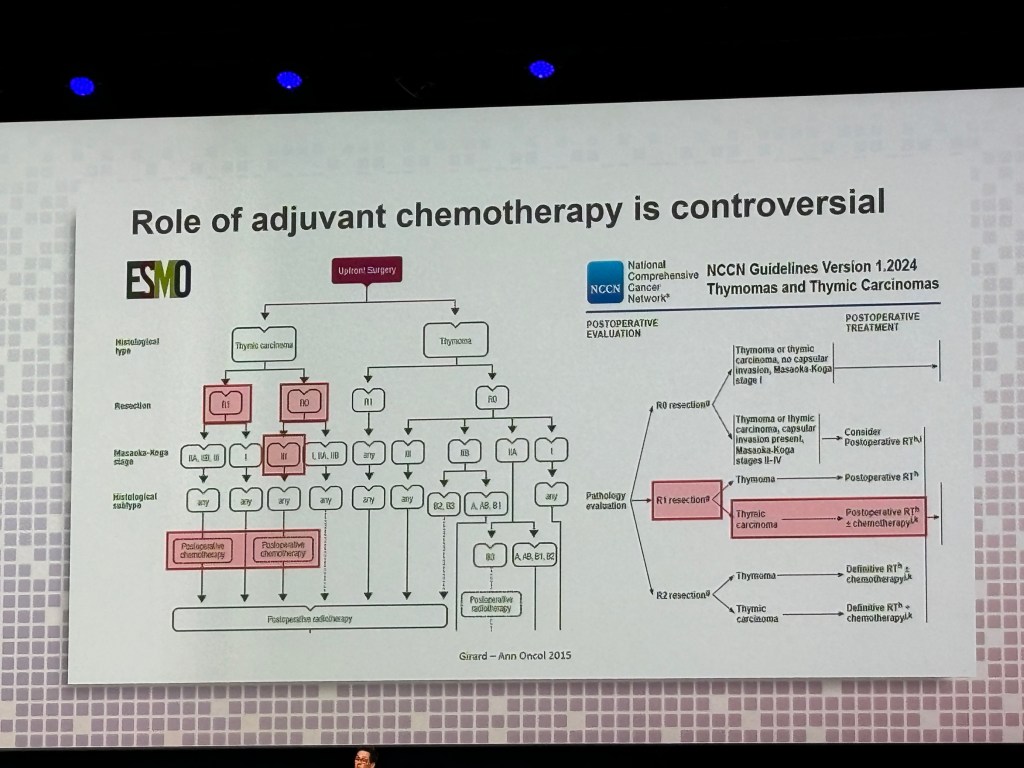
  2. in selected cases , post-operative radiotherapy can be considered 
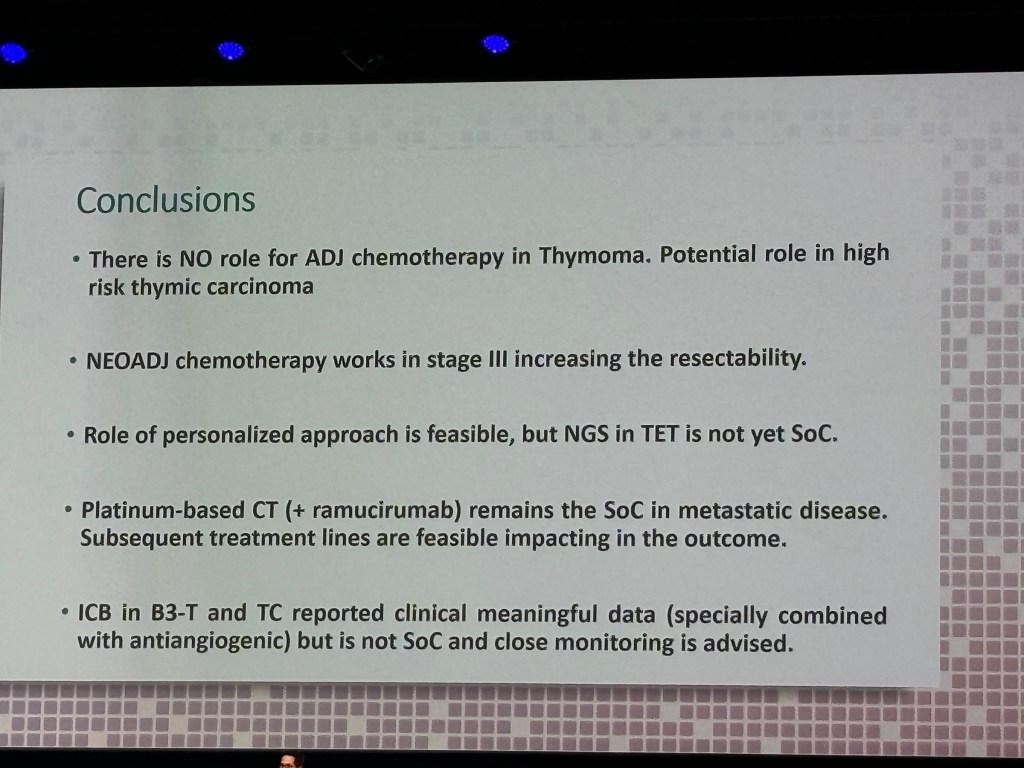
  3. Routine adjuvant chemotherapy after complete surgical excision for early cancers is NOT indicated 
  4. Thymic cancers are chemo-sensitive and they have the potential to turn inoperable cancers to operable cancers.
  5. Platinum and Anthracycline combination chemo regimens have the best response rates.
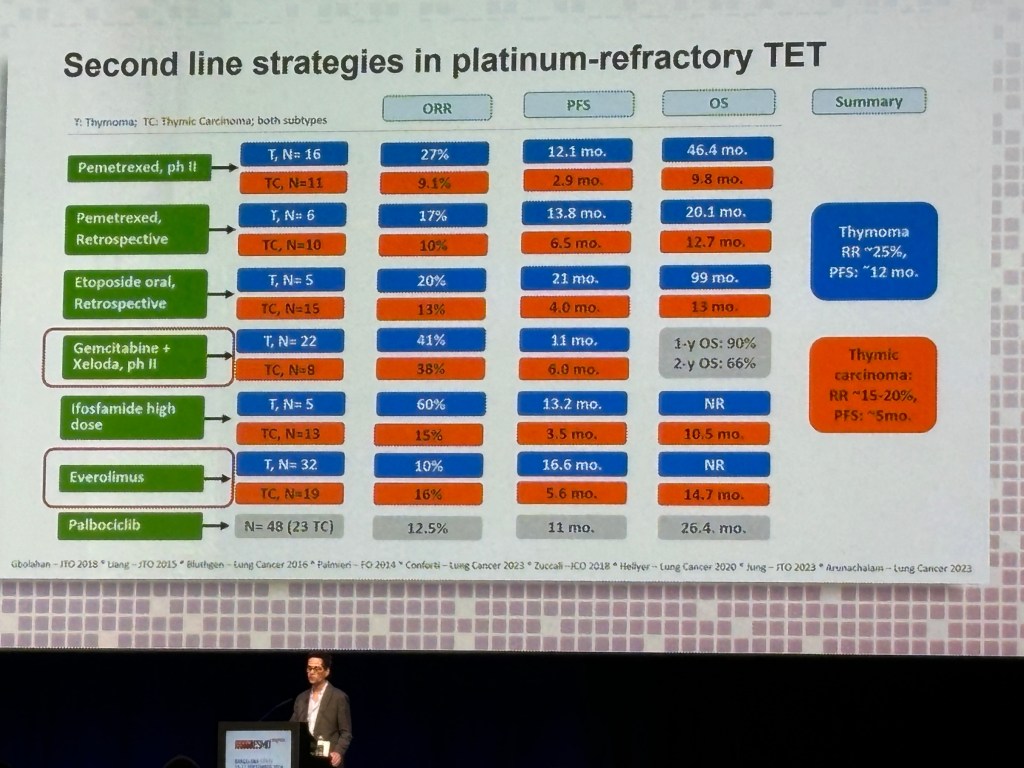
  6. Immunotherapy and Molecular targeted therapy are possible options in those resistant to platinum drugs in addition to other non-platinum chemotherapy drugs .

Disclaimer: Please note – This blog is NOT medical advice. This blog is NOT a expert medical opinion on various topics. This blog is purely for information only and do check the sources where cited. Please DO consult your own doctor to discuss concerns and options relevant to you. The views expressed in this blog are NOT, in any way whatsoever, intended to be a substitute for professional advice. The blog is NOT previewed, commissioned or otherwise endorsed, in any way, by any organisation that the author is associated with. The views expressed in this blog likely represents some of the author’s personal views held at the time of drafting the blog and MAY CHANGE overtime, particularly when new evidence comes to light.

Is radiotherapy needed for all lymphoma patients after completing a course of chemotherapy?

In previous decades, radiotherapy was routinely used to consolidate remission after completion of chemotherapy in Lymphoma patients.

Chemotherapy alone can cure a lot of these patients. Radiotherapy can be associated with long term side effects even 10 years after completion of treatment.

So increasingly there is a tendency to omit radiotherapy in those lymphoma patients who had responded extremely well to chemotherapy alone.

Long term trial results, in a group of lymphoma patients who had mediastinal (chest) lymphoma, confirms that radiotherapy can be safely omitted in those patients who had excellent response to chemotherapy alone.

Reference

Omission of Radiotherapy in Primary Mediastinal B-Cell Lymphoma: IELSG37 Trial Results | Journal of Clinical Oncology

Disclaimer: Please note – This blog is NOT medical advice. This blog is NOT a expert medical opinion on various topics. This blog is purely for information only and do check the sources where cited. Please DO consult your own doctor to discuss concerns and options relevant to you. The views expressed in this blog are NOT, in any way whatsoever, intended to be a substitute for professional advice. The blog is NOT previewed, commissioned or otherwise endorsed, in any way, by any organisation that the author is associated with. The views expressed in this blog likely represents some of the author’s personal views held at the time of drafting the blog and MAY CHANGE overtime, particularly when new evidence comes to light.

Should quotas be used to increase women representation?

In areas where women representation has been traditionally poor, Quotas have been suggested as a quick and easy fix.

But quotas do have their limitations and can lead to unintended consequences.

Read the BMJ letter and post your views through rapid response.

Article: Womens representation and limitations of quotas

Free to access link: http://bmj.com/cgi/content/full/bmj.q1629?ijkey=MSTzILqzKZNt2UR&keytype=ref

Disclaimer: The views expressed in this blog represent the author’s personal views held at the time of drafting the blog and may change overtime, particularly when new evidence comes to light. The blog is NOT previewed, commissioned or otherwise endorsed by any organisation that the author is associated with.

New immunotherapy treatment option for Liver cancer

Immunotherapy has dramatically improved the prognosis of skin cancer patients and has made significant improvement in prognosis of kidney, lung, uterus and bladder cancer patients .

Advanced liver cancer is notoriously difficult to treat and prognosis is often poor.

Now a widely used combination immunotherapy therapy treatment has been found to improve the prognosis of liver cancer patients.

Patients with inoperable, previously untreated, liver cancer had significantly longer overall survival with the combination of nivolumab plus ipilimumab compared with former standard-of-care with lenvatinib or sorafenib.

Doublet Immunotherapy (nivolumab plus ipilimumab ) is a standard of care now in primary liver cancer ( HCC: hepato cellular carcinoma ).

References

1. ASCO 2024. Nivolumab (NIVO) plus ipilimumab (IPI) vs lenvatinib (LEN) or sorafenib (SOR) as first-line treatment for unresectable hepatocellular carcinoma (uHCC): First results from CheckMate 9DW. Abstract LBA4008

Disclaimer: Please note – This blog is NOT medical advice. This blog is NOT a expert medical opinion on various topics. This blog is purely for information only and do check the sources where cited. Please DO consult your own doctor to discuss concerns and options relevant to you. The views expressed in this blog are NOT, in any way whatsoever, intended to be a substitute for professional advice. The blog is NOT previewed, commissioned or otherwise endorsed, in any way, by any organisation that the author is associated with. The views expressed in this blog likely represents some of the author’s personal views held at the time of drafting the blog and MAY CHANGE overtime, particularly when new evidence comes to light.

Milder chemotherapy for older patients with pancreatic cancer

Older adults with newly diagnosed advanced pancreatic cancer are often frail and vulnerable.

The standard chemotherapy regimens such as the FOLFIRINOX regimen are quite toxic and not suitable for frail patients.

At the recent ASCO meeting in Chicago, a study which utilised gentler versions of the existing chemotherapy regimens was presented.

These gentler versions were found to have reasonable efficacy and toxicity.

References

1. ASCO post. Efrat Dotan, MD, on Pancreatic Cancer in Older Adults: Defining the Optimal Treatment Approach.

2. ASCO 2024 Abstract. A randomized phase II study of gemcitabine and nab-paclitaxel compared with 5-fluorouracil, leucovorin, and liposomal irinotecan in older patients with treatment-naïve metastatic pancreatic cancer (GIANT): ECOG-ACRIN EA2186.

Disclaimer: Please note – This blog is NOT medical advice. This blog is NOT a expert medical opinion on various topics. This blog is purely for information only and do check the sources where cited. Please DO consult your own doctor to discuss concerns and options relevant to you. The views expressed in this blog are NOT, in any way whatsoever, intended to be a substitute for professional advice. The blog is NOT previewed, commissioned or otherwise endorsed, in any way, by any organisation that the author is associated with. The views expressed in this blog likely represents some of the author’s personal views held at the time of drafting the blog and MAY CHANGE overtime, particularly when new evidence comes to light.

Is drinking alcohol and sleeping on long haul flights dangerous ?

Yes, it could be risky to drink alcohol and sleep on long haul flights. This is particularly relevant for those who have any heart or lung conditions.

A recent paper analysed the effect of alcohol in a flight simulator. In healthy individuals, the combined effect of alcohol and low pressure in the flight cabin affected sleep quality and put extra strain on heart.

The authors suggest that these changes noted in these young and healthy individuals could be more detrimental in older people with heart and lung conditions.

The authors advise restricting alcoholic beverages before and during long haul flights.

References

1. Daily Telegraph. Falling asleep on a plane after drinking could be deadly. Sarah Knapton, SCIENCE EDITOR. 4 June 2024 • 8:02am

2. Effects of moderate alcohol consumption and hypobaric hypoxia: implications for passengers’ sleep, oxygen saturation and heart rate on long-haul flights.

Disclaimer: Please note – This blog is NOT medical advice. This blog is NOT a expert medical opinion on various topics. This blog is purely for information only and do check the sources where cited. Please DO consult your own doctor to discuss concerns and options relevant to you. The views expressed in this blog are NOT, in any way whatsoever, intended to be a substitute for professional advice. The blog is NOT previewed, commissioned or otherwise endorsed, in any way, by any organisation that the author is associated with. The views expressed in this blog likely represents some of the author’s personal views held at the time of drafting the blog and MAY CHANGE overtime, particularly when new evidence comes to light.

Is it safe to delay treatment in low risk prostate cancer?

Low risk prostate cancers are sometimes managed by a “wait and watch” approach and frequent monitoring rather than immediate prostate surgery.

Is this approach safe? Yes

A recent report after 10 year follow-up , from a Canadian trial shows that this approach can be safely done with an active monitoring protocol.

In this study, 10 years after diagnosis, half the men were fine without any worsening of their prostate cancer. Reassuringly only less than 2% developed metastatic disease, and less than 1% died of their disease.

These results confirm that “active surveillance” can be an effective management strategy for patients diagnosed with favorable-risk prostate cancer.

References

Long-Term Outcomes in Patients Using Protocol-Directed Active Surveillance for Prostate Cancer
JAMA. Published online May 3, 2024

Disclaimer: Please note – This blog is NOT medical advice. This blog is NOT a expert medical opinion on various topics. This blog is purely for information only and do check the sources where cited. Please DO consult your own doctor to discuss concerns and options relevant to you. The views expressed in this blog are NOT, in any way whatsoever, intended to be a substitute for professional advice. The blog is NOT previewed, commissioned or otherwise endorsed, in any way, by any organisation that the author is associated with. The views expressed in this blog likely represents some of the author’s personal views held at the time of drafting the blog and MAY CHANGE overtime, particularly when new evidence comes to light.

Immunotherapy given before surgery for skin cancer melanoma improves overall outcome .

Skin cancers, which can amendable for surgery, are removed straightaway.

A recent trial indicates giving some immunotherapy treatment before the operation is better than immediate surgery.

Also avoiding additional treatment after surgery in those who have responded well to prior immunotherapy is a bonus through this personalised approach.

This approach is likely to become the standard of care.

References

1. NEJM. Neoadjuvant Nivolumab and Ipilimumab in Resectable Stage III Melanoma.

2. ASCO 2024. Neoadjuvant nivolumab plus ipilimumab versus adjuvant nivolumab in macroscopic, resectable stage III melanoma: The phase 3 NADINA trial.

3. ASCO 2024 Daily news. NADINA: Neoadjuvant Ipilimumab Plus Nivolumab Poised to Become a New Standard of Care for Macroscopic Stage III Melanoma

Disclaimer: Please note – This blog is NOT medical advice. This blog is NOT a expert medical opinion on various topics. This blog is purely for information only and do check the sources where cited. Please DO consult your own doctor to discuss concerns and options relevant to you. The views expressed in this blog are NOT, in any way whatsoever, intended to be a substitute for professional advice. The blog is NOT previewed, commissioned or otherwise endorsed, in any way, by any organisation that the author is associated with. The views expressed in this blog likely represents some of the author’s personal views held at the time of drafting the blog and MAY CHANGE overtime, particularly when new evidence comes to light.

New spit test for prostate cancer

Prostate cancer is the most common male cancer and is one of the most common cause of death due to cancer.

Yet, paradoxically most men with prostate cancer die “with it” rather than “of it”.

It does take a bit of thinking to get the head around the above two facts.

At present, we use a blood test called PSA ( prostate specific antigen) to detect prostate cancer. It is the most widely used and best available blood test. But it is not perfect.

PSA detects too many “mild cancers” which do not need to be detected because those “mild prostate cancers” do not affect the life expectancy in most men.

PSA can also sometimes miss “severe cancers”.

Hence the search is on to find better tests.

A U.K. led team has now developed a “saliva” (spit) test to improve the detection of prostate cancer.

The promising results presented at ASCO 2024 meeting in Chicago hopefully will be followed by more confirmatory trials before it becomes standard practice.

References

1. BBC News. At-home saliva test may catch deadly prostate cancers.

2. “More men die with prostate cancer than because of it” – an old adage that still holds true in the 21st century. Cancer Treatment and Research Communications, Volume 26,2021, 100225, ISSN 2468-2942,
https://doi.org/10.1016/j.ctarc.2020.100225.
(https://www.sciencedirect.com/science/article/pii/S2468294220300605)

3. Effect of polygenic risk score for clinically significant prostate cancer in a screening program: The BARCODE 1 study results. Journal of Clinical Oncology. Volume 42, Number 16_suppl

Disclaimer: Please note – This blog is NOT medical advice. This blog is NOT a expert medical opinion on various topics. This blog is purely for information only and do check the sources where cited. Please DO consult your own doctor to discuss concerns and options relevant to you. The views expressed in this blog are NOT, in any way whatsoever, intended to be a substitute for professional advice. The blog is NOT previewed, commissioned or otherwise endorsed, in any way, by any organisation that the author is associated with. The views expressed in this blog likely represents some of the author’s personal views held at the time of drafting the blog and MAY CHANGE overtime, particularly when new evidence comes to light.

Cancer survival rates for abdominal cancers

Princess Kate Middleton, born in 1982, is unlucky to have a cancer diagnosis at such a young age. Many Royal well-wishers are upset and sad about Kate Middleton’s cancer diagnosis and they all wish for an excellent outcome. Since Kate Middleton has announced her cancer diagnosis, there has been understandably a huge interest on survival rates for various abdominal cancers.

Due to privacy concerns the Palace has not revealed the type of cancer but the chemotherapy she is undergoing has termed “preventative” implying that she had a localised cancer which has been successfully removed surgery. It is also implied by many newspapers that the cancer has been found “incidentally” after surgery.

With these caveats, these are the survival rates for various abdominal cancers. This is only a guide, as the cancer can behave vastly differently in various people.

The survival figures quoted are from the publicly available cancer research U.K. (CRUK ) website

Pancreatic cancer: Almost 55 out of 100 people with localised pancreatic cancer er survive their cancer for 1 year or more after diagnosis. Pancreatic cancer is one of the nastiest cancer and only 25% survive their cancer for 3 years or more after diagnosis. 

Stomach cancer: England Survival statistics show that 65 out of 100 people (65%) with stage 1 stomach cancer will survive their cancer for 5 years or more after they’re diagnosed. 

Gallbladder cancer: American Survival statistics show that More than 65 out of 100 people with localised cancer survive their cancer for 5 years or more after diagnosis. 

Small Intestine cancer: More than half (53.0%) of people diagnosed with small intestine cancer in England are predicted to survive their disease for five years or more.

Large Bowel cancer: The survival statistics for early bowel cancer is very optimistic. Around 90 out of 100 people (around 90%) with stage 1 bowel cancer will survive their cancer for 5 years or more after they’re diagnosed and treated.

Ovarian cancer: The survival statistics for early ovarian cancer is also excellent. Almost 95 out of 100 women (almost 95%) will survive their cancer for 5 years or more after they are diagnosed. 

Obviously no two people are the same and there are no guarantees with any cancer. Cancer does not spare the well-off in the society.

Disclaimer: Please note – This blog is NOT medical advice. This blog is NOT a expert medical opinion on various topics. This blog is purely for information only and do check the sources where cited. Please DO consult your own doctor to discuss concerns and options relevant to you. The views expressed in this blog are NOT, in any way whatsoever, intended to be a substitute for professional advice. The blog is NOT previewed, commissioned or otherwise endorsed, in any way, by any organisation that the author is associated with. The views expressed in this blog likely represents some of the author’s personal views held at the time of drafting the blog and MAY CHANGE overtime, particularly when new evidence comes to light.

Is there too much care at the end of life in cancer patients?

Cancer is a dreadful disease. Advanced cancers are often incurable, even though lot of cancer patients do survive for years with treatment.

With the benefit of hind sight, it is obvious that in some patients, treatment has been futile and toxic chemo treatment could have been stopped early .

It is very difficult to predict who will respond to a particular treatment and who will be harmed by futile chemotherapy , even when someone is very fit.

There is a criticism from some people in medical profession that there is too much futile care towards the end of life in cancer patients.

But cancer patients do often want to fight the cancer and not give up. It is a delicate balance. Read the BMJ piece and contribute your views via rapid response.

References

BMJ: Is there too much care in advanced cancer? BMJ 2024; 385 doi: https://doi.org/10.1136/bmj.q784 (Published 05 April 2024)

BMJ : Illness trajectories of incurable solid cancers. BMJ 2024; 384 doi: https://doi.org/10.1136/bmj-2023-076625 (Published 01 March 2024)

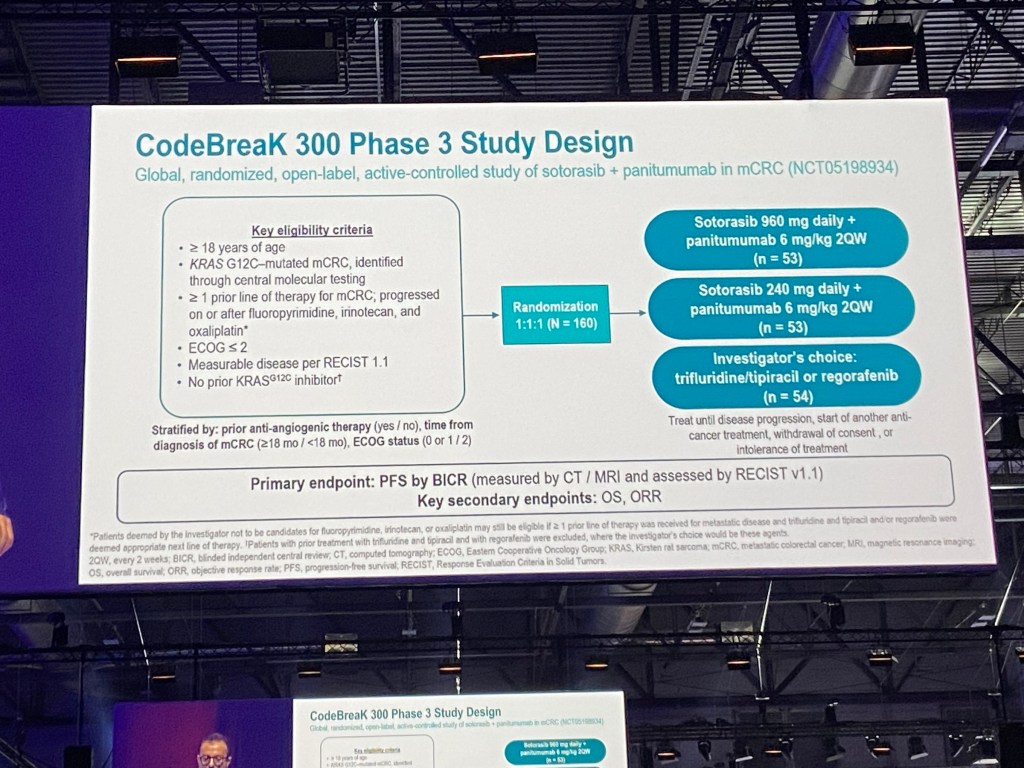
New cancer drug combination that is active in advanced bowel cancer after other drugs have failed.

Advanced bowel cancer that has become resistant to prior chemotherapy drugs is always difficult to treat.

A drug combination shows significant activity in this setting.

Sotorasib and Panitumumab are already in use in other settings and hence they will be used very soon in clinics.

Disclaimer: Please note – This blog is NOT medical advice. This blog is NOT a expert medical opinion on various topics. This blog is purely for information only and do check the sources where cited. Please DO consult your own doctor to discuss concerns and options relevant to you. The views expressed in this blog are NOT, in any way whatsoever, intended to be a substitute for professional advice. The blog is NOT previewed, commissioned or otherwise endorsed, in any way, by any organisation that the author is associated with. The views expressed in this blog likely represents some of the author’s personal views held at the time of drafting the blog and MAY CHANGE overtime, particularly when new evidence comes to light.

New Drug for Lung cancer

This year’s ESMO 2023 Conference had breaking news for lot of new drugs in various cancers.

One such drug called Amivantamab is very promising in 1st line as well as 2nd line setting, both in combination with chemotherapy as well as in combination with a new oral drug called lazertinib.

Amivantamab combination therapies emerge as new options for EGFR-mutated advanced NSCLC

Disclaimer: Please note – This blog is NOT medical advice. This blog is NOT a expert medical opinion on various topics. This blog is purely for information only and do check the sources where cited. Please DO consult your own doctor to discuss concerns and options relevant to you. The views expressed in this blog are NOT, in any way whatsoever, intended to be a substitute for professional advice. The blog is NOT previewed, commissioned or otherwise endorsed, in any way, by any organisation that the author is associated with. The views expressed in this blog likely represents some of the author’s personal views held at the time of drafting the blog and MAY CHANGE overtime, particularly when new evidence comes to light.

Exciting New Drug for Breast cancer and Lung cancer !

Datopotamab Deruxtecan is a new drug which is known in shorter version as Dato Dxd.

Dato Dxd is very promising in breast cancer and Lung cancers that have failed to respond to prior treatments

Dato Dxd belongs a existing new group of cancer drugs known ADCs ( Antibody drug Conjugate).

ADCs involve a combination of carrier molecule and a payload. ADCs go and stick to surface of cancer cells and off load the chemotherapy drug which in turn damages the cancer cell.

Data presented at the an European Cancer congress in Madrid demonstrates high degree of cancer activity. Hopefully the drug will be available for clinical use very shortly after it has been properly licensed by regulatory authorities.

References

Datopotamab deruxtecan met the PFS endpoint in previously treated NSCLC

Antibody–drug conjugates improve outcomes for patients with inoperable or metastatic breast cancer

Disclaimer: Please note – This blog is NOT medical advice. This blog is NOT a expert medical opinion on various topics. This blog is purely for information only and do check the sources where cited. Please DO consult your own doctor to discuss concerns and options relevant to you. The views expressed in this blog are NOT, in any way whatsoever, intended to be a substitute for professional advice. The blog is NOT previewed, commissioned or otherwise endorsed, in any way, by any organisation that the author is associated with. The views expressed in this blog likely represents some of the author’s personal views held at the time of drafting the blog and MAY CHANGE overtime, particularly when new evidence comes to light.

A major breakthrough in advanced bladder cancer

Advanced bladder cancer is a difficult disease to treat in many patients.

For a long time, there was no major advance in first line treatment

Today, at an European Cancer conference in Madrid, there was a breakthrough announcement about a new combination for bladder cancer.

The combination of EV ( enfortumab vedotin) and Pembro ( Pembrolizumab) has shown dramatically better results in a clinical trial reported today.

The combination of EV+ Pembro will become first choice of treatment for Advanced bladder cancer now.

References

LBA6 EV-302/KEYNOTE-A39: Open-label, randomized phase III study of enfortumab vedotin in combination with pembrolizumab (EV+P) vs chemotherapy (Chemo) in previously untreated locally advanced metastatic urothelial carcinoma (la/mUC)

Disclaimer: Please note – This blog is NOT medical advice. This blog is NOT a expert medical opinion on various topics. This blog is purely for information only and do check the sources where cited. Please DO consult your own doctor to discuss concerns and options relevant to you. The views expressed in this blog are NOT, in any way whatsoever, intended to be a substitute for professional advice. The blog is NOT previewed, commissioned or otherwise endorsed, in any way, by any organisation that the author is associated with. The views expressed in this blog likely represents some of the author’s personal views held at the time of drafting the blog and MAY CHANGE overtime, particularly when new evidence comes to light.

Is over thinking and over sharing negative events – bad for mental health ?

Yes, a recent study suggests that contrary to popular opinion, trying to forget bad news is better than openly talking about it.

More than 50 years back, many people particularly, British people were advised to keep a stiff upper lip and carry on with their life and not dwell or over share their negative experiences. Then came the American way of Psychotherapy which encouraged everyone to talk about bad things that happened to them.

Men, in particular, were also encouraged to openly talk about their emotions. This was widely accepted as the right thing to do by almost all psychologists and psychiatrists.

Contrary to this widely accepted view, now a new study has shown that the old British stiff upper lip of keeping your emotions in check and carrying on with life is probably better.

The British Royal family, particularly, the Late queen was often accused of not showing enough emotions in Public. This study proves that she is probably right and is having the last laugh !!

So it may be perfectly reasonable not to talk and dwell on bad news and getting on with life.

Mentally suppressing bad news may be not be harmful. Pushing away bad memories can fade them and improve your mental health.

Obviously, one cannot read too much into one study and we have to hope that other studies would confirm or refute this study.

References

Telegraph: A stiff upper lip could make you happier. 21 Sept 2023.

Scientific American. Suppressing an Onrush of Toxic Thoughts Might Improve Your Mental Health.

Science Daily. Suppressing negative thoughts may be good for mental health after all, study suggests.

Can Therapy Be Harmful? 2021.

NHS PTSD treatment

Journal Reference:

2023: Zulkayda Mamat, Michael C. Anderson. Improving mental health by training the suppression of unwanted thoughts. Science Advances, 2023; 9 (38) DOI: 10.1126/sciadv.adh5292

2015: Steenkamp MM, Litz BT, Hoge CW, Marmar CR. Psychotherapy for Military-Related PTSD: A Review of Randomized Clinical Trials. JAMA. 2015 Aug 4;314(5):489-500. doi: 10.1001/jama.2015.8370. PMID: 26241600.

2009: Berk, M., & Parker, G. (2009). The Elephant on the Couch: Side-Effects of Psychotherapy. Australian & New Zealand Journal of Psychiatry, 43(9), 787–794. https://doi.org/10.1080/00048670903107559

Disclaimer: Please note- This blog is NOT medical advice. This blog is NOT a expert medical opinion on various topics. This blog is purely for information only and do check the sources where cited. Please DO consult your own doctor to discuss concerns and options relevant to you. The views expressed in this blog represent the author’s personal views held at the time of drafting the blog and may change overtime, particularly when new evidence comes to light. The blog is NOT previewed, commissioned or otherwise endorsed by any organisation that the author is associated with. The views expressed in this blog are NOT, in way whatsoever, intended to be a substitute for professional advice.

New treatment option for myeloma

CAR-T cell treatments are now routinely used in some blood cancers.

A recent study presented at the American Society of Clinical Oncology, shows that CAR-T cell treatment is a valuable option for those patients who have already tried conventional treatments .

References

1. Daily Mail. Breakthrough in treating one of the deadliest blood cancers: ‘Remarkably effective’ new immunotherapy can slow disease’s progress by 74%

2. ASCO 2023: Long-term remission and survival in patients with relapsed or refractory multiple myeloma after treatment of LCAR-B38M CAR-T: At least 5-year follow-up in LEGEND-2.

3. ASCO 2023: First phase 3 results from CARTITUDE-4: Cilta-cel versus standard of care (PVd or DPd) in lenalidomide-refractory multiple myeloma.

New radiotherpy alternative treatment for low grade brain tumours

Brain Radiation therapy has long term side effects particularly in young people

People with low grade cancer of brain have a prognosis of many years.

Hence, it is important from a quality of life point of view that alternative treatments are used to minimise or avoid the risk of brain damage from radiation

Vorasidenib is a new type of medical treatment . It is a tablet developed specifically to target a specific vulnerable part of low grade brain cancers. The Vorasidenib tablets target abnormal proteins in cancer and hence spares a lot of normal tissues.

A study presented at the American Society of Clinical Oncology (ASCO) annual meeting in Chicago on June 4 is very promising.

Preliminary results show that the tablet significantly delays the growth of the tumour.

References

1. National Cancer Institute. Vorasidenib Treatment Shows Promise for Some Low-Grade Gliomas.

2. NEJM. Vorasidenib in IDH1- or IDH2-Mutant Low-Grade Glioma

3. Vorasidenib ASCO2023 news. INDIGO: Vorasidenib Offers Patients With IDH-Mutant Low-Grade Glioma a Means to Delay Chemotherapy and Radiotherapy

Disclaimer: Please note – This blog is NOT medical advice. This blog is NOT a expert medical opinion on various topics. This blog is purely for information only and do check the sources where cited. Please DO consult your own doctor to discuss concerns and options relevant to you. The views expressed in this blog are NOT, in any way whatsoever, intended to be a substitute for professional advice. The blog is NOT previewed, commissioned or otherwise endorsed, in any way, by any organisation that the author is associated with. The views expressed in this blog likely represents some of the author’s personal views held at the time of drafting the blog and MAY CHANGE overtime, particularly when new evidence comes to light.

How long hormone therapy is needed for breast cancer?

Some breast cancers are very much dependent on the female hormones for growth.

Even after an successful operation for breast cancer, cancer can come back in some people. It’s estimated that “about 1% come back on average each and every year for at least 20 years

It is a well known fact the taking anti-female (anti-oestrogen) hormone therapy can prevent the cancer from coming back.

But these hormonal therapies do have side effects and there is an ongoing debate about how long patients should take these treatments.

A breast cancer specialists consensus meeting took place recently in Europe. There is emerging consensus that 7-8 years is sufficient on average for lot of low to medium risk patients. The high risk patients do need it for 10 years. ( slides courtesy of ASCO 2023 meeting presentation)

It is important that breast cancer patients talk to their oncologist about these data before they take any action !

References

ASCO Daily news. 2023. ER-Positive Breast Cancer: Assessing Late Relapse and Moving Treatment Forward.

Disclaimer: Please note – This blog is NOT medical advice. This blog is NOT a expert medical opinion on various topics. This blog is purely for information only and do check the sources where cited. Please DO consult your own doctor to discuss concerns and options relevant to you. The views expressed in this blog are NOT, in any way whatsoever, intended to be a substitute for professional advice. The blog is NOT previewed, commissioned or otherwise endorsed, in any way, by any organisation that the author is associated with. The views expressed in this blog likely represents some of the author’s personal views held at the time of drafting the blog and MAY CHANGE overtime, particularly when new evidence comes to light.

New drug combo for ovarian cancer

Low grade ovarian is a difficult cancer to treat with chemotherapy.

So it is quite reassuring to note that a new drug combination is very promising in this setting .

Interim Results were revealed at the American Society of Clinical oncology conference in Chicago.

The study is continuing and the drugs are not available outside the study setting.

Hopefully, in the near future, the final study results of study would lead to this combination becoming standard of care in routine practice. Nothing guaranteed though !

References

Telegraph. New drug cocktail could double treatments for rare form of ovarian cancer

ASCO Chicago 2023: Initial efficacy and safety results from ENGOT-ov60/GOG-3052/RAMP 201: A phase 2 study of avutometinib (VS-6766) ± defactinib in recurrent low-grade serous ovarian cancer (LGSOC).

Disclaimer: Please note – This blog is NOT medical advice. This blog is NOT a expert medical opinion on various topics. This blog is purely for information only and do check the sources where cited. Please DO consult your own doctor to discuss concerns and options relevant to you. The views expressed in this blog are NOT, in any way whatsoever, intended to be a substitute for professional advice. The blog is NOT previewed, commissioned or otherwise endorsed, in any way, by any organisation that the author is associated with. The views expressed in this blog likely represents some of the author’s personal views held at the time of drafting the blog and MAY CHANGE overtime, particularly when new evidence comes to light.