Artificial intelligence is the current fashionable technology for investors.
Artificial intelligence is getting incorporated in our daily life.
AI is hyped everywhere .
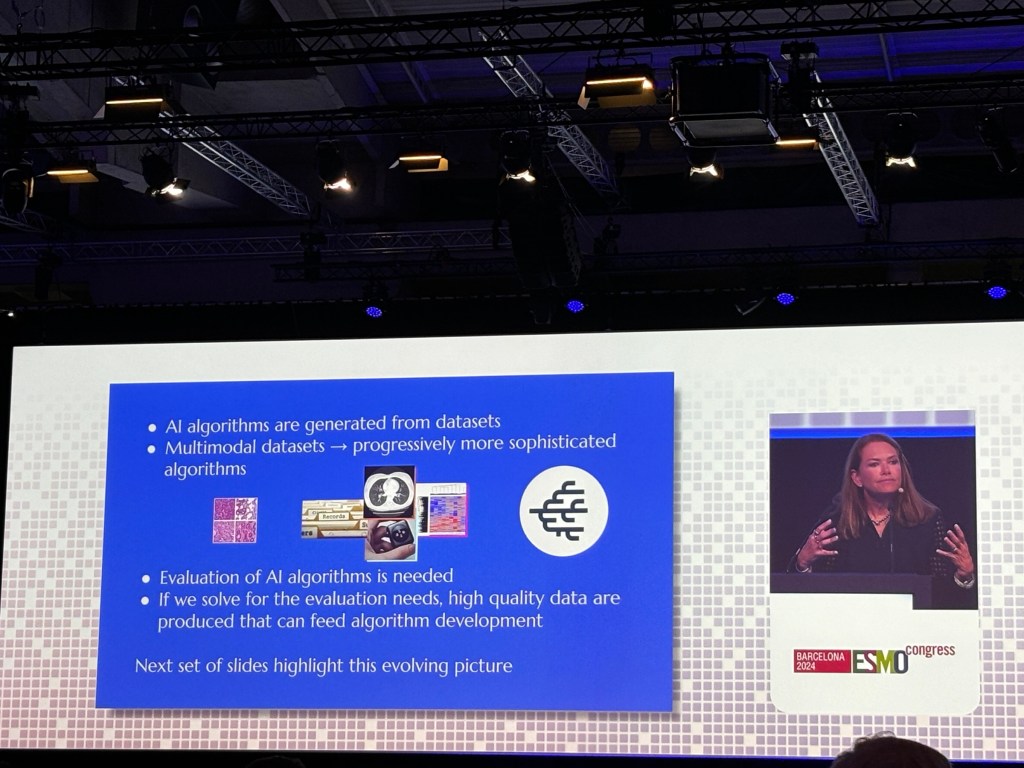
Would AI make a difference in diagnosis and treatment of cancer patients?
Yes, it will play an important role in choosing the right treatments for individual cancer patient.
At present, a blanket treatment approach is used where subgroups of patients are treated in the same way. Not everyone responds to a particular cancer treatment and some people would develop resistance after an initial response to a particular treatment.
AI can help to move from this blanket treatment approach for whole group of patients
AI can help us move towards a personalised approach; it can help us to predict resistance and response to a particular treatment
AI can help in new drug development.
AI seems to the future
A word of caution. AI is not ready for routine clinical use yet. AI Algorithms need to be validated before day to day clinical use.
A recent study conducted in U.K. later looked at the problem of smoking in pregnant women.
The study gave money to pregnant women if women stopped smoking.
The study found that giving money up to 400 pounds made some women stop smoking but sadly, the women stopped smoking only for a short period. After six months, there was NO significant difference between women given money and women given only usual advice about smoking.
The first issue with this study is the principle of “inducing / bribing” people with money to give up unhealthy habits. Shouldn’t the healthcare staff educate women rather than giving money for bad behaviour?
The second issue is no one knows whether the money was used wisely. Pregnant women who smoke are likely to have other vices such as unhealthy diet, physical inactivity, alcohol misuse, use of recreational drugs etc. Unhealthy behaviours cluster.
Giving money may have encouraged the women to stop smoking temporarily but the money could have used by women to replace smoking with other unhealthy behaviours. Unfortunately, the study doesn’t seem to looked at this problem.
In the study, two thirds of adverse events occurred in women given money vouchers. The authors have naively dismissed them as unrelated. The increase in adverse events suggests that women, who were given money, may have used the money unwisely. Perversely this well intentioned attempt to encourage good behaviour seem to have caused harm !
Finally, most women who smoke during pregnancy are likely to be from lower socioeconomic group. Poverty is the underlying reason for most of their problems in life including unhealthy habits.
The Healthcare staff in UK are dealing with multiple crisis at present. It is beyond the ability of NHS staff to deal with poverty. The government through social services and public-health team should deal with poverty.
Effect of financial voucher incentives provided with UK stop smoking services on the cessation of smoking in pregnant women (CPIT III): pragmatic, multicentre, single blinded, phase 3, randomised controlled trial. BMJ 2022; 379 doi: https://doi.org/10.1136/bmj-2022-071522 (Published 19 October 2022)
Disclaimer: Please note – This blog is NOT medical advice. This blog is NOT a expert medical opinion on various topics. This blog is purely for information only and do check the sources where cited. Please DO consult your own doctor to discuss concerns and options relevant to you. The views expressed in this blog are NOT, in any way whatsoever, intended to be a substitute for professional advice. The blog is NOT previewed, commissioned or otherwise endorsed, in any way, by any organisation that the author is associated with. The views expressed in this blog likely represents some of the author’s personal views held at the time of drafting the blog and MAY CHANGE overtime, particularly when new evidence comes to light.
BMJ. Associations between statins and adverse events in primary prevention of cardiovascular disease: systematic review with pairwise, network, and dose-response meta-analyses BMJ 2021; 374 doi: https://doi.org/10.1136/bmj.n1537 (Published 15 July 2021) Cite this as: BMJ 2021;374:n1537
Disclaimer: Please note- This blog is NOT medical advice. This blog is NOT a expert medical opinion on various topics. This blog is purely for information only and do check the sources where cited. Please DO consult your own doctor to discuss concerns and options relevant to you. The views expressed in this blog represent the author’s personal views held at the time of drafting the blog and may change overtime, particularly when new evidence comes to light. The blog is NOT previewed, commissioned or otherwise endorsed by any organisation that the author is associated with. The views expressed in this blog are NOT, in way whatsoever, intended to be a substitute for professional advice.
According to a recent large study which analysed ‘habitual coffee consumption in 398,646 UK Biobank participants aged 37–73 years’.
The study found that “High coffee consumption was associated with smaller total brain volumes and increased odds of dementia”.
In particular, consumption of >6 cups/day was associated with 53% higher odds of dementia compared to consumption of 1–2 cups/day.
A word of caution applies to all ‘food and disease’ association reports. Almost every week there are newspaper reports of studies exploring associations between “various food/drink” with “various diseases”. Some of them are conflicting and confusing with a positive study followed by a negative study !
This study report is no different in that respect.
A previous review published in 2017 concluded that ‘Drinking Coffee was often associated with Health benefits than harm for a range of health outcomes’.
The 2017 review in particular concluded that ‘Coffee consumption reduced risk of Alzheimer’s disease’.
So how to make sense of these two conflicting study reports ?
A 2021 negative report versus a 2017 positive report.
One can look for quality of studies, pedigree of authors and further confirmatory studies .
But there are no easy answers.
Everything in moderation is perhaps the most sensible thing when it comes to Food and Drink.
BMJ Minerva. Calcification in arteries . . . and other stories BMJ 2021; 374 doi: https://doi.org/10.1136/bmj.n1901 (Published 05 August 2021) Cite this as: BMJ 2021;374:n1901
BMJ. Coffee consumption and health: umbrella review of meta-analyses of multiple health outcomes BMJ 2017; 359 doi: https://doi.org/10.1136/bmj.j5024 (Published 22 November 2017) Cite this as: BMJ 2017;359:j5024
Disclaimer: Please note – This blog is NOT medical advice. This blog is NOT a expert medical opinion on various topics. This blog is purely for information only and do check the sources where cited. Please DO consult your own doctor to discuss concerns and options relevant to you. The views expressed in this blog are NOT, in way whatsoever, intended to be a substitute for professional advice. The blog is NOT previewed, commissioned or otherwise endorsed, in any way, by any organisation that the author is associated with. The views expressed in this blog likely represents some of the author’s personal views held at the time of drafting the blog and MAY CHANGE overtime, particularly when new evidence comes to light.
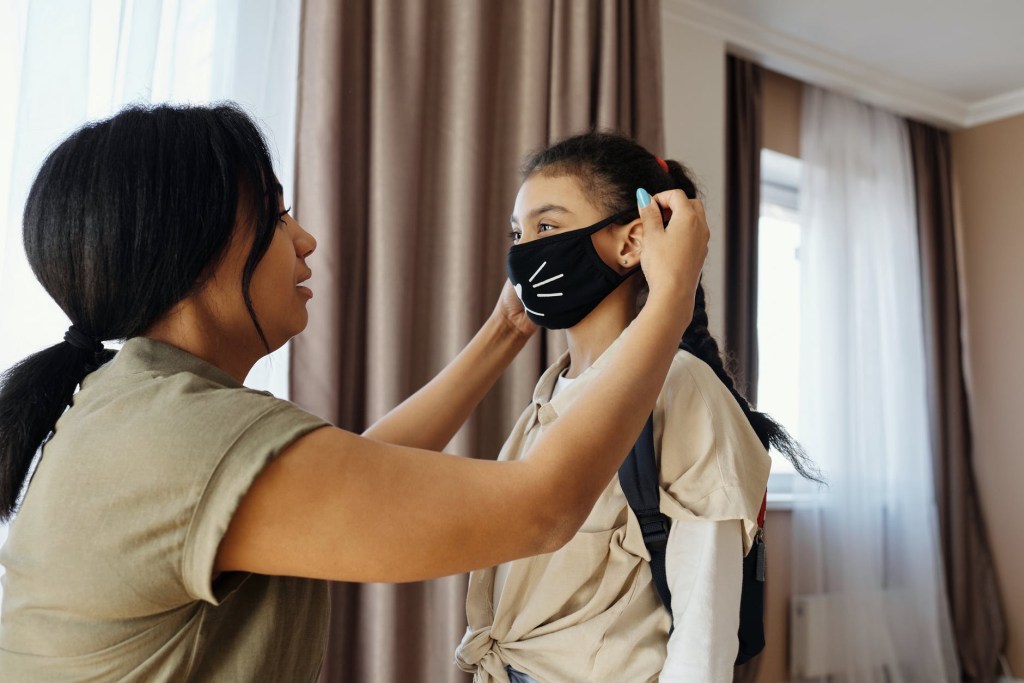
Yes, we should be cautious after the freedom day on July 19th and this is for the following reasons.
1. Vaccines are highly effective but they are NOT 100% effective.
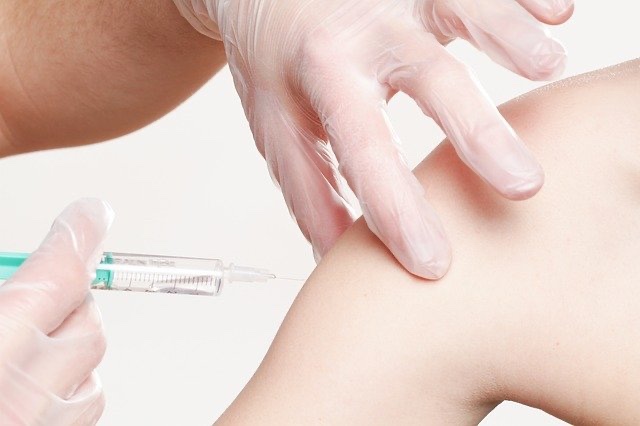
2. Two doses are needed for full protection. Even though, more than two third of adults have had atleast one vaccine, only about half the U.K. population had double vaccination so far.
3. Vaccine Protection against New COVID variants may NOT be as good as it is now. For instance , vaccines are slightly less effective against the delta variant particularly after first dose.
4. Vaccine protection may decrease over time and Vaccines may not give the same level of protection as months pass by.
4. Being cautious now, may helps us to avoid lockdowns during Autumn and would help to save Christmas !
Public Health England. Press release Vaccines highly effective against hospitalisation from Delta variant New analysis by PHE shows for the first time that 2 doses of COVID-19 vaccines are highly effective against hospitalisation from the Delta (B.1.617.2) variant. Published 14 June 2021
Disclaimer: Please note- This blog is NOT medical advice. This blog is NOT a expert medical opinion on various topics. This blog is purely for information only and do check the sources where cited. Please DO consult your own doctor to discuss concerns and options relevant to you. The views expressed in this blog represent the author’s views held at the time of drafting the blog and may change overtime, particularly when new evidence comes to light. The blog is not previewed, commissioned or otherwise endorsed by any organisation that the author is associated with. The views expressed in this blog are not, in way whatsoever, intended to be a substitute for professional advice.
Worries about vaccines are nothing new. Anti_vaccination groups were formed in 1860s when small pox vaccination was made compulsory. Even when small pox was causing untold devastation, some people were opposed to it.
The Vaccine hesitancy of 19th century is somewhat excusable. Some of the worries were real, and not much was known about the safety of small pox vaccine at that time. Lot of people were ill-informed and did not have access to good sources of information. They didn’t know the immense potential of the vaccination to eliminate distressing diseases.
Vaccines have now successfully eradicated small pox. Many other devastating infectious diseases such as polio have been controlled in many countries across the globe due to the vaccines.
Some of the vaccine hesitancy in west is because western people are not fully aware of the devastating power of infectious diseases (at least until COVID-19 came to the world in 2020).
Vaccine hesitancy is also sustained by “confirmation bias” . Confirmation bias is the tendency of human beings to seek information that confirms what they believe in. If you distrust vaccines, you go looking for information that confirms you beliefs and you disregard information that proves vaccines are hugely beneficial.
Some people wish for a 100% safe vaccine. But there is no such thing as completely risk free vaccine. It is true Vaccines can cause serious side effects. It is true that Vaccines can cause long term side effects. It is true that Vaccines can rarely cause life threatening side effects and even deaths.
It is normal to worry about side effects of vaccines. But the potential for side effects should not be the reason to decline vaccination.
One has to look at benefits as well as risks. Some people focus on everything bad that can happen as a result of vaccines.
COVID-19 vaccines had an unusually short development period. This is because of the pandemic. The available evidence indicate that the benefits of the vaccines are far greater than risks. It is true that there is no long term safety data. But in the middle of a pandemic, which has caused untold misery to millions, waiting for perfect long term data is not an option.
If you are sceptical about vaccines, please do focus on benefits as well as risks. Do not focus on risks only.
References
BMJ. Practice Pointer. Covid-19 vaccination hesitancy. BMJ 2021; 373 doi: https://doi.org/10.1136/bmj.n1138 (Published 20 May 2021) Cite this as: BMJ 2021;373:n1138
BMJ. News. Covid-19: Pfizer-BioNTech vaccine is “likely” responsible for deaths of some elderly patients, Norwegian review finds. BMJ 2021; 373 doi: https://doi.org/10.1136/bmj.n1372 (Published 27 May 2021) Cite this as: BMJ 2021;373:n1372
Disclaimer: Please note- This blog is NOT medical advice. This blog is NOT a expert medical opinion on various topics. This blog is purely for information only and do check the sources where cited. Please DO consult your own doctor to discuss concerns and options relevant to you. The views expressed in this blog represent the author’s views held at the time of drafting the blog and may change overtime, particularly when new evidence comes to light. The blog is not previewed, commissioned or otherwise endorsed by any organisation that the author is associated with. The views expressed in this blog are not, in way whatsoever, intended to be a substitute for professional advice.
















 Dr S Sundar