New treatment for 2nd line treatment of pancreatic cancer

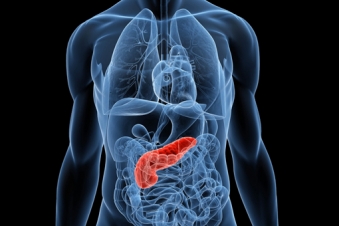
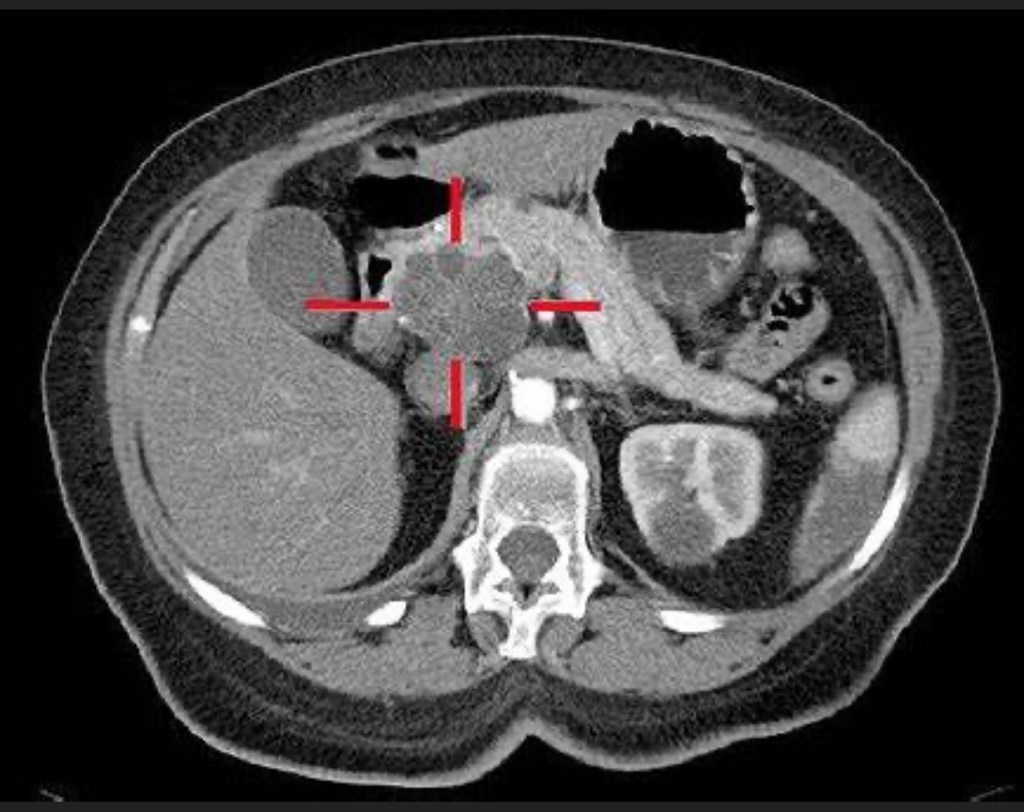
Pancreatic cancer: image from Wikipedia

Pancreatic cancers patients have worse prognosis than most other common cancers. The cancer research UK states only “25 out of every 100 (25%) survive their cancer for 1 year or more”.

Chemotherapy is the main treatment for advanced pancreatic cancer.

While immunotherapy and targeted therapy options have made great inroads into successfully prolong lives of patients with various other cancers, pancreatic cancer patients were left behind.

Only a small minority of pancreatic cancer patients benefited from targeted therapy so far.

Now there is a breakthrough !

Daraxonrasib is the name of the promising new drug.

Trial results were presented and discussed at the ASCO 2026 Annual Meeting in Chicago ( ASCO- American Society of Clinical Oncology).

The study author’s presentation of trial results of Daraxonrasib in pancreatic cancer received a standing ovation!

Daraxonrasib (“darax”) doubled the survival pancreatic cancer patients in the second line setting .

Results are extraordinary and are now published in the prestigious New England Journal of Medicine.

The drug will be the standard of care now in 2nd line setting.

A word of caution about availability!

American FDA has given the green light but it might take many months before it becomes available in European Hospitals for pancreatic cancer patients.

References

Lay public summary. ASCO. Oral targeted therapy slows pancreatic cancer growth, improves overall survival. Published 31 May 2026.

ASCO 2026: Daraxonrasib, a RAS(ON) multi-selective inhibitor vs chemotherapy in previously treated metastatic pancreatic adenocarcinoma (mPDAC): Primary and final analysis from the phase 3 RASolute 302 study. Abstract LBA5

Guardian newspaper. Daily pill can double survival time for world’s deadliest cancer, trial shows: Experts hail daraxonrasib as ‘gamechanger’ for patients with advanced pancreatic cancer

BBC News. Daily pill doubles survival time for pancreatic cancer patients
MHRA UK

Disclaimer: Please note – This blog is NOT medical advice. This blog is NOT a expert medical opinion on various topics. This blog is purely for information research only and do check the sources where cited. But the author cannot vouch for scientific integrity of the sources cited and author is not responsible for any information in any advert on those cited pages. Please DO consult your own doctor to discuss concerns and options, which are directly relevant and specific to you. The views expressed in this blog are NOT, in any way whatsoever, intended to be a substitute for professional advice. The blog is NOT previewed, commissioned or otherwise endorsed, in any way, by any organisation that the author is associated with. The views expressed in this blog likely represents some of the author’s personal views held at the time of drafting this blog and MAY CHANGE overtime, particularly when new evidence comes to light.


Anything potentially good from this COVID-19 pandemic?

It might seem foolish to ask the question “Anything good from this COVID-19 pandemic?” when so many people across the world has been so badly affected by the coronavirus pandemic.

There is some truth in the proverb that “every dark cloud has a silver lining” and no matter how bad the current pandemic is now, human spirit and endeavour would get something positive out of it.

One possible good thing that has come out of the pandemic is the “mRNA technology”.

Of the three vaccines so far, two of them the Pfizer vaccine and the Moderna vaccine are based on RNA technology.

The successful use of RNA technology for Coronavirus Vaccines would hopefully enable the versatile RNA technology to be further developed and successfully used a cancer treatment in near future.

Further clinical trials in cancer patients would be done to provide proof of their potential.

References:

Bloomberg. Technology & Ideas. mRNA Vaccines Could Vanquish Covid Today, Cancer Tomorrow.
The best news about the mRNA shots from BioNTech and Moderna is that the same technique could also defeat many other diseases.

MSKCC. In a Twist, Scientists Find Cancer Drivers Hiding in RNA, Not DNA.

Jerusalem Post Health & Science. Israeli scientists use mRNA COVID-19 vaccine technology to fight cancer. By MAAYAN JAFFE-HOFFMAN NOVEMBER 24, 2020 20:08

Disclaimer: Please note- This blog is NOT medical advice. This blog is purely for information only and do check the the sources where cited. Please DO consult your own doctor to discuss concerns and options relevant to you.

The views expressed in this blog represent the author’s views held at the time of drafting the blog and may change overtime, particularly when new evidence comes to light. The blog is not necessarily endorsed by any organisation the author is associated with and the authors views are not in way intended to be a substitute for professional advice.

Cancer treatment delays during the pandemic

The Staff at National Health Service in UK are doing an admirable job during the pandemic. In the particular, the frontline staff (“patient-facing”) are showing great courage in face of great difficulties and are primarily driven by altruism.

But the pressures of pandemic means many routine scans and hospital clinic appointments have been cancelled particularly during the first wave. There is a great worry about delayed diagnosis of cancer and delayed treatment of cancer.

A paper in BMJ reports that cancer patients survival can be significantly compromised.

But, as with everything else in life, things are not always what they look like at first impression. Even things that are logical and common sense at first glance do not turn out to be simple and clear.

Firstly, delays and cancellations of scans paradoxically could have psychologically benefited some cancer patients . This might seem counterintuitive or even an outrageous statement.

But there are some cancers which are being over diagnosed. A Cancer diagnosis does not always mean a death sentence. Some cancers do not cause problems for a long time or never in the life time of a person. These cancers do not need to be diagnosed promptly. Not being diagnosed with these cancers prevents the psychological burden of a cancer diagnosis. This “over diagnosis” would be expectedly less during pandemic.

Secondly, treatment delays could be caused by a cancer that is advanced and the need for time consuming additional investigations and procedures. Sometimes delays are caused by patients needing to see many medical specialists for the treatment. So it’s the aggressive cancer and the complex patient care that would cause the delay and is responsible for poor outcome rather than the delay by itself.

Read the BMJ article and make your views known.

Mortality due to cancer treatment delay: systematic review and meta-analysis
BMJ 2020; 371 doi: https://doi.org/10.1136/bmj.m4087 (Published 04 November 2020)
Cite this as: BMJ 2020;371:m4087

Overdiagnosis in Cancer
H. Gilbert Welch, William C. Black
JNCI: Journal of the National Cancer Institute, Volume 102, Issue 9, 5 May 2010, Pages 605–613, https://doi.org/10.1093/jnci/djq099

Disparities in head and neck cancer: assessing delay in treatment initiation
Urjeet A Patel et al. Laryngoscope. 2012 Aug.

Khorana AA, Tullio K, Elson P, Pennell NA, Grobmyer SR, Kalady MF, et al. (2019) . Time to initial cancer treatment in the United States and association with survival over time: An observational study. PLoS ONE 14(4): e0215108. doi:10.1371/journal.pone.0215108

How to communicate that the disease is mild even though symptoms are disabling?

women s white long sleeved top

Beth McHugh makes a strong argument for doctors “not to explicitly discuss disease severity scale”.

But

(1) A valid informed consent would then become difficult

(2) Not discussing severity, is not a practical option for patients with certain illness.

My BMJ eLetter on this topic…

Risk categorisation will continue to be the norm in future as genomic data leads to personalised medicine.

England’s 100 000 Genomes Project