How long can a man with aggressive prostate cancer live?

Many people were shocked by the news that president Joe Biden, aged 82, has been diagnosed with aggressive prostate cancer.

Prostate cancer is quite common in men in their eighties. Nearly two third of men in eighties would have prostate cancer and most of these men do not die of prostate cancer! This is because lot of the cancers in elderly men are low to medium risk.

But men who develop aggressive prostate cancer are at higher risk of death from prostate cancer. Aggressive prostate cancer can spread to bone and other organs.

It has to be pointed out that aggressive prostate cancer is not immediately terminal in vast majority of men, even if the cancer has spread to bone.

With modern hormone treatments, men can have a prognosis of many years.

References

  1. BBC. Joe Biden diagnosed with ‘aggressive’ prostate cancer
  2. CRUK. Prostate Cancer incidence statistics .
  3. CRUK. Prostate cancer survival statistics.
  4. NEJM. Apalutamide for Metastatic, Castration-Sensitive Prostate Cancer.
  5. Lancet. Abiraterone acetate plus prednisolone with or without enzalutamide for patients with metastatic prostate cancer starting androgen deprivation therapy: final results from two randomised phase 3 trials of the STAMPEDE platform protocol.

Disclaimer: Please note – This blog is NOT medical advice. This blog is NOT a expert medical opinion on various topics. This blog is purely for information research only and do check the sources where cited. Please DO consult your own doctor to discuss concerns and options, which are relevant and specific to you. The views expressed in this blog are NOT, in any way whatsoever, intended to be a substitute for professional advice. The blog is NOT previewed, commissioned or otherwise endorsed, in any way, by any organisation that the author is associated with. The views expressed in this blog likely represents some of the author’s personal views held at the time of drafting the blog and MAY CHANGE overtime, particularly when new evidence comes to light.

New treatment option for advanced prostate cancer patients

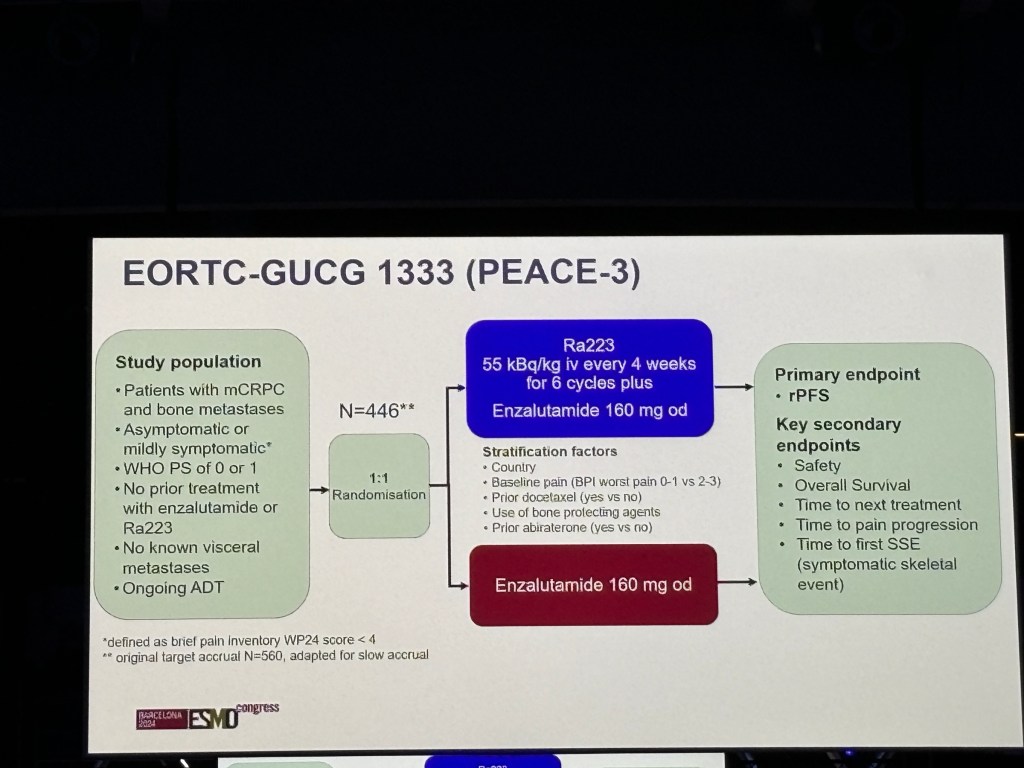
Advanced prostate patients were treated with hormone injections only in the past. When these advanced cancer patients were no longer responding to those hormone injections, tablets such as Enzalutamide , Apalutamide and Abiraterone were added to the hormone injections.

A new combination has become available for use in these patients.

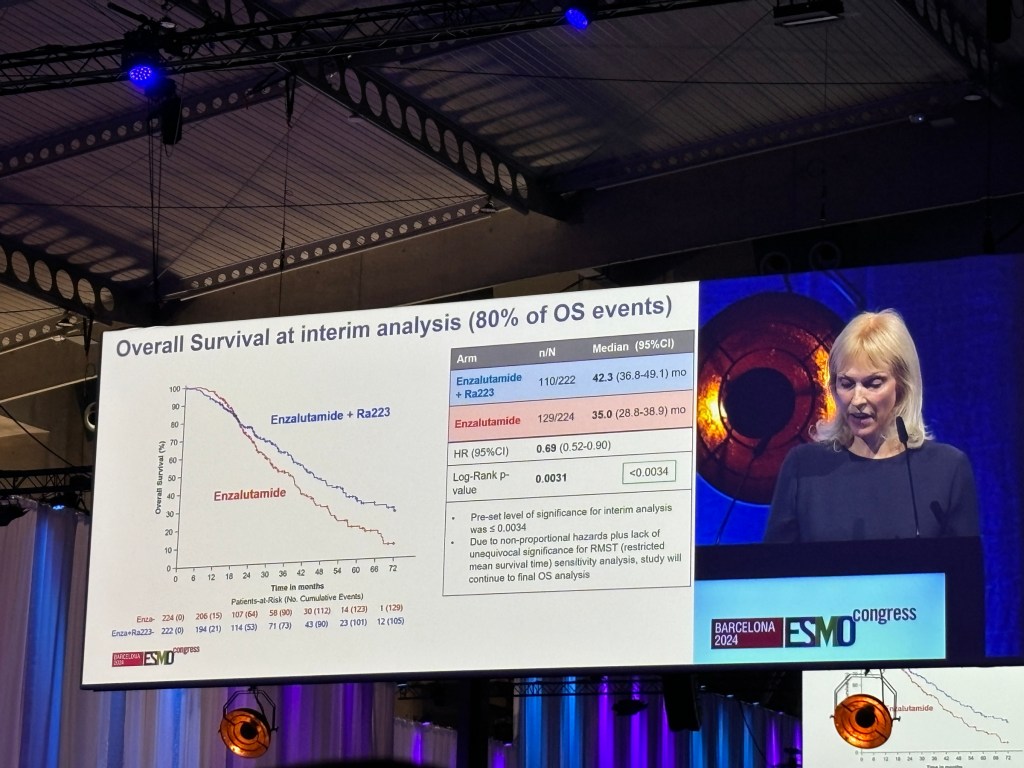
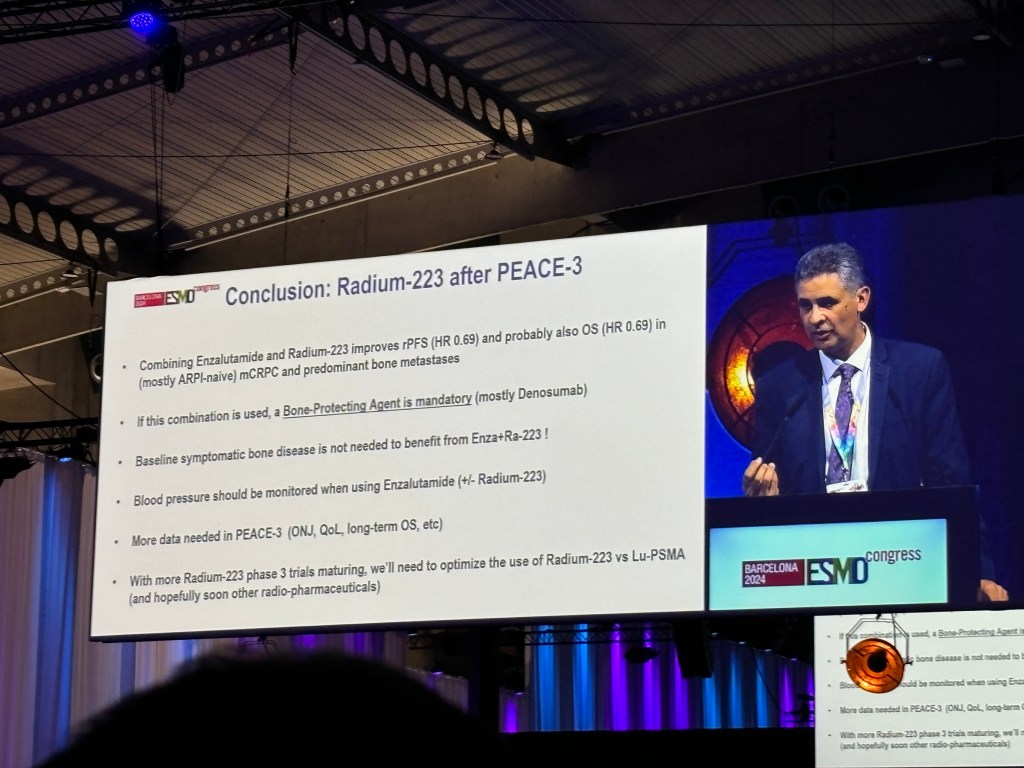
Data presented at the ESMO Congress 2024 (Barcelona, 13–17 September) demonstrated the potential of combining Enzalutamide and Radium 223 injections.

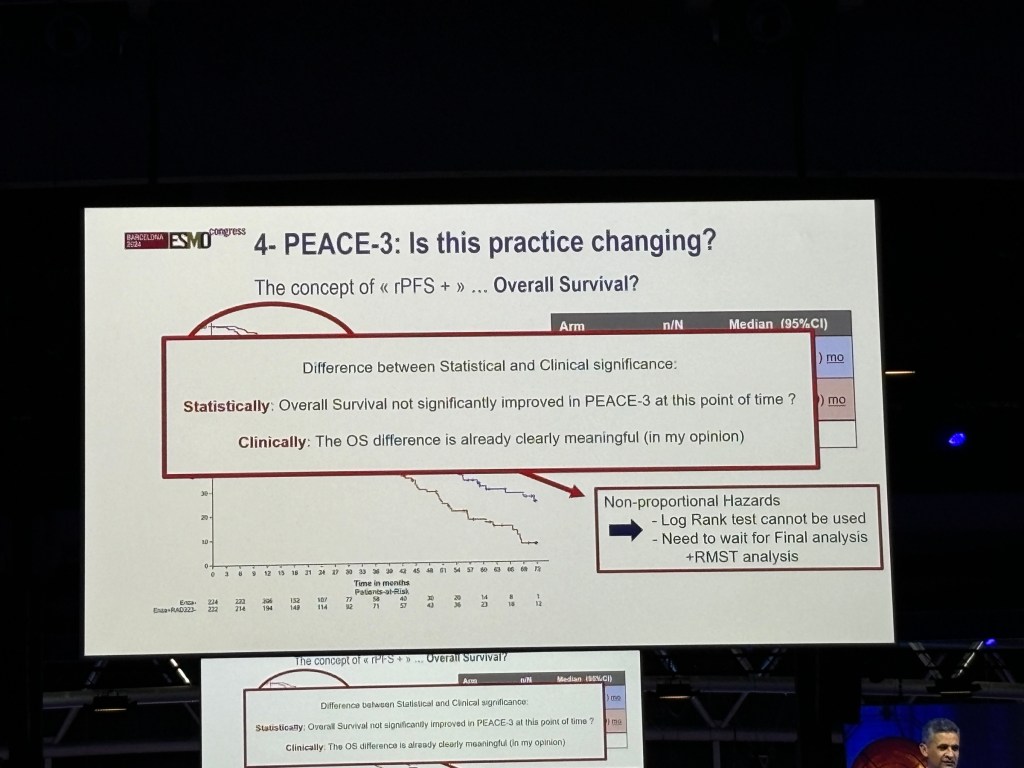
The combination Enzalutamide and Radium 223 injections was better than Enzalutamide tablets alone.

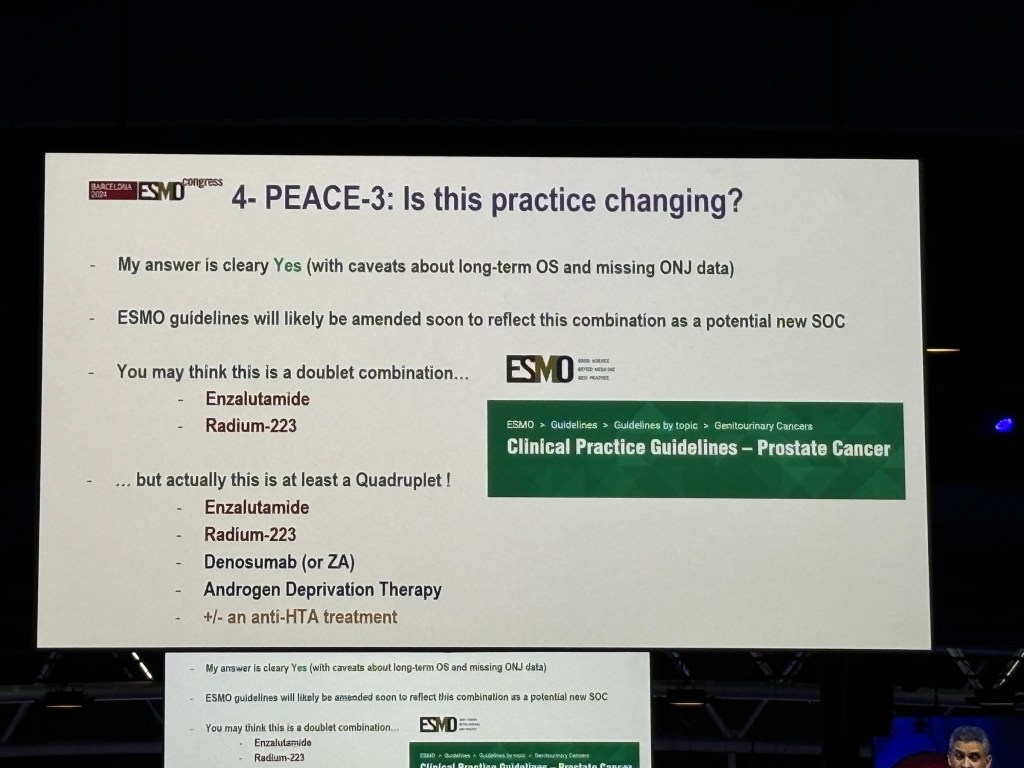
The combination is likely to become a standard of care for these patients.

The only caveat is that a lot of advanced cancer patients are nowadays treated with hormone injections and tablets upfront. This trial data does not directly apply to these patients.

Disclaimer: Please note – This blog is NOT medical advice. This blog is NOT a expert medical opinion on various topics. This blog is purely for information only and do check the sources where cited. Please DO consult your own doctor to discuss concerns and options relevant to you. The views expressed in this blog are NOT, in any way whatsoever, intended to be a substitute for professional advice. The blog is NOT previewed, commissioned or otherwise endorsed, in any way, by any organisation that the author is associated with. The views expressed in this blog likely represents some of the author’s personal views held at the time of drafting the blog and MAY CHANGE overtime, particularly when new evidence comes to light.

A new blood test for cancer

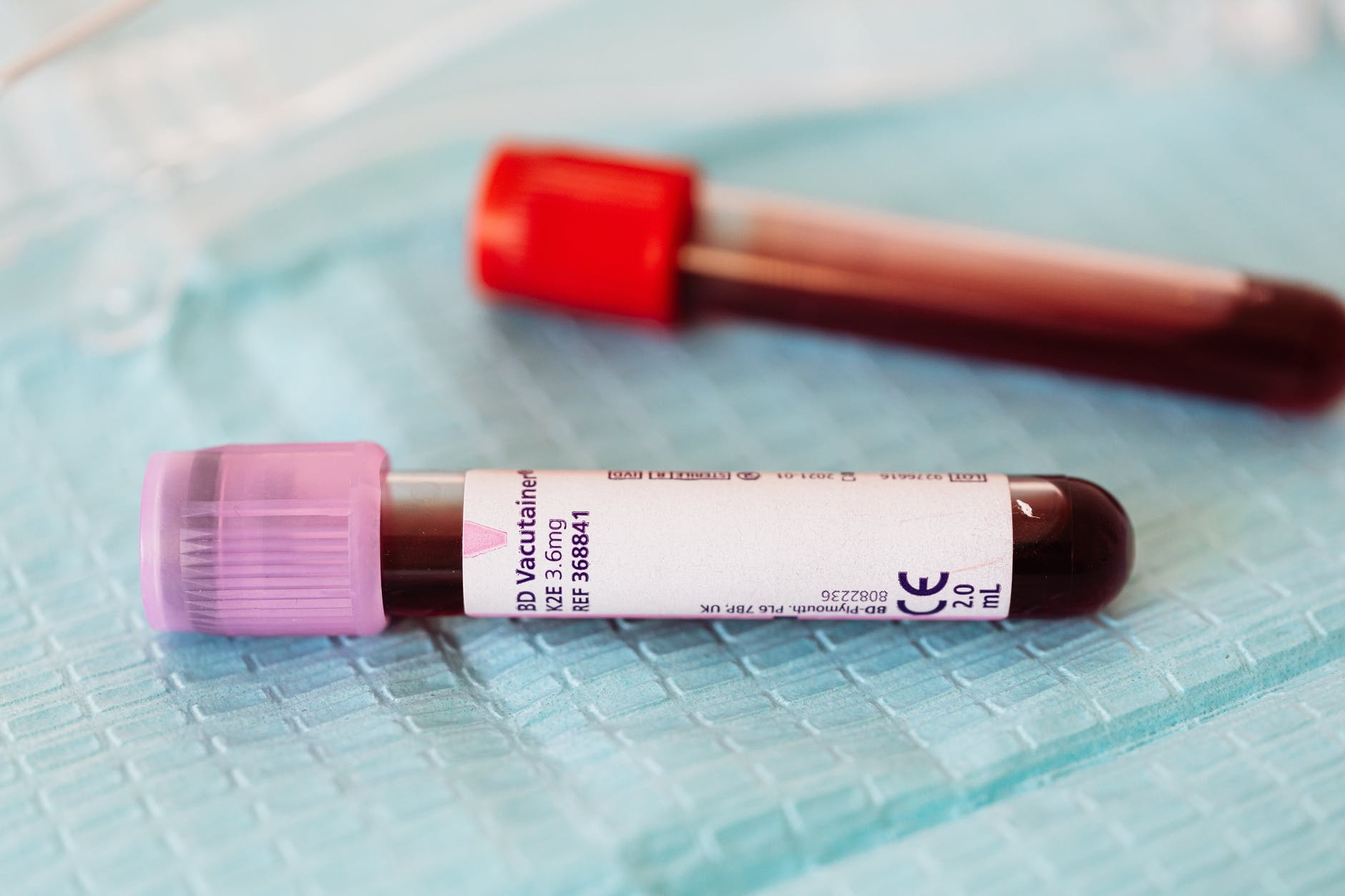
Cancer cells can float in a person’s blood. But finding them, in the past, used to be like “looking for a needle in a haystack”.

But new smart technology promises to detect these cancer cells easily and much early before a person develops symptoms. Detection of cancer cells at an early stage may be helpful for some patients.

A recently published study in the journal “Annals of Oncology” reports exciting results.

A Californian company called Grail has developed a blood test which seems to have a high degree of accuracy for detection of multiple cancers.

Times newspaper reports that “The NHS will begin a pilot scheme of the test with 140,000 people this year. If that is successful it will be used for millions of patients by 2025”

A word of caution though.

Just because something could be diagnosed early does not always mean that it is a good thing.

The most important thing is whether the early diagnosis can lead to better cure rates and a better quality of life.

If a test detects a cancer early but has no meaningful effect on quantity or quality of life, then it is not a good thing.

For example. Up to 80% of men have prostate cancer which can now be detected by a simple blood test called PSA. There is a good reason why we are NOT using the simple PSA test in every 80 year old.

Most 80 year old men die WITH prostate cancer rather than DUE to prostate cancer.

So why diagnose a cancer that is not causing symptoms if it is not going to make person live longer !

REFERENCES

Times. New blood test, created by Californian company Grail, detects cancers among over-50s. Kat Lay, Health Editor. Friday June 25 2021, 12.01am, The Times.

Clinical validation of a targeted methylation-based multi-cancer early detection test using an independent validation set. E A Klein et al. Ann Oncol. 2021.

Guardian. Blood test that finds 50 types of cancer is accurate enough to be rolled out.
Diagnostic tool being piloted by NHS England shows ‘impressive results’ in spotting tumours in early stages
Blood tests’ development could help the NHS further.
Nadeem Badshah and agency
Fri 25 Jun 2021 06.00 BST

Daily Mail. NHS trials ‘holy grail’ blood test that can spot 50 kinds of cancer: Ground-breaking check that can accurately detect two thirds of deadly cancers early in healthy people could save thousands of lives a year. By Victoria Allen Science Correspondent For The Daily Mail
00:00, 25 Jun 2021 , updated 10:04, 25 Jun 2021

NHS. Should I have a PSA test?

Disclaimer: Please note- This blog is NOT medical advice. This blog is NOT a expert medical opinion on various topics. This blog is purely for information only and do check the sources where cited. Please DO consult your own doctor to discuss concerns and options relevant to you. The views expressed in this blog represent the author’s views held at the time of drafting the blog and may change overtime, particularly when new evidence comes to light. The blog is not previewed, commissioned or otherwise endorsed by any organisation that the author is associated with. The views expressed in this blog are not, in way whatsoever, intended to be a substitute for professional advice.
Should a patient avoid a surgeon on the surgeons’ birthday?

If you are going to have an emergency surgery, it may be worthwhile asking your surgeon whether it is their birthday on that day.

If you accept the findings of a recent study at face value, one should weigh up the pros and cons of seeking a different surgeon if one is available or request your surgeon to be extra careful.

An intriguing paper published in BMJ recently suggests so. The study looked at the outcome of Medicare patients who underwent emergency surgery in USA. It is a very large study in which 980876 procedures performed by 47489 surgeons were analyzed. Hence the study findings do need to be taken very seriously.

The study found that patients operated by surgeons on the surgeons’ birthday had a higher risk of death.

The study provocatively suggests, without any direct proof, that surgeons were possibly distracted on their birthdays and in their rush to go to their birthday celebration, they might have done “botched emergency surgeries” by not concentrating properly during surgery and by not providing good post-operative care.

The findings are entirely plausible from behavioural psychology point of view and the study authors seem to have done a thorough statistical analysis of various factors that could have spuriously affected the death rates.

Nevertheless, there remains a distinct possibility that the study findings are spurious. For instance, the scientific community is aware of the fact that if “any data is tortured enough”, the dataset will cough up spurious and unexpected results.

Apart from data dredging , one has to take findings from observational studies with a “pinch of salt”. That’s why we often see conflicting results about Nutrition published in Newspapers all the time.

Genuine Surgical errors can sometimes lead to death but much more commonly surgical errors can often lead to increase in rate of surgical complications. It is a bit of stretch for the study to suggest that surgeons all over the country are doing “ technically poor surgeries” everyday if that day happens to be their birthday and they are doing it in such a way to cause deaths without causing any surgical complications.

We don’t know whether the study inadvertently looked at male surgeons working on weekends at rural non-teaching hospitals as these factors could have a bearing on death rates.

Sad life events can adversely affect the work performance of any human being. But happy people are more productive at work. So the conclusion by the study that a happy event, such as a birthday, can adversely affect a surgeon’s performance deserves more scrutiny in a well designed study.

Read the full paper at BMJ website and share your views at the BMJ rapid response section.

References.(1). BMJ. Patient mortality after surgery on the surgeon’s birthday: observational study. BMJ 2020; 371 doi: https://doi.org/10.1136/bmj.m4381 (Published 10 December 2020)
Cite this as: BMJ 2020;371:m4381

(2) Conflicting healthy eating advice leaving public ‘clueless’, poll suggests. Rob Knight
Tuesday 16 July 2019 14:56

(3). Does Employee Happiness have an Impact on Productivity?. Saïd Business School WP 2019-13

Disclaimer: Please note- This blog is NOT medical advice. This blog is purely for information only and do check the the sources where cited. Please consult your own doctor to discuss concerns and options relevant to you.

The views expressed in this blog represent the author’s views held at the time of drafting the blog and is likely to change overtime, particularly when new evidence comes to light. The blog is not necessarily endorsed by any organisation the author is associated with and views are not substitute for professional advice.
Cancer treatment delays during the pandemic

The Staff at National Health Service in UK are doing an admirable job during the pandemic. In the particular, the frontline staff (“patient-facing”) are showing great courage in face of great difficulties and are primarily driven by altruism.

But the pressures of pandemic means many routine scans and hospital clinic appointments have been cancelled particularly during the first wave. There is a great worry about delayed diagnosis of cancer and delayed treatment of cancer.

A paper in BMJ reports that cancer patients survival can be significantly compromised.

But, as with everything else in life, things are not always what they look like at first impression. Even things that are logical and common sense at first glance do not turn out to be simple and clear.

Firstly, delays and cancellations of scans paradoxically could have psychologically benefited some cancer patients . This might seem counterintuitive or even an outrageous statement.

But there are some cancers which are being over diagnosed. A Cancer diagnosis does not always mean a death sentence. Some cancers do not cause problems for a long time or never in the life time of a person. These cancers do not need to be diagnosed promptly. Not being diagnosed with these cancers prevents the psychological burden of a cancer diagnosis. This “over diagnosis” would be expectedly less during pandemic.

Secondly, treatment delays could be caused by a cancer that is advanced and the need for time consuming additional investigations and procedures. Sometimes delays are caused by patients needing to see many medical specialists for the treatment. So it’s the aggressive cancer and the complex patient care that would cause the delay and is responsible for poor outcome rather than the delay by itself.

Read the BMJ article and make your views known.

Mortality due to cancer treatment delay: systematic review and meta-analysis
BMJ 2020; 371 doi: https://doi.org/10.1136/bmj.m4087 (Published 04 November 2020)
Cite this as: BMJ 2020;371:m4087

Overdiagnosis in Cancer
H. Gilbert Welch, William C. Black
JNCI: Journal of the National Cancer Institute, Volume 102, Issue 9, 5 May 2010, Pages 605–613, https://doi.org/10.1093/jnci/djq099

Disparities in head and neck cancer: assessing delay in treatment initiation
Urjeet A Patel et al. Laryngoscope. 2012 Aug.

Khorana AA, Tullio K, Elson P, Pennell NA, Grobmyer SR, Kalady MF, et al. (2019) . Time to initial cancer treatment in the United States and association with survival over time: An observational study. PLoS ONE 14(4): e0215108. doi:10.1371/journal.pone.0215108

Hope and incurable Cancer: does hope torment or does it help to cope?

A diagnosis of incurable and advanced cancer is often a massive shock to everyone.

Should we ask them to face reality , accept death and extinguish all hope.

Or should we be offering hope of living a bit longer with treatments while being honest with prognosis.

Hope can be tormenting to some.

Hope can be comforting to some.

What are you views?

Contribute your views at online rapid response @BMJ journal

Don’t torment me with hope. BMJ 2020; 370 doi: https://doi.org/10.1136/bmj.m3016 (Published 09 September 2020)Cite this as: BMJ 2020;370:m3016

In defence of Hope: https://www.bmj.com/content/370/bmj.m3016/rr-3

Are Routine blood tests essential during follow up of low grade Lymphoma?

Bloods tests have the potential to pick up various abnormalities including cancer related abnormalities during follow up of cancers.

But , many patients would be surprised to know that there is ongoing debate about usefulness of routine blood tests atleast in some cancers !

In a recent study, Australian investigators assessed the role of routine blood tests during monitoring of patients with low grade lymphoma.

They found that routine blood tests rarely found or detected disease progression in patients who did not have any symptoms.

References

Routine Blood Tests in Asymptomatic Patients With Indolent Lymphoma Have Limited Ability to Detect Clinically Significant Disease Progression. DOI: 10.1200/JOP.19.00771 JCO Oncology Practice – published online before print June 25, 2020. PMID: 32584701

Effectiveness of Routine Blood Testing in Detection of Disease During Active Surveillance for Indolent Non-Hodgkin Lymphoma. By Matthew Stenger. Posted: 7/16/2020 1:40:00 PM . Last Updated: 7/29/2020 1:59:00 PM

Utility of Routine Surveillance Laboratory Testing in Detecting Relapse in Patients With Classic Hodgkin Lymphoma in First Remission: Results From a Large Single-Institution Study. DOI: 10.1200/JOP.19.00733 JCO Oncology Practice – published online before print May 5, 2020. PMID: 32369413

Disclaimer: Please note- This blog is NOT medical advice. This blog is purely for information only and do check the the sources where cited. Please consult your own doctor to discuss concerns and options relevant to you.

The views expressed in this blog represent the author’s views held at the time of publication and is likely to change overtime, particularly when new evidence comes to light. The blog is not necessarily endorsed by any organisation the author is associated with and views are not substitute for professional advice.
Can Coronavirus linger in air, and cause COVID-19 by spreading through air ?

Normally many flu-like viruses spread by direct or close contact.

Because Virus containing droplets are heavier than air, scientifically it is thought that when someone coughs or sneezes, virus particles quickly fall to ground or surrounding objects.(“like a brick or stone falling to ground“).

But a group of scientists and WHO have raised the possibility that coronavirus can stay in air for longer periods, float around and cause more infections. (“float like a balloon“). This is called air-borne transmission.

What does it mean?

If confirmed– this means “closed spaces” are high risk even if you maintain 2 metre distance from an infected person. AVOID CLOSED SPACES.

As many people in UK do not wear masks in public places, there is a high chance of second wave of infections in the coming weeks as lock down is eased. WEAR A MASK.

It also means avoiding non-essential visitors to hospitals so that visitors cannot catch the infection or pass the infection to vulnerable patients. AVOID NON-ESSENTIAL VISITORS AT HOSPITALS.

If air borne transmission is confirmed, it is also bad news for the coming winter.

If Coronavirus is still in community and not eliminated by winter, air-borne transmission is likely to result in further wave of infections.

This is because Winter means more closed spaces and more chance of infection !!!!!!

STAY SAFE

References

1. Daily Mail Newspaper. Group of 239 scientists demand that WHO admit coronavirus is AIRBORNE -meaning the public should wear masks indoors and AC units should be fitted with filters .By Ariel Zilber For Dailymail.com and Reuters and Associated Press. 17:44, 05 Jul 2020 , updated 08:14, 06 Jul 2020

2. Guardian Newspaper. WHO underplaying risk of airborne spread of Covid-19, say scientists. Open letter says there is emerging evidence of potential for aerosol transmission. Hannah Devlin. Science correspondent. @hannahdev

3. Guardian Newspaper. Coronavirus outbreak Global report: WHO says ‘evidence emerging’ of airborne coronavirus spread. Martin Farrer and agencies.

4. BBC News. Coronavirus: WHO rethinking how Covid-19 spreads in air.

5. It is Time to Address Airborne Transmission of COVID-19. Lidia Morawska, Donald K Milton. Clinical Infectious Diseases, ciaa939, https://doi.org/10.1093/cid/ciaa939. Published: 06 July 2020

Disclaimer: Please note- This blog is NOT medical advice. This blog is purely for information only and do check the the sources where cited. Please consult your own doctor to discuss concerns and options relevant to you.

The views expressed in this blog represent the author’s views held at the time of publication and is likely to change overtime, particularly when new evidence comes to light. The blog is not necessarily endorsed by any organisation the author is associated with and views are not substitute for professional advice.
Chloroquine not useful for treating or preventing Coronavirus infections

Randomised Study is the considered as the gold standard for trials.

Placebos are dummy pills . Placebos are inactive drugs that look like the real drug but are essentially sugar coated dummy pills.

Trials which involve a placebo vs active drug comparison are considered one of the best trials for some clinical situations.

A “randomised trial” involving “Chloroquine ” and “placebo ” has been published in NEJM .

A randomised trial suggests Chloroquine is not better than a placebo in treatment of COVID.

Another randomised trial suggests, Hydroxycloroquine is not useful for prevention of COVID-19.

In summary, Hydroxycloroquine is not useful either as COVID-19 treatment or as a COVID-19 preventative drug as advocates in certain countries.

Please Note : Chloroquine and HydroxyChloroquine are different drugs but have broadly similar effects.

References

1. Guardian newspaper: Coronavirus outbreak. Hydroxychloroquine no better than placebo, Covid-19 study finds.

2. NEJM. https://www.nejm.org/

3. BMJ India Correspondent. Covid-19: Doctors criticise Indian research agency for recommending hydroxychloroquine prophylaxis. BMJ2020;369:m2170. doi:10.1136/bmj.m2170 pmid:32471832.

4. BMJ news: Covid-19: Hydroxychloroquine does not benefit hospitalised patients, UK trial finds. BMJ 2020; 369 doi: https://doi.org/10.1136/bmj.m2263 (Published 08 June 2020)

5. BMJ news. Covid-19: Hydroxychloroquine was ineffective as postexposure prophylaxis, study finds. BMJ 2020; 369 doi: https://doi.org/10.1136/bmj.m2242 (Published 05 June 2020)

———————————————————————–

Disclaimer: Please note- This blog is NOT medical advice. This blog is purely for information only and do check the the sources where cited. Please consult your own doctor to discuss concerns and options relevant to you.

The views expressed in this blog represent the author’s views held at the time of publication and is likely to change overtime, particularly when new evidence comes to light. The blog is not necessarily endorsed by any organisation the author is associated with and views are not substitute for professional advice.

Cancer and COVID-19

Coronavirus infection seems to be more deadly in patients whose immune systems are not functioning very well.

So cancer patients who have reduced immunity due to chemotherapy are understandably at higher risk of death.

Among cancer patients, those patients whose cancer is progressing ( i.e cancer not under control ) seem to at even more from COVID-19.

A study presented at the ASCO ( American Society of Clinical Oncology) reports that ” after a COVID-19 diagnosis, patients with progressing cancer were found to be 5.2 times more likely to die within 30 days”.

So stay safe and consider shielding if your cancer is not under control .

Furthermore, there is lot of interest in use of Chloroquine, an anti-malaria drug for treatment of COVID-19. The study reports that “Treatment with the drug combination hydroxychloroquine and azithromycin was also strongly associated with greater risk of death”. So best to avoid unproven treatments outside a trial setting.

References

1. ASCO News. Early Data Show Cancer Progression Associated With Increased Risk of Death in Patients With COVID-19. May 28, 2020.

2. ASCO News. Chemo Within 3 Months of COVID-19 Diagnosis Associated With an Increased Risk of Death in Patients With Thoracic Cancer. May 2020.

Disclaimer: Please note- This blog is NOT medical advice. This blog is purely for information only and do check the the sources where cited. Please consult your own doctor to discuss concerns and options relevant to you.

The views expressed in this blog represent the author’s views held at the time of publication and is likely to change overtime, particularly when new evidence comes to light. The blog is not necessarily endorsed by any organisation the author is associated with and views are not substitute for professional advice.

“Think Positive “ and live longer !

People with sunny disposition seems to live longer.

Having a positive outlook on life seems to protect heart.

Is it a case of “chicken vs egg” in that what came first. Do healthy people have a optimistic outlook and pessimistic people have lot of social, personal and health problems. Do life problems make people pessimistic or being optimistic makes one do better?

Researchers have adjusted the data for confounding factors. Evidence so far is very intriguing.

And the next question is – can one learn to be optimistic, change personality and have beneficial health effects. We don’t know at present.

References

1. Guardian. Optimists have lower risk of heart problems and early death.

2. Guardian. Optimism may hold secret to longer life, study suggests.

3. The association of optimism and pessimism with inflammation and hemostasis in the Multi-Ethnic Study of Atherosclerosis (MESA)

4. JAMA. Association of Optimism With Cardiovascular Events and All-Cause Mortality

Disclaimer: Please note- This blog is NOT medical advice. This blog is purely for information only. See your own doctor to discuss concerns and options relevant for you.