A new blood test for cancer

Cancer cells can float in a person’s blood. But finding them, in the past, used to be like “looking for a needle in a haystack”.

But new smart technology promises to detect these cancer cells easily and much early before a person develops symptoms. Detection of cancer cells at an early stage may be helpful for some patients.

A recently published study in the journal “Annals of Oncology” reports exciting results.

A Californian company called Grail has developed a blood test which seems to have a high degree of accuracy for detection of multiple cancers.

Times newspaper reports that “The NHS will begin a pilot scheme of the test with 140,000 people this year. If that is successful it will be used for millions of patients by 2025”

A word of caution though.

Just because something could be diagnosed early does not always mean that it is a good thing.

The most important thing is whether the early diagnosis can lead to better cure rates and a better quality of life.

If a test detects a cancer early but has no meaningful effect on quantity or quality of life, then it is not a good thing.

For example. Up to 80% of men have prostate cancer which can now be detected by a simple blood test called PSA. There is a good reason why we are NOT using the simple PSA test in every 80 year old.

Most 80 year old men die WITH prostate cancer rather than DUE to prostate cancer.

So why diagnose a cancer that is not causing symptoms if it is not going to make person live longer !

REFERENCES

Times. New blood test, created by Californian company Grail, detects cancers among over-50s. Kat Lay, Health Editor. Friday June 25 2021, 12.01am, The Times.

Clinical validation of a targeted methylation-based multi-cancer early detection test using an independent validation set. E A Klein et al. Ann Oncol. 2021.

Guardian. Blood test that finds 50 types of cancer is accurate enough to be rolled out.
Diagnostic tool being piloted by NHS England shows ‘impressive results’ in spotting tumours in early stages
Blood tests’ development could help the NHS further.
Nadeem Badshah and agency
Fri 25 Jun 2021 06.00 BST

Daily Mail. NHS trials ‘holy grail’ blood test that can spot 50 kinds of cancer: Ground-breaking check that can accurately detect two thirds of deadly cancers early in healthy people could save thousands of lives a year. By Victoria Allen Science Correspondent For The Daily Mail
00:00, 25 Jun 2021 , updated 10:04, 25 Jun 2021

NHS. Should I have a PSA test?

Disclaimer: Please note- This blog is NOT medical advice. This blog is NOT a expert medical opinion on various topics. This blog is purely for information only and do check the sources where cited. Please DO consult your own doctor to discuss concerns and options relevant to you. The views expressed in this blog represent the author’s views held at the time of drafting the blog and may change overtime, particularly when new evidence comes to light. The blog is not previewed, commissioned or otherwise endorsed by any organisation that the author is associated with. The views expressed in this blog are not, in way whatsoever, intended to be a substitute for professional advice.


Cancer treatment delays during the pandemic

The Staff at National Health Service in UK are doing an admirable job during the pandemic. In the particular, the frontline staff (“patient-facing”) are showing great courage in face of great difficulties and are primarily driven by altruism.

But the pressures of pandemic means many routine scans and hospital clinic appointments have been cancelled particularly during the first wave. There is a great worry about delayed diagnosis of cancer and delayed treatment of cancer.

A paper in BMJ reports that cancer patients survival can be significantly compromised.

But, as with everything else in life, things are not always what they look like at first impression. Even things that are logical and common sense at first glance do not turn out to be simple and clear.

Firstly, delays and cancellations of scans paradoxically could have psychologically benefited some cancer patients . This might seem counterintuitive or even an outrageous statement.

But there are some cancers which are being over diagnosed. A Cancer diagnosis does not always mean a death sentence. Some cancers do not cause problems for a long time or never in the life time of a person. These cancers do not need to be diagnosed promptly. Not being diagnosed with these cancers prevents the psychological burden of a cancer diagnosis. This “over diagnosis” would be expectedly less during pandemic.

Secondly, treatment delays could be caused by a cancer that is advanced and the need for time consuming additional investigations and procedures. Sometimes delays are caused by patients needing to see many medical specialists for the treatment. So it’s the aggressive cancer and the complex patient care that would cause the delay and is responsible for poor outcome rather than the delay by itself.

Read the BMJ article and make your views known.

Mortality due to cancer treatment delay: systematic review and meta-analysis
BMJ 2020; 371 doi: https://doi.org/10.1136/bmj.m4087 (Published 04 November 2020)
Cite this as: BMJ 2020;371:m4087

Overdiagnosis in Cancer
H. Gilbert Welch, William C. Black
JNCI: Journal of the National Cancer Institute, Volume 102, Issue 9, 5 May 2010, Pages 605–613, https://doi.org/10.1093/jnci/djq099

Disparities in head and neck cancer: assessing delay in treatment initiation
Urjeet A Patel et al. Laryngoscope. 2012 Aug.

Khorana AA, Tullio K, Elson P, Pennell NA, Grobmyer SR, Kalady MF, et al. (2019) . Time to initial cancer treatment in the United States and association with survival over time: An observational study. PLoS ONE 14(4): e0215108. doi:10.1371/journal.pone.0215108

New treatment for Advanced Uterine Cancer

Women with advanced uterine / endometrial cancer are usually treated with chemotherapy.

Those who failed chemotherapy or those who are fit for chemotherapy are sometimes treated with hormone treatment.

Letrozole is one such hormone treatment for those patients with hormone sensitive cancer.

In breast cancer, Letrozole efficacy can be improved by a treatment called Palboclicib.

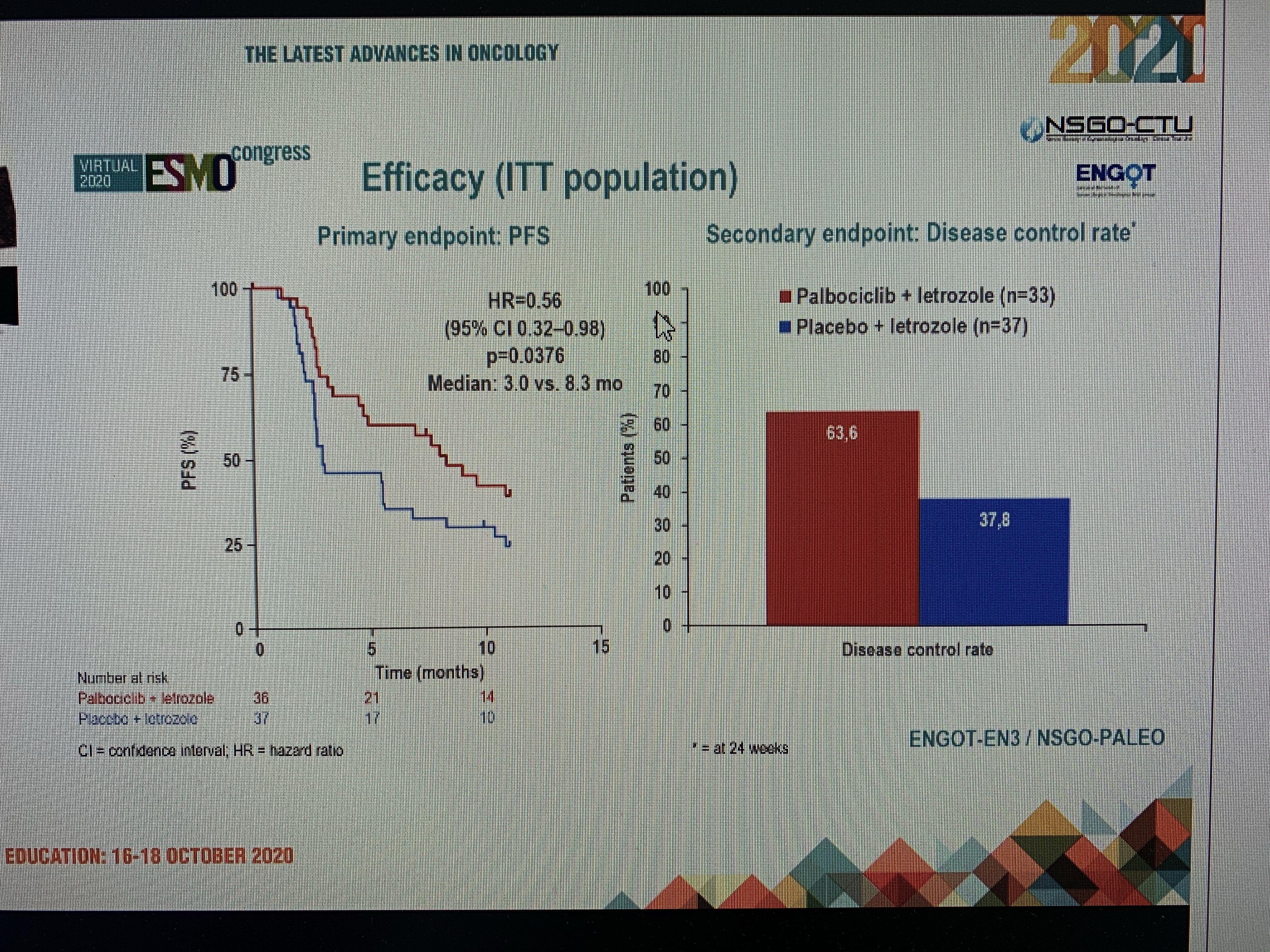
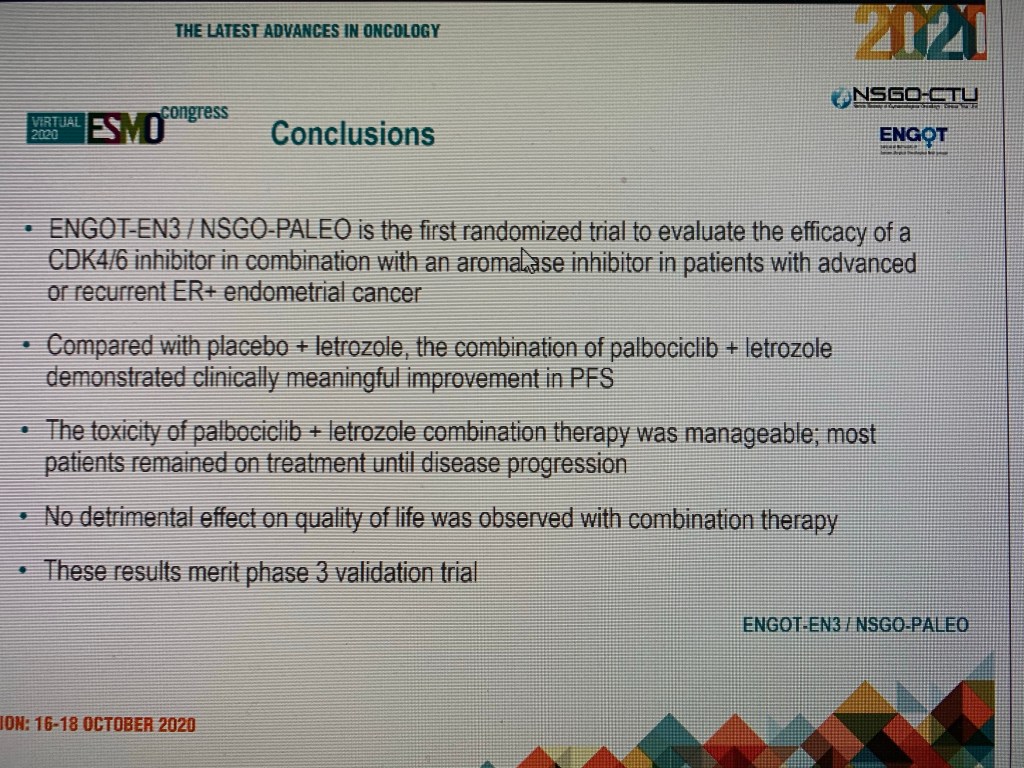
A trial was done to check whether the same improvement can be observed in uterine cancer when the combination of Letrozole and Palboclicib is tried.

The trial data presented at the ESMO ( European Society of Medical Oncology) is very promising.

If large trials confirm this finding, the combination would be standard treatment in future.

Disclaimer: Please note- This blog is NOT medical advice. This blog is purely for information only and do check the the sources where cited. Please consult your own doctor to discuss concerns and options relevant to you.

The views expressed in this blog represent the author’s views held at the time of drafting the blog and is likely to change overtime, particularly when new evidence comes to light. The blog is not necessarily endorsed by any organisation the author is associated with and views are not substitute for professional advice.