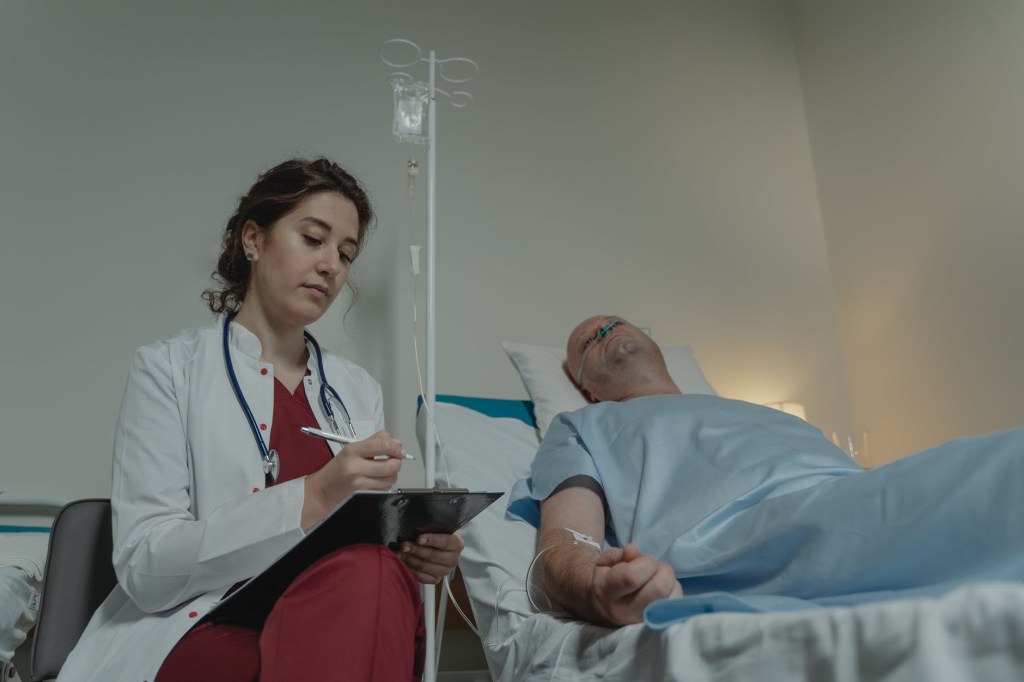
Can exercise make cancer patients live longer?

Yes, exercise can make cancer patients live longer.

A recent study of bowel cancer patients showed that people who had a “structured exercise program” had better fitness and a longer life.

The study data was presented at the prestigious annual meeting of the American Society of Clinical Oncology (ASCO) at Chicago.

Dr Sundar is a member of American Society of Clinical Oncology (ASCO) and has been a member for more than 25 years.

References

  1. ASCO abstract. A randomized phase III trial of the impact of a structured exercise program on disease-free survival (DFS) in stage 3 or high-risk stage 2 colon cancer: Canadian Cancer Trials Group (CCTG) CO.21 (CHALLENGE).
  2. CNN news. Exercise may help patients with colon cancer live as long as those who never had it, study suggests
    By Madeline Holcombe, CNN
     4 minute read
    Published 3:02 PM EST, Mon February 24, 2025
  3. CNN. New research presents promising findings on colorectal cancer treatment and prevention
  4. BBC news. Major study shows exercise improves cancer survival.

Disclaimer: Please note – This blog is NOT medical advice. This blog is NOT a expert medical opinion on various topics. This blog is purely for information research only and do check the sources where cited. Please DO consult your own doctor to discuss concerns and options, which are relevant and specific to you. The views expressed in this blog are NOT, in any way whatsoever, intended to be a substitute for professional advice. The blog is NOT previewed, commissioned or otherwise endorsed, in any way, by any organisation that the author is associated with. The views expressed in this blog likely represents some of the author’s personal views held at the time of drafting the blog and MAY CHANGE overtime, particularly when new evidence comes to light.
New treatment option for a subset of bowel cancer patients

Advanced bowel cancer is usually treated with chemotherapy.

A subset of bowel cancers carry a genetic change called BRAF V600E mutation.

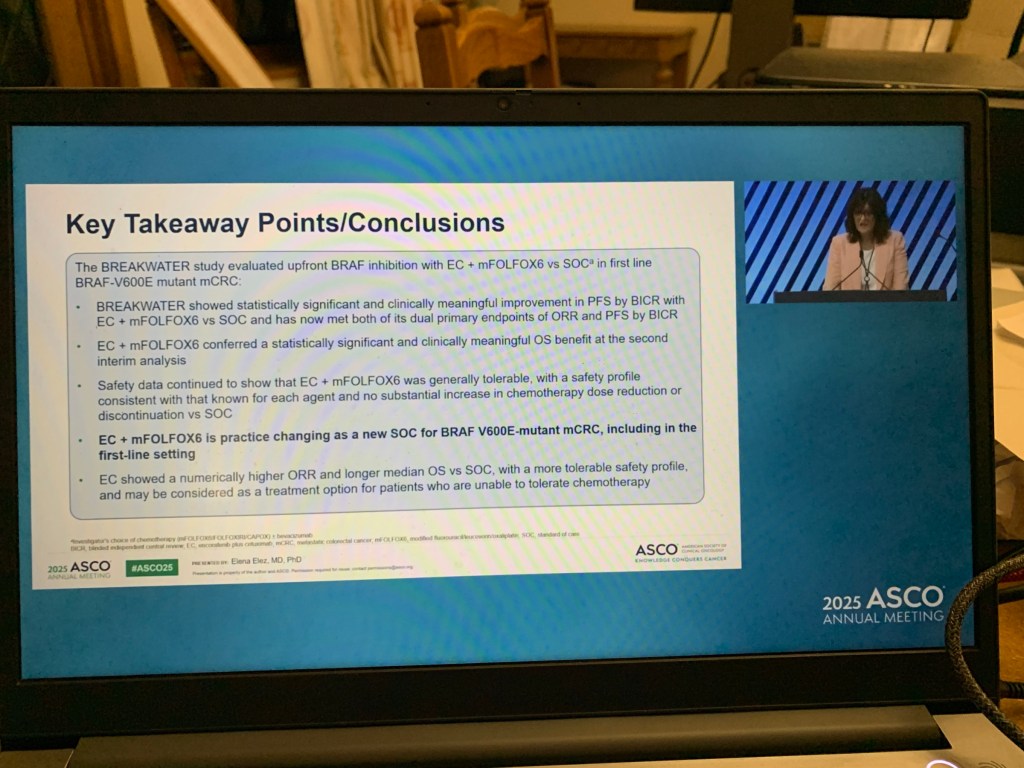
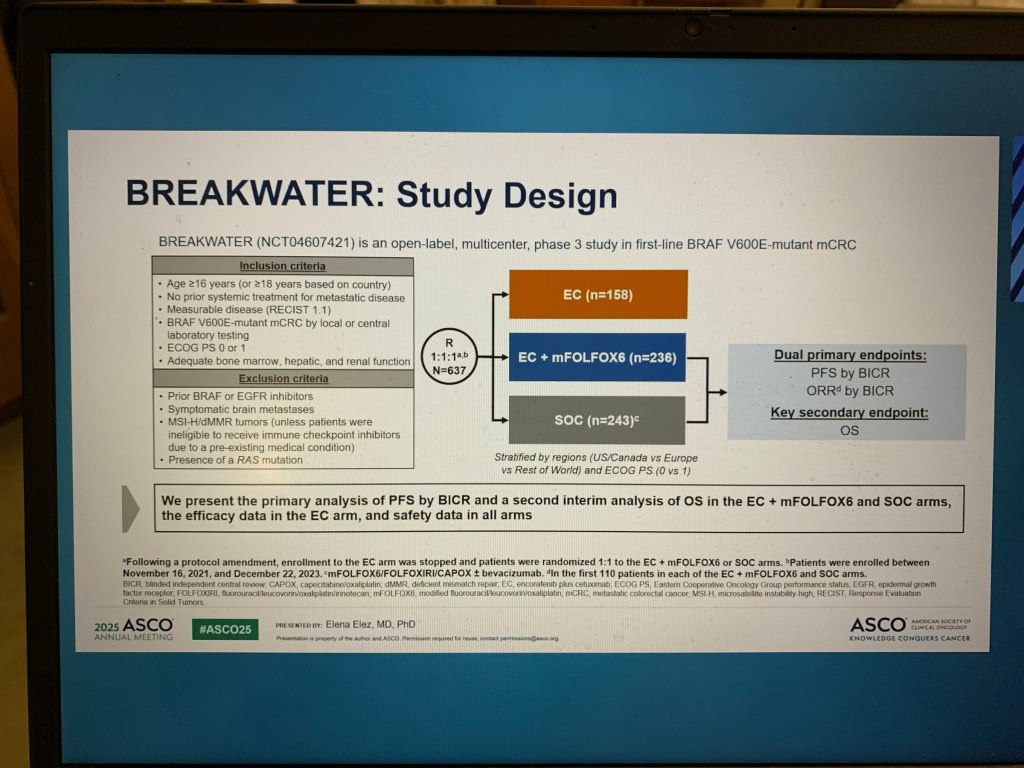
These patients benefit from addition of a drug called Encorafenib to the chemotherapy drugs.

This treatment regimen will become the standard of care for this sub-group of patients.

The study data was presented at the prestigious annual meeting of the American Society of Clinical Oncology (ASCO) at Chicago.

The results were also published in the prestigious NEJM New England Journal of Medicine.

Dr Sundar is a member of American Society of Clinical Oncology (ASCO) and has been a member for more than 25 years.

References

  1. ASCO. First-line encorafenib + cetuximab + mFOLFOX6 in BRAF V600E-mutant metastatic colorectal cancer (BREAKWATER): Progression-free survival and updated overall survival analyses.
  2. NEJM. Encorafenib, Cetuximab, and mFOLFOX6 in BRAF-Mutated Colorectal Cancer
    Authors: Elena Elez, M.D., Ph.D., Takayuki Yoshino, M.D., Ph.D., Lin Shen, M.D., Sara Lonardi, M.D., Eric Van Cutsem, M.D., Ph.D., Cathy Eng, M.D., Tae Won Kim, M.D., Ph.D., +13 , for the BREAKWATER Trial Investigators*Author Info & Affiliations
    Published May 30, 2025
    DOI: 10.1056/NEJMoa2501912
    Copyright © 2025

Disclaimer: Please note – This blog is NOT medical advice. This blog is NOT a expert medical opinion on various topics. This blog is purely for information research only and do check the sources where cited. Please DO consult your own doctor to discuss concerns and options, which are relevant and specific to you. The views expressed in this blog are NOT, in any way whatsoever, intended to be a substitute for professional advice. The blog is NOT previewed, commissioned or otherwise endorsed, in any way, by any organisation that the author is associated with. The views expressed in this blog likely represents some of the author’s personal views held at the time of drafting the blog and MAY CHANGE overtime, particularly when new evidence comes to light.
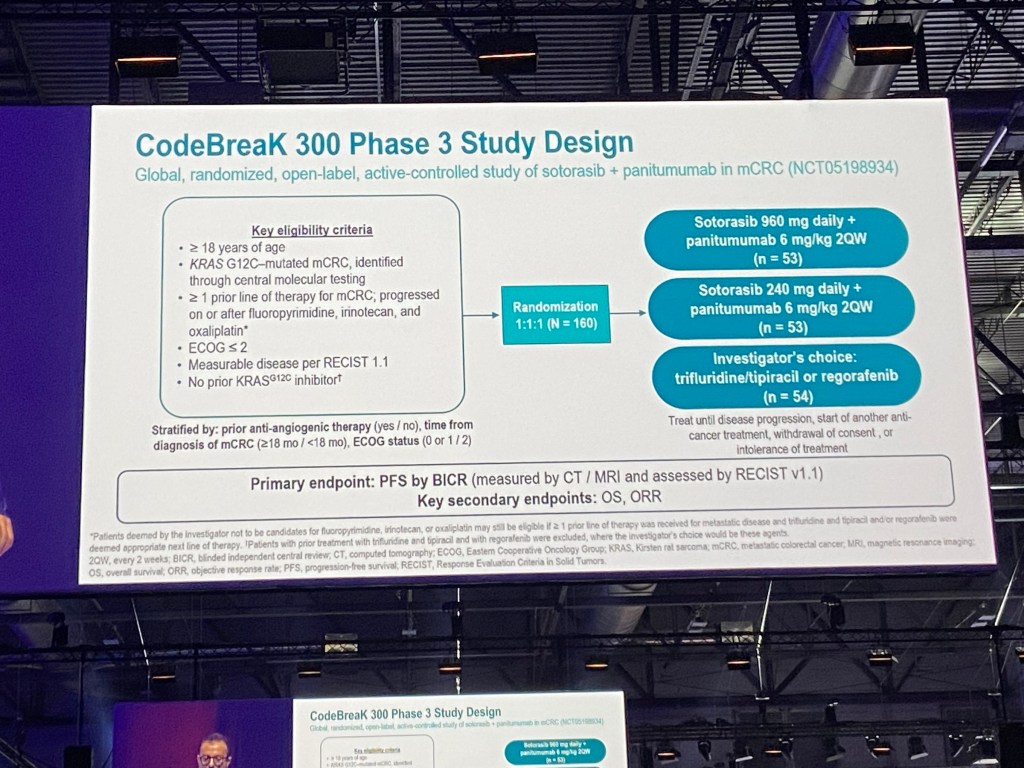
New cancer drug combination that is active in advanced bowel cancer after other drugs have failed.

Advanced bowel cancer that has become resistant to prior chemotherapy drugs is always difficult to treat.

A drug combination shows significant activity in this setting.

Sotorasib and Panitumumab are already in use in other settings and hence they will be used very soon in clinics.

Disclaimer: Please note – This blog is NOT medical advice. This blog is NOT a expert medical opinion on various topics. This blog is purely for information only and do check the sources where cited. Please DO consult your own doctor to discuss concerns and options relevant to you. The views expressed in this blog are NOT, in any way whatsoever, intended to be a substitute for professional advice. The blog is NOT previewed, commissioned or otherwise endorsed, in any way, by any organisation that the author is associated with. The views expressed in this blog likely represents some of the author’s personal views held at the time of drafting the blog and MAY CHANGE overtime, particularly when new evidence comes to light.

Can bowel cancer be diagnosed without a camera test?

Yes, previously a camera test (colonoscopy) was the only reliable way of looking at the inside of the bowels.

Now, there is an alternative. Advances in scan technology has enabled radiologists to look at the inside surface of bowels without a direct camera .

A special type of scan called Virtual Colonoscopy is helping doctors diagnose bowel cancer in appropriate patients.

There is increased awareness of bowel cancer following the death of 40 yr old Dame Deborah James.

Hopefully, Virtual colonoscopy will play an important complementary role in early diagnosis of bowel ( colon) cancer.

Disclaimer: Please note – This blog is NOT medical advice. This blog is NOT a expert medical opinion on various topics. This blog is purely for information only and do check the sources where cited. Please DO consult your own doctor to discuss concerns and options relevant to you. The views expressed in this blog are NOT, in any way whatsoever, intended to be a substitute for professional advice. The blog is NOT previewed, commissioned or otherwise endorsed, in any way, by any organisation that the author is associated with. The views expressed in this blog likely represents some of the author’s personal views held at the time of drafting the blog and MAY CHANGE overtime, particularly when new evidence comes to light.
Are COVID-19 vaccines safe in cancer patients having immunotherapy?

Yes, Pfizer vaccine is safe.

A recent study published in the esteemed Lancet Oncology Journal shows that the vaccine is well tolerated in patients having immunotherapy.

Unlike cancer chemotherapy, immunotherapy works differently. It works by releasing the in-built brakes holding down the immune system thereby boosting the body’s immune system against cancer.

There has been some theoretical concerns whether this might lead to COVID vaccine causing more side effects.

Reassuringly, the Vaccine side effects were NO different from those seen in people not having immunotherapy. The Vaccine also did NOT increase the immunotherapy side effects.

Immunotherapy is increasingly used widely in treatment of cancer are often better tolerated than chemotherapy.

So the study is good news for tens of thousands of patients on immunotherapy and any cancer patient who has hesitated before, should seriously consider having the vaccine now

COVID infection could be very nasty in cancer patients and all evidence points to the benefits of vaccine far outweighing any risks from the Vaccine.

References

Short-term safety of the BNT162b2 mRNA COVID-19 vaccine in patients with cancer treated with immune checkpoint inhibitors
The Lancet Oncology. Published: April 1, 2021
Barliz Waissengrin et al. DOI:https://doi.org/10.1016/S1470-2045(21)00155-8

Disclaimer: Please note- This blog is NOT medical advice. This blog is NOT a expert medical opinion on various topics. This blog is purely for information only and do check the the sources where cited. Please DO consult your own doctor to discuss concerns and options relevant to you. The views expressed in this blog represent the author’s views held at the time of drafting the blog and may change overtime, particularly when new evidence comes to light. The blog is not previewed, commissioned or otherwise endorsed by any organisation the author is associated with. The authors views are not in way intended to be a substitute for professional advice.

Is the COVID-19 Coronavirus vaccine safe for use in patients having chemotherapy and immunotherapy?

Yes, the available indirect evidence indicates that the anticipated benefits overweigh the potential risks.

Cancer patients, particularly those on chemotherapy have compromised immune systems and hence more vulnerable to COVID-19 Coronavirus complications.

The guidelines indicate that anticipated benefits of vaccine are greater than unknown risks from the Coronavirus vaccines.

The Vaccine trials deliberately included lot of healthy people. Very few people with cancer, particularly cancer patients on active treatment, were included in the COVID-19 trials. So there is not much direct evidence regarding efficacy and safety of Vaccines in cancer patients. But indirect evidence significantly favours Coronavirus vaccination in cancer patients.

Flu vaccines are regularly used in cancer patients without any major side effects specific to cancer patients. No increase in incidence or severity of drug side effects were seen in immunotherapy patients having flu vaccines.

On balance, Vaccination is most likely to be of utmost benefit for most advanced cancer patients on active treatment.

References:

ESMO STATEMENTS FOR VACCINATION AGAINST COVID-19 IN PATIENTS WITH CANCER.

Guidance: COVID-19: the green book, chapter 14a
Coronavirus (COVID-19) vaccination information
for public health professionals. (UK),

Cochrane: Influenza (flu) vaccination for preventing influenza in adults with cancer

Safety of Inactivated Influenza Vaccine in Cancer Patients Receiving Immune Checkpoint Inhibitors
Curtis R Chong et al. Clin Infect Dis. 2020.

ESMO: CANCER PATIENT MANAGEMENT DURING THE COVID-19 PANDEMIC.

Kuderer NM Choueiri TK Shah DP et al.
Clinical impact of COVID-19 on patients with cancer (CCC19): a cohort study. Lancet. 2020; 395: 1907-1918

Disclaimer: Please note- This blog is NOT medical advice. This blog is purely for information only and do check the the sources where cited. Please consult your own doctor to discuss concerns and options relevant to you.
The views expressed in this blog represent the author’s views held at the time of drafting the blog and is likely to change overtime, particularly when new evidence comes to light. The blog is not necessarily endorsed by any organisation the author is associated with and views are not substitute for professional advice.