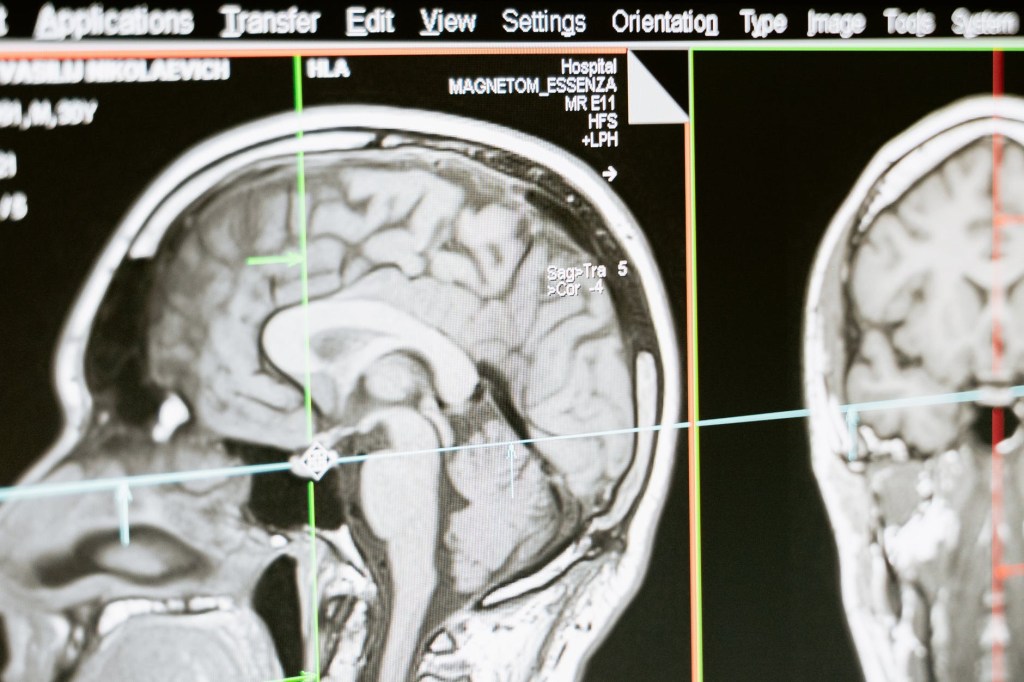
New radiotherpy alternative treatment for low grade brain tumours

Brain Radiation therapy has long term side effects particularly in young people

People with low grade cancer of brain have a prognosis of many years.

Hence, it is important from a quality of life point of view that alternative treatments are used to minimise or avoid the risk of brain damage from radiation

Vorasidenib is a new type of medical treatment . It is a tablet developed specifically to target a specific vulnerable part of low grade brain cancers. The Vorasidenib tablets target abnormal proteins in cancer and hence spares a lot of normal tissues.

A study presented at the American Society of Clinical Oncology (ASCO) annual meeting in Chicago on June 4 is very promising.

Preliminary results show that the tablet significantly delays the growth of the tumour.

References

1. National Cancer Institute. Vorasidenib Treatment Shows Promise for Some Low-Grade Gliomas.

2. NEJM. Vorasidenib in IDH1- or IDH2-Mutant Low-Grade Glioma

3. Vorasidenib ASCO2023 news. INDIGO: Vorasidenib Offers Patients With IDH-Mutant Low-Grade Glioma a Means to Delay Chemotherapy and Radiotherapy

Disclaimer: Please note – This blog is NOT medical advice. This blog is NOT a expert medical opinion on various topics. This blog is purely for information only and do check the sources where cited. Please DO consult your own doctor to discuss concerns and options relevant to you. The views expressed in this blog are NOT, in any way whatsoever, intended to be a substitute for professional advice. The blog is NOT previewed, commissioned or otherwise endorsed, in any way, by any organisation that the author is associated with. The views expressed in this blog likely represents some of the author’s personal views held at the time of drafting the blog and MAY CHANGE overtime, particularly when new evidence comes to light.


Does exercise help the brain ?

Yes, moderate and vigorous physical activity helps the brain to stay sharp.

A large study looked at people born across England, Scotland and Wales in 1970 and followed-up throughout childhood and adulthood

A report of the study with 4481participants (52% female) found that moderate and vigorous physical activity helps cognition compared to light intensity physical activity.

But a word of caution though !

People with sedentary behaviour in this study had better brain sharpness than doing light intensity physical activity !

It seems bizarre to suggest Sedentary activities are good for brain !

We don’t know why this study showed this particularly unexpected finding. It could be that the study missed to collect some important information that influences brain.

This fact about sedentary behaviour is counterintuitive but science does sometimes show unexpected results. Sometimes unexpected findings are true and Sometimes they are false due to data collection issues or convoluted statistical tests.

That’s why it is important that information from multiple studies is taken together rather than relying on one study to make any scientific conclusion on any topic !

References

Exploring the associations of daily movement behaviours and mid-life cognition: a compositional analysis of the 1970 British Cohort Study.

Minerva. BMJ. Physical activity and cognition in middle age.

Disclaimer: Please note – This blog is NOT medical advice. This blog is NOT a expert medical opinion on various topics. This blog is purely for information only and do check the sources where cited. Please DO consult your own doctor to discuss concerns and options relevant to you. The views expressed in this blog are NOT, in any way whatsoever, intended to be a substitute for professional advice. The blog is NOT previewed, commissioned or otherwise endorsed, in any way, by any organisation that the author is associated with. The views expressed in this blog likely represents some of the author’s personal views held at the time of drafting the blog and MAY CHANGE overtime, particularly when new evidence comes to light.

Can mild Covid affect the brain ?

Yes, according to an Oxford study.

The team investigated brain changes in 785 UK Biobank participants (aged 51–81).

The team compared Brain scans before COVID infection and Brain scans after infection.

They found that people with COVID subsequently had “brain shrinkage” and reduced “brain function” particularly relating to parts of brain dealing with emotions smell and long-term memory

It is not known whether these brain changes are temporary and reversible after a while or whether these changes are permanent.

References

Original paper in Nature for COVID brain. Douaud, G., Lee, S., Alfaro-Almagro, F. et al. SARS-CoV-2 is associated with changes in brain structure in UK Biobank. Nature (2022). https://doi.org/10.1038/s41586-022-04569-5

Daily Telegraph. Covid may cause the brain to degenerate three times faster than normal
Study finds ‘significantly greater cognitive decline’ among people who have been infected with coronavirus

By Sarah Knapton, SCIENCE EDITOR
7 March 2022 • 4:46pm

BBC. Scans reveal how Covid may change the brain By Rebecca Morelle
Science Editor, BBC News

Bloomberg. Covid Can Shrink the Brain as Much as a Decade of Aging, Study Finds. By +Follow7 March 2022, 16:00 GMT

Daily Mail. ‘Covid brain’ IS real: Illness can cause regions of the brain to SHRINK and lead to cognitive decline, new study finds. By Bhvishya Patel For Mailonline
02:16, 08 Mar 2022 , updated 07:18, 08 Mar 2022

Disclaimer: Please note – This blog is NOT medical advice. This blog is NOT a expert medical opinion on various topics. This blog is purely for information only and do check the sources where cited. Please DO consult your own doctor to discuss concerns and options relevant to you. The views expressed in this blog are NOT, in any way whatsoever, intended to be a substitute for professional advice. The blog is NOT previewed, commissioned or otherwise endorsed, in any way, by any organisation that the author is associated with. The views expressed in this blog likely represents some of the author’s personal views held at the time of drafting the blog and MAY CHANGE overtime, partic

What time of the day should you take your blood pressure medication: morning or evening?

It is a common question for many people. When should the blood pressure medications be taken?

High blood is quite common in the General population. High blood pressure can cause blood vessel damage, heart problems and brain damage.

First of all , Taking medication regularly, at any time of the day, is more important than forgetting to take the medication every day.

If one does take the blood pressure medication regularly, then taking it at evening seems to be more beneficial than taking the medication in the morning.

A Japanese study assessed blood pressure of patients continuously at home. All patients in the study underwent 24-hour ambulatory BP monitoring at baseline. Patients were then followed every year to determine the rate of heart and blood vessel complications .

The Japanese study found that high nightime blood pressure readings were an important sign of future heart problems.

A review by the renowned Cochrane group found that “better blood pressure control was achieved with bedtime dosing than morning administration of blood pressure (antihypertensive) medication”

So if possible taking the blood pressure medication at bedtime makes sense .

References:

(1) Nighttime Blood Pressure Phenotype and Cardiovascular Prognosis. Practitioner-Based Nationwide JAMP Study. Kazuomi Kario, et al. On behalf of the JAMP Study Group.
Originally published2 Nov 2020. https://doi.org/10.1161/CIRCULATIONAHA.120.049730Circulation. 2020;142:1810–1820

(2). Zhao P, Xu P, Wan C, Wang Z. Evening versus morning dosing regimen drug therapy for hypertension. Cochrane Database of Systematic Reviews 2011, Issue 10. Art. No.: CD004184. DOI: 10.1002/14651858.CD004184.pub2

Disclaimer: Please note- This blog is NOT medical advice. This blog is purely for information only and do check the the sources where cited. Please DO consult your own doctor to discuss concerns and options relevant to you.

The views expressed in this blog represent the author’s views held at the time of drafting the blog and may change overtime, particularly when new evidence comes to light. The blog is not necessarily endorsed by any organisation the author is associated with and views are not substitute for professional advice.

COVID-19 infection affects brain and mental health

A recent paper published in Lancet Psychiatry reports that at least 1 in 3 patients , who have recovered from severe COVID, have substantial neurological and psychiatric problems during the next six months .

This report is very worrying .

If study findings are confirmed by other studies, this would be yet another substantial reason to consider getting the vaccine as soon as it is offered.

References

Guardian. One in three survivors of severe Covid diagnosed with mental health condition
Study finds 34% developed psychiatric or neurological conditions after six months
.
Sarah Marsh
@sloumarsh
Wed 7 Apr 2021 06.00 BST

BMJ. Covid-19: One in three has neurological or psychiatric condition diagnosed after covid infection, study finds
BMJ 2021; 373 doi: https://doi.org/10.1136/bmj.n908 (Published 07 April 2021)
Cite this as: BMJ 2021;373:n908

Taquet M, Geddes JR, Husain M, Luciano S, Harrison PJ. 6-month neurological and psychiatric outcomes in 236379 survivors of COVID-19: a retrospective cohort study using electronic health records. Lancet Psychiatry 2021 (published online 6 Apr). doi:10.1016/S2215-0366(21)00084-5. https://www.thelancet.com/journals/lanpsy/article/PIIS2215-0366(21)00084-5/fulltext.

Disclaimer: Please note- This blog is NOT medical advice. This blog is NOT a expert medical opinion on various topics. This blog is purely for information only and do check the the sources where cited. Please DO consult your own doctor to discuss concerns and options relevant to you. The views expressed in this blog represent the author’s views held at the time of drafting the blog and may change overtime, particularly when new evidence comes to light. The blog is not previewed, commissioned or otherwise endorsed by any organisation the author is associated with. The authors views are not in way intended to be a substitute for professional advice.