Tumour genetic material in blood circulation : effect on cancer relapse after a complete surgical resection of kidney tumour

Cancer can come back in many high-risk kidney cancer patients even after a successful operation.

This is because tiny tumour cells can remain in body undetectable by scans.

This is why immunotherapy is given to patients after successful surgery in high risk kidney cancer patients. ( Pembrolizumab).

New technology enables detection of tumour DNA ( genetic material) in blood circulation.

In the study, which evaluated a immunotherapy drug called Pembrolizumab, the investigators assessed the stored blood samples of kidney cancer patients.

They found tumour DNA circulating in the blood stream in up to 20% of patients with high risk cancer. These patients did not do well over long term.

Patients who were able clear the tumour DNA from circulation at the 15 week period ( either spontaneously or with help of immunotherapy) did better .

This is an evolving area . The routine use of tests for detection of tumour DNA is likely to be one more common in future.

The results of this study are being presented at the Annual meeting of American Association of Clinical oncology in Chicago ( June 2026).

References

ASCO 2026 Annual meeting. ctDNA analysis in participants with renal cell carcinoma treated with adjuvant pembrolizumab or placebo in the KEYNOTE-564 trial.Toni K. Choueiri, MD, FASCODana-Farber Cancer Institute, Harvard Medical School. Abstract 4502

Disclaimer: Please note – This blog is NOT medical advice. This blog is NOT a expert medical opinion on various topics. This blog is purely for information research only and do check the sources where cited. But the author cannot vouch for scientific integrity of the sources cited and author is not responsible for any information in any advert on those cited pages. Please DO consult your own doctor to discuss concerns and options, which are directly relevant and specific to you. The views expressed in this blog are NOT, in any way whatsoever, intended to be a substitute for professional advice. The blog is NOT previewed, commissioned or otherwise endorsed, in any way, by any organisation that the author is associated with. The views expressed in this blog likely represents some of the author’s personal views held at the time of drafting this blog and MAY CHANGE overtime, particularly when new evidence comes to light.


Immunotherapy makes advanced head and neck cancer patients live longer

Immunotherapy has revolutionised the care of many patients with kidney, bladder, skin and various other cancers.

Now a UK led study has shown that given the immunotherapy drug- pembrolizumab – before and after surgery– makes people live substantially longer.

Pembrolizumab is a very costly drug with limited affordability in developing countries.

In western countries, only people with private medical insurance or people having a publicly funded health systems such as NHS can afford it.

The fascinating immunotherapy data was presented at the prestigious annual meeting of the American Society of Clinical Oncology (ASCO) at Chicago.

Dr Sundar is a member of American Society of Clinical Oncology (ASCO) for more than 25 years.

References

  1. BBC News. Breakthrough cancer drug doubles survival in trial. Philippa Roxby
    Heath Reporter. May 2025.
  2. American Society of Clinical Oncology (ASCO) 2025: Neoadjuvant and adjuvant pembrolizumab plus standard of care (SOC) in resectable
    locally advanced head and neck squamous cell carcinoma (LA HNSCC): Exploratory
    efficacy analyses of the phase 3 KEYNOTE-689 study
    . ( Distant Metastasis-Free Survival (DMFS) data:
    Median DMFS was 51.8 months with pembrolizumab + SOC versus 35.7 months with SOC (HR 0.71, 95% CI 0.56–0.90).
    Estimated DMFS rate at 36 months was 59.1% versus 49.0%, respectively. )
  3. American Association for Cancer Research (AACR) Annual Meeting. 2025. Addition of Perioperative Pembrolizumab to Standard of Care in Newly Diagnosed Locally Advanced Head and Neck Cancer.
  4. Pembrolizumab With or Without Chemotherapy in Recurrent or Metastatic Head and Neck Squamous Cell Carcinoma: Updated Results of the Phase III KEYNOTE-048 Study.

Disclaimer: Please note – This blog is NOT medical advice. This blog is NOT a expert medical opinion on various topics. This blog is purely for information research only and do check the sources where cited. Please DO consult your own doctor to discuss concerns and options, which are relevant and specific to you. The views expressed in this blog are NOT, in any way whatsoever, intended to be a substitute for professional advice. The blog is NOT previewed, commissioned or otherwise endorsed, in any way, by any organisation that the author is associated with. The views expressed in this blog likely represents some of the author’s personal views held at the time of drafting the blog and MAY CHANGE overtime, particularly when new evidence comes to light.

New treatment option for liver cancer

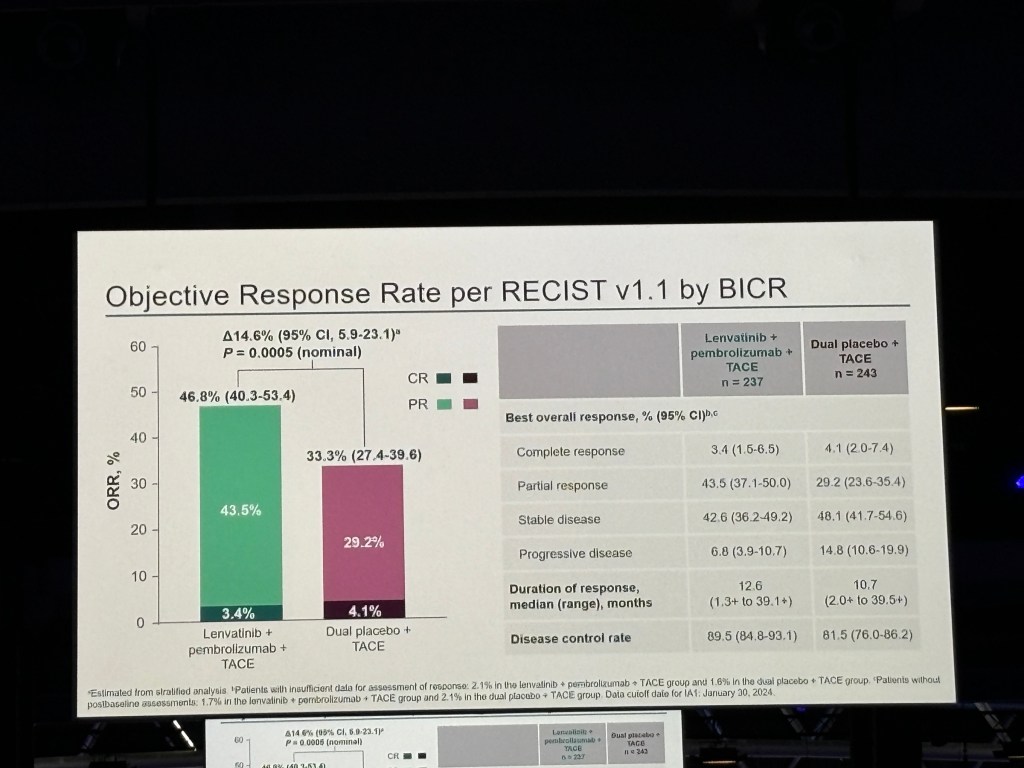
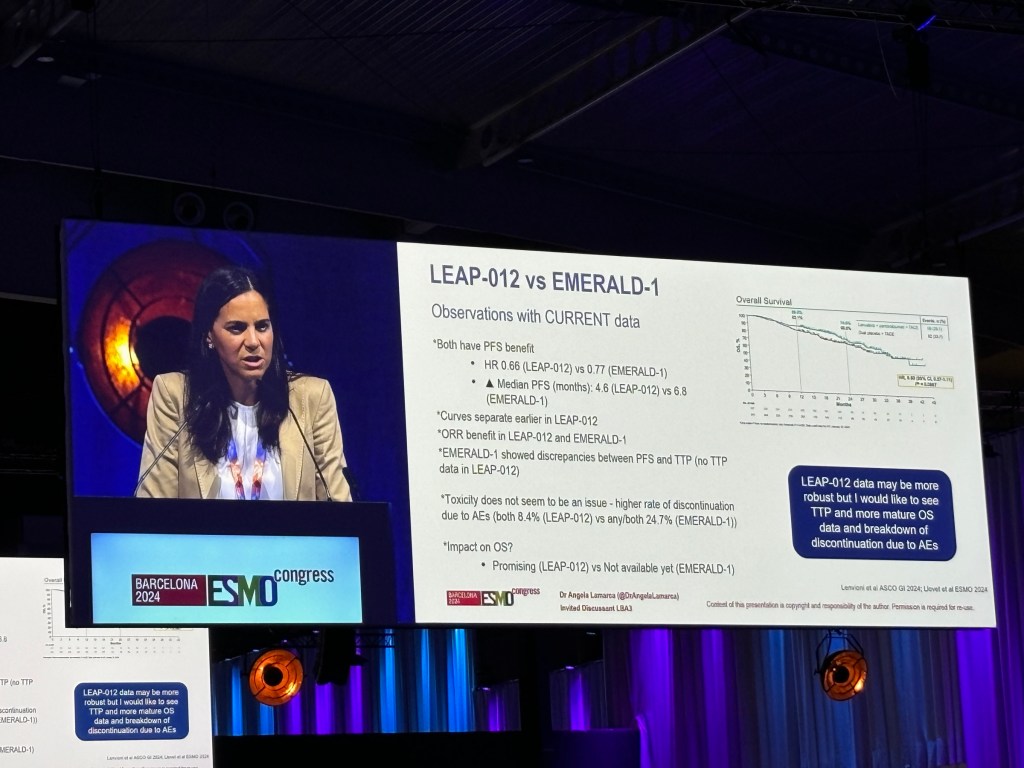
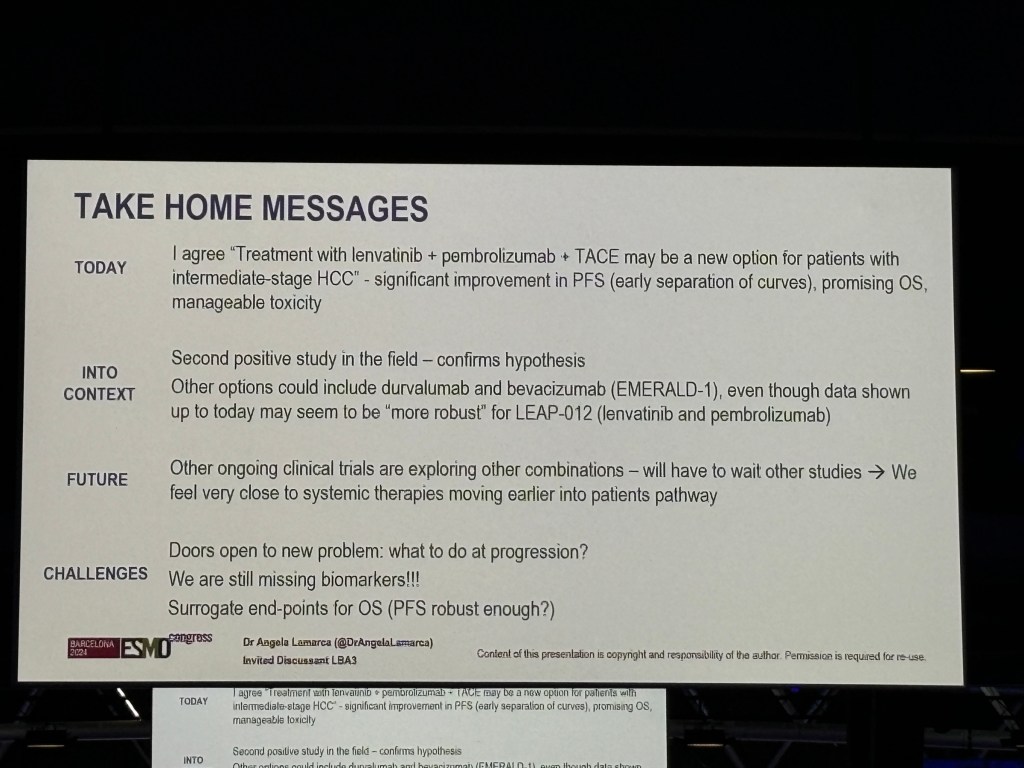
Data presented at the ESMO Congress 2024 (Barcelona, 13–17 September) shows that adding Lenvatinib (tablets) and Pembrolizumab (immunotherapy infusion) to standard treatment has the potential to improve prognosis.

The trial was done in intermediate stage patients.

Adding the combination of Lenvatinib and Pembrolizumab to the other standard treatment TACE seems to work.

The response rates are better with combination and early results are promising but the data is still immature.

Another caveat is that this combination was previously tested in the advanced setting. The combination of Lenvatinib and Pembrolizumab did NOT improve survival in the advanced cancer patient group.

Disclaimer: Please note – This blog is NOT medical advice. This blog is NOT a expert medical opinion on various topics. This blog is purely for information only and do check the sources where cited. Please DO consult your own doctor to discuss concerns and options relevant to you. The views expressed in this blog are NOT, in any way whatsoever, intended to be a substitute for professional advice. The blog is NOT previewed, commissioned or otherwise endorsed, in any way, by any organisation that the author is associated with. The views expressed in this blog likely represents some of the author’s personal views held at the time of drafting the blog and MAY CHANGE overtime, particularly when new evidence comes to light.

Immunotherapy for curative treatment of Cervical cancer

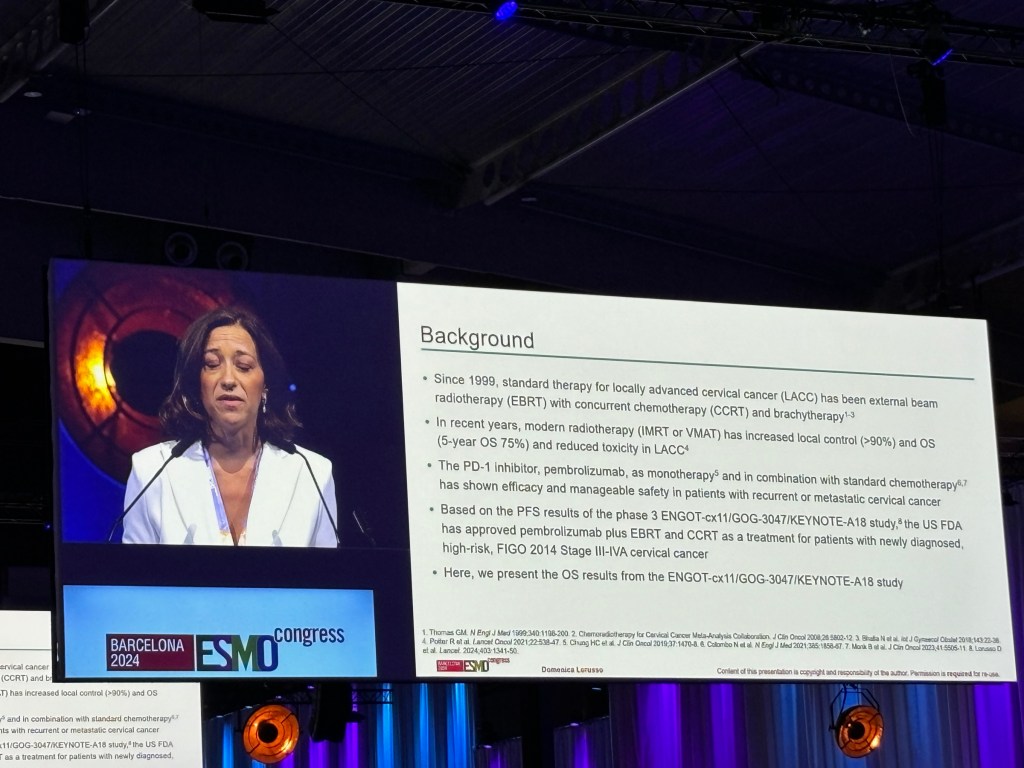
Updated Data presented at the ESMO Congress 2024( Barcelona, 13–17 September) confirms benefit of adding immunotherapy to combination of chemotherapy and radiotherapy for treatment of cervical cancer.

For nearly twenty years, chemo- radiation, which is the practice of giving chemotherapy at the same time as radiotherapy, was the standard of care.

Last year, early results from a large trial suggested that adding immunotherapy to chemo-radiation would improve outcome .

Updated results confirm that the additional immunotherapy is of significant benefit.

Reference

Lancet. Pembrolizumab or placebo with chemoradiotherapy followed by pembrolizumab or placebo for newly diagnosed, high-risk, locally advanced cervical cancer (ENGOT-cx11/GOG-3047/KEYNOTE-A18): overall survival results from a randomised, double-blind, placebo-controlled, phase 3 trial.

Disclaimer: Please note – This blog is NOT medical advice. This blog is NOT a expert medical opinion on various topics. This blog is purely for information only and do check the sources where cited. Please DO consult your own doctor to discuss concerns and options relevant to you. The views expressed in this blog are NOT, in any way whatsoever, intended to be a substitute for professional advice. The blog is NOT previewed, commissioned or otherwise endorsed, in any way, by any organisation that the author is associated with. The views expressed in this blog likely represents some of the author’s personal views held at the time of drafting the blog and MAY CHANGE overtime, particularly when new evidence comes to light.

A major breakthrough in advanced bladder cancer

Advanced bladder cancer is a difficult disease to treat in many patients.

For a long time, there was no major advance in first line treatment

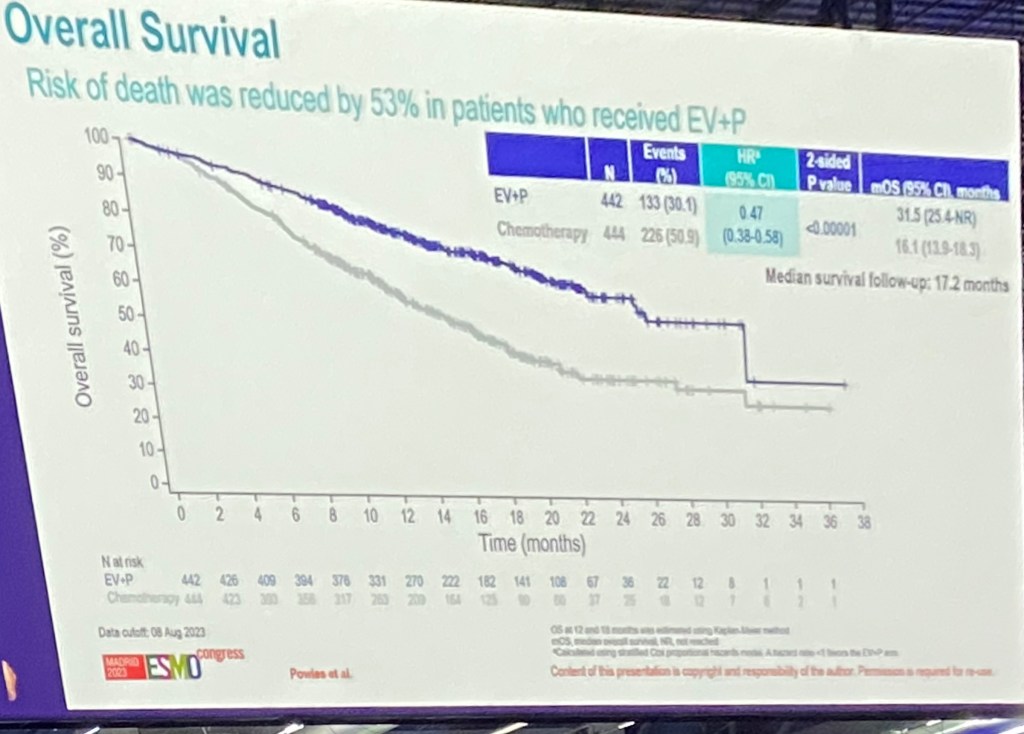
Today, at an European Cancer conference in Madrid, there was a breakthrough announcement about a new combination for bladder cancer.

The combination of EV ( enfortumab vedotin) and Pembro ( Pembrolizumab) has shown dramatically better results in a clinical trial reported today.

The combination of EV+ Pembro will become first choice of treatment for Advanced bladder cancer now.

References

LBA6 EV-302/KEYNOTE-A39: Open-label, randomized phase III study of enfortumab vedotin in combination with pembrolizumab (EV+P) vs chemotherapy (Chemo) in previously untreated locally advanced metastatic urothelial carcinoma (la/mUC)

Disclaimer: Please note – This blog is NOT medical advice. This blog is NOT a expert medical opinion on various topics. This blog is purely for information only and do check the sources where cited. Please DO consult your own doctor to discuss concerns and options relevant to you. The views expressed in this blog are NOT, in any way whatsoever, intended to be a substitute for professional advice. The blog is NOT previewed, commissioned or otherwise endorsed, in any way, by any organisation that the author is associated with. The views expressed in this blog likely represents some of the author’s personal views held at the time of drafting the blog and MAY CHANGE overtime, particularly when new evidence comes to light.