Can Gerson therapy or alternative treatment cure cancer ?

No !

No one has published any reliable scientific evidence to prove alternative therapies such as Gerson therapy can cure cancer.

When some one is diagnosed with cancer, particularly at a young age, the shock is unimaginable!

People are so shocked they start to question everything.

People can be understandably very worried about side effects of conventional treatments such as chemotherapy.

People with cancer can be frightened about everything.

BUT alternative therapy is not the answer to their worries and concerns.

Alternative therapy has not been shown to cure cancer.

There are lot of scams on social media promoting so called alternative or complimentary therapy. Be careful!

Even worse are the misguided people who promote well-intentioned but dangerous unscientific information.

Any one who has been newly diagnosed with cancer should be aware of the enormous amount of misinformation out there.

Some complementary therapies (eg massage, aromatherapy ) can have palliative and psychological benefits but they do not cure or control the cancer.

The recent BBC news article about a young women, who died of a potentially curable cancer, should be a warning to other people.

References

BBC News. ‘Our sister died of cancer because of our mum’s conspiracy theories’. Published 23 June 2025. Marianna Spring. Social media investigations correspondent

Telegraph. Cambridge graduate ‘killed by mother’s anti-medicine conspiracy theories’. Gwyn Wright. 24 June 2025 6:21am BST

Disclaimer: Please note – This blog is NOT medical advice. This blog is NOT a expert medical opinion on various topics. This blog is purely for information research only and do check the sources where cited. Please DO consult your own doctor to discuss concerns and options, which are relevant and specific to you. The views expressed in this blog are NOT, in any way whatsoever, intended to be a substitute for professional advice. The blog is NOT previewed, commissioned or otherwise endorsed, in any way, by any organisation that the author is associated with. The views expressed in this blog likely represents some of the author’s personal views held at the time of drafting the blog and MAY CHANGE overtime, particularly when new evidence comes to light.

Can exercise make cancer patients live longer?

Yes, exercise can make cancer patients live longer.

A recent study of bowel cancer patients showed that people who had a “structured exercise program” had better fitness and a longer life.

The study data was presented at the prestigious annual meeting of the American Society of Clinical Oncology (ASCO) at Chicago.

Dr Sundar is a member of American Society of Clinical Oncology (ASCO) and has been a member for more than 25 years.

References

  1. ASCO abstract. A randomized phase III trial of the impact of a structured exercise program on disease-free survival (DFS) in stage 3 or high-risk stage 2 colon cancer: Canadian Cancer Trials Group (CCTG) CO.21 (CHALLENGE).
  2. CNN news. Exercise may help patients with colon cancer live as long as those who never had it, study suggests
    By Madeline Holcombe, CNN
     4 minute read
    Published 3:02 PM EST, Mon February 24, 2025
  3. CNN. New research presents promising findings on colorectal cancer treatment and prevention
  4. BBC news. Major study shows exercise improves cancer survival.

Disclaimer: Please note – This blog is NOT medical advice. This blog is NOT a expert medical opinion on various topics. This blog is purely for information research only and do check the sources where cited. Please DO consult your own doctor to discuss concerns and options, which are relevant and specific to you. The views expressed in this blog are NOT, in any way whatsoever, intended to be a substitute for professional advice. The blog is NOT previewed, commissioned or otherwise endorsed, in any way, by any organisation that the author is associated with. The views expressed in this blog likely represents some of the author’s personal views held at the time of drafting the blog and MAY CHANGE overtime, particularly when new evidence comes to light.
New treatment option for a subset of bowel cancer patients

Advanced bowel cancer is usually treated with chemotherapy.

A subset of bowel cancers carry a genetic change called BRAF V600E mutation.

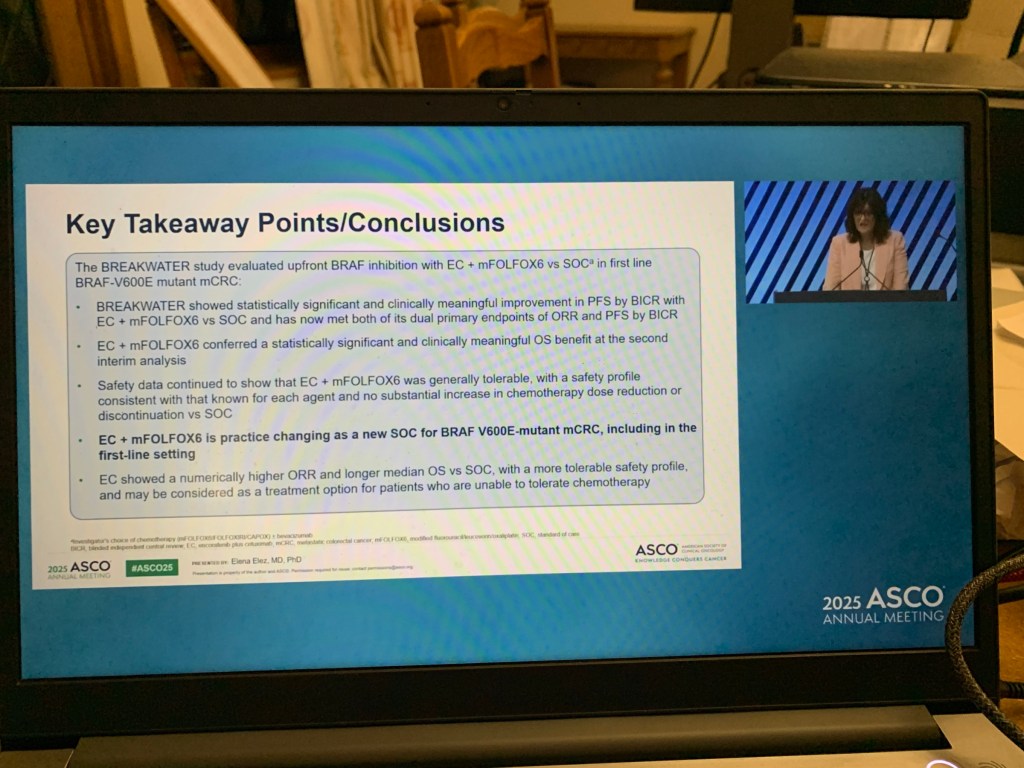
These patients benefit from addition of a drug called Encorafenib to the chemotherapy drugs.

This treatment regimen will become the standard of care for this sub-group of patients.

The study data was presented at the prestigious annual meeting of the American Society of Clinical Oncology (ASCO) at Chicago.

The results were also published in the prestigious NEJM New England Journal of Medicine.

Dr Sundar is a member of American Society of Clinical Oncology (ASCO) and has been a member for more than 25 years.

References

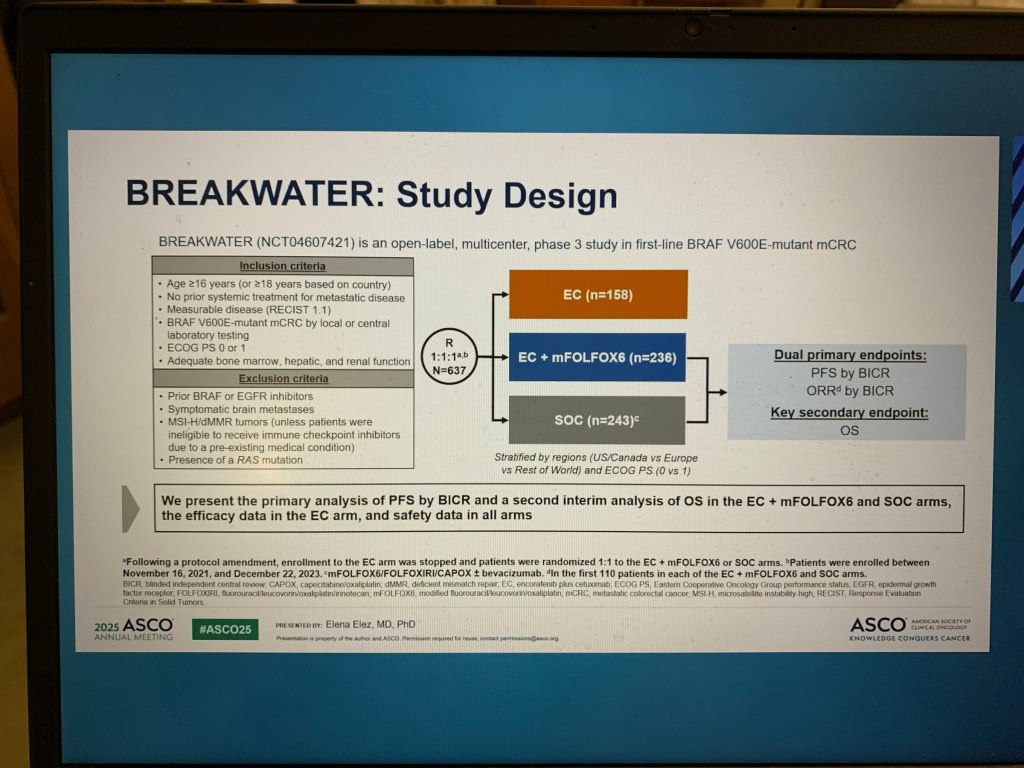
  1. ASCO. First-line encorafenib + cetuximab + mFOLFOX6 in BRAF V600E-mutant metastatic colorectal cancer (BREAKWATER): Progression-free survival and updated overall survival analyses.
  2. NEJM. Encorafenib, Cetuximab, and mFOLFOX6 in BRAF-Mutated Colorectal Cancer
    Authors: Elena Elez, M.D., Ph.D., Takayuki Yoshino, M.D., Ph.D., Lin Shen, M.D., Sara Lonardi, M.D., Eric Van Cutsem, M.D., Ph.D., Cathy Eng, M.D., Tae Won Kim, M.D., Ph.D., +13 , for the BREAKWATER Trial Investigators*Author Info & Affiliations
    Published May 30, 2025
    DOI: 10.1056/NEJMoa2501912
    Copyright © 2025

Disclaimer: Please note – This blog is NOT medical advice. This blog is NOT a expert medical opinion on various topics. This blog is purely for information research only and do check the sources where cited. Please DO consult your own doctor to discuss concerns and options, which are relevant and specific to you. The views expressed in this blog are NOT, in any way whatsoever, intended to be a substitute for professional advice. The blog is NOT previewed, commissioned or otherwise endorsed, in any way, by any organisation that the author is associated with. The views expressed in this blog likely represents some of the author’s personal views held at the time of drafting the blog and MAY CHANGE overtime, particularly when new evidence comes to light.
New drug for platinum resistant ovarian cancer

Multiple new drugs have been developed lung and breast cancers over the last decade.

But only a few new drugs have been approved for ovarian cancers in the past decade.

Drugs like Olaparib and Niraparib – which have been approved for ovarian cancers recently – are maintenance drugs used after chemotherapy rather than used as an upfront treatment .

So it is very good news that a brand new drug is likely to enter the market in the near future.

The new drug is called Relacorilant.(Rela).

It has been tested in ovarian cancers which have become resistant to the platinum drugs.

Platinum drugs are the standard of care ovarian cancers and most other drugs do not work very well once ovarian cancers have become resistant to carboplatin or cisplatin (platinum resistant ovarian cancers).

So it is very good news that we may have a new option now for this group of patients with platinum resistant ovarian cancers.

Early phase drug trial results of Rela in 2023 were promising but not definitive.

Advanced phase 3 trials of Rela have been positive in improving survival (2025).

The study results were due to presented at the prestigious annual meeting of the American Society of Clinical Oncology (ASCO) at Chicago.( June 2025).

Dr Sundar is a member of American Society of Clinical Oncology (ASCO) and has been a member for more than 25 years.

References

1. Relacorilant + Nab-Paclitaxel in Patients With Recurrent, Platinum-Resistant Ovarian Cancer: A Three-Arm, Randomized, Controlled, Open-Label Phase II Study
Nicoletta Colombo et al. J Clin Oncol. 2023.

2. Targeted oncology. News Article. March 31, 2025. Relacorilant Extends Survival in Platinum-Resistant Ovarian Cancer Mar 31, 2025 . By Jordyn Sava. Fact checked by: Jason M. Broderick

3. ROSELLA: A phase 3 study of relacorilant in combination with nab-paclitaxel versus nab-paclitaxel monotherapy in patients with platinum-resistant ovarian cancer (GOG-3073, ENGOT-ov72).

Disclaimer: Please note – This blog is NOT medical advice. This blog is NOT a expert medical opinion on various topics. This blog is purely for information research only and do check the sources where cited. Please DO consult your own doctor to discuss concerns and options, which are relevant and specific to you. The views expressed in this blog are NOT, in any way whatsoever, intended to be a substitute for professional advice. The blog is NOT previewed, commissioned or otherwise endorsed, in any way, by any organisation that the author is associated with. The views expressed in this blog likely represents some of the author’s personal views held at the time of drafting the blog and MAY CHANGE overtime, particularly when new evidence comes to light.

Can applying some electric current make chemotherapy work better in pancreatic cancer ?

Yes !

Applying electricity to tumours can help to improve control of pancreatic cancer.

The procedure is called TTfFields.

The procedure is not invasive.

The procedure uses low-energy electricity which impedes cancer cells’ ability to grow and divide.

The procedure is done alongside standard chemotherapy .

The TTFields electric treatments has already been tested and has shown promise in brain tumours and lung cancers.

A study presented at the Chicago ASCO meeting shows better survival in patients who had TTFields electricity in addition to their usual chemotherapy regimen of gemcitabine and abraxane (nab-paclitaxel) for pancreatic cancer.

The study data was presented at the prestigious annual meeting of the American Society of Clinical Oncology (ASCO) at Chicago.

Dr Sundar is a member of American Society of Clinical Oncology (ASCO) and has been a member for more than 25 years.

References

  1. Tumour treating fields therapy for glioblastoma: current advances and future directions. British Journal of Cancer volume 124, pages 697–709 (2021)
  2. Weinberg U, Farber O, Giladi M, Bomzon Z, Kirson ED. Tumor treating field concurrent with standard of care for stage 4 non-small cell lung cancer (NSCLC) following platinum failure: Phase III LUNAR study. [abstract]. ESMO, October 2018. Ann Oncol. 2018;29:viii543. doi: 10.1093/annonc/mdy292.120.
  3. Lancet oncology. Tumor Treating Fields therapy with standard systemic therapy versus standard systemic therapy alone in metastatic non-small-cell lung cancer following progression on or after platinum-based therapy (LUNAR): a randomised, open-label, pivotal phase 3 study.
  4. Wiki. Alternating electric field therapy.
  5. PANOVA-3: Phase 3 study of tumor treating fields (TTFields) with gemcitabine and nab-paclitaxel for locally advanced pancreatic ductal adenocarcinoma (LA-PAC) .

Disclaimer: Please note – This blog is NOT medical advice. This blog is NOT a expert medical opinion on various topics. This blog is purely for information research only and do check the sources where cited. Please DO consult your own doctor to discuss concerns and options, which are relevant and specific to you. The views expressed in this blog are NOT, in any way whatsoever, intended to be a substitute for professional advice. The blog is NOT previewed, commissioned or otherwise endorsed, in any way, by any organisation that the author is associated with. The views expressed in this blog likely represents some of the author’s personal views held at the time of drafting the blog and MAY CHANGE overtime, particularly when new evidence comes to light.

Hormone tablet Abiraterone for prostate cancer treated with curative intent

Prostate cancer can be treated with curative intent if it is localised to pelvis.

But in patients with high risk cancers, additional treatments might be needed to improve the odds of controlling the cancer.

Abiraterone is one such add-on treatment that has been shown to improve long term outcomes in a large UK trial.

Unfortunately the drug, abiraterone, even though it is much cheaper now, is not widely available in the UK National Health System ( NHS).

Now an AI (artificial intelligence) test has been developed which selects better those patients who are likely to benefit from Abiraterone.

Hopefully the test will become available for routine use in the near future.

The study data was presented at the prestigious annual meeting of the American Society of Clinical Oncology (ASCO) at Chicago.

Dr Sundar is a member of American Society of Clinical Oncology (ASCO) and has been a member for more than 25 years.

References

BBC news. Hugh Pym and Ian Atkinson. Men denied life-extending prostate cancer drug

UCL. AI test to determine best prostate cancer treatment could save lives and money. 30 May 2025.

Daily Telegraph. Give prostate cancer patients drug that halves risk of death, NHS told.

SUN Newspaper.

Disclaimer: Please note – This blog is NOT medical advice. This blog is NOT a expert medical opinion on various topics. This blog is purely for information research only and do check the sources where cited. Please DO consult your own doctor to discuss concerns and options, which are relevant and specific to you. The views expressed in this blog are NOT, in any way whatsoever, intended to be a substitute for professional advice. The blog is NOT previewed, commissioned or otherwise endorsed, in any way, by any organisation that the author is associated with. The views expressed in this blog likely represents some of the author’s personal views held at the time of drafting the blog and MAY CHANGE overtime, particularly when new evidence comes to light.

Can some advanced kidney cancer patients be managed by wait and watch only ?

Yes !

When the cancer is advanced , the natural inclination of doctors and patients is chose immediate therapy .

This is the logical and correct thing to do in many cancer patients.

But there are exceptions!

For example, it is well known that some advanced kidney cancer patients can be managed by “active surveillance” or “wait and watch policy” ONLY without any immediate cancer treatment.

A study presented at a Cancer meeting in Chicago confirms that this approach is safe and feasible in “carefully selected” patients.

The study patients who were managed by “active surveillance” or “wait and watch policy” ONLY had preservation of quality of life compared to patients on cancer treatments.

This approach is reassuring but this approach is not for everyone; the study is about kidney cancer patients only. Not other cancers. Patients do need to make an informed choice after discussing the option with their oncologists.

The study data was presented at the prestigious annual meeting of the American Society of Clinical Oncology (ASCO) at Chicago.

Dr Sundar is a member of American Society of Clinical Oncology (ASCO) and has been a member for more than 25 years.

References

American Society of Clinical Oncology (ASCO) 2025. Real-world quality of life (QOL) in patients (pts) with metastatic renal cell carcinoma (mRCC) on active surveillance (AS) in the ODYSSEY prospective observational study. Publication: Journal of Clinical Oncology.

Disclaimer: Please note – This blog is NOT medical advice. This blog is NOT a expert medical opinion on various topics. This blog is purely for information research only and do check the sources where cited. Please DO consult your own doctor to discuss concerns and options, which are relevant and specific to you. The views expressed in this blog are NOT, in any way whatsoever, intended to be a substitute for professional advice. The blog is NOT previewed, commissioned or otherwise endorsed, in any way, by any organisation that the author is associated with. The views expressed in this blog likely represents some of the author’s personal views held at the time of drafting the blog and MAY CHANGE overtime, particularly when new evidence comes to light.

More pancreatic cancer patients may benefit from immunotherapy

Immunotherapy has revolutionised cancer treatment over the last few years . But, sadly, not all cancer patients derive benefit from the costly immunotherapy drugs

For instance, almost, all advanced kidney or skin melanoma cancer patients are eligible to try immunotherapy. But only about 1% of patients with pancreatic cancer are at present eligible for immunotherapy .

A new study suggests more people with pancreatic cancer may be eligible for immunotherapy. 

The preliminary data from a good quality early study (randomized phase II trial) is interesting.

The study compared treatment with gemcitabine (G) and nab-paclitaxel (N) with and without dual immunotherapy treatment with durvalumab (D) and tremelimumab (T) as 1st-line therapy in patients with advanced pancreatic cancer. 

In this study, only a subset of patients derived benefit from the dual combination therapy. 

Subsequent molecular and genetic analysis showed that the presence of certain gene mutations (≥2 DDR) was strongly associated with benefit from the combination of chemotherapy with dual immune checkpoint inhibitor therapy. 

These intriguing exploratory data analysis needs confirmatory data before the combination therapy become the standard of care for advanced pancreatic cancer patients.

The study data was presented at the prestigious annual meeting of the American Society of Clinical Oncology (ASCO) hosted at Chicago.

Dr Sundar is a member of American Society of Clinical Oncology (ASCO) and has been a member for more than 25 years.

References

American Society of Clinical Oncology (ASCO) 2025: Concurrent mutations in DNA damage repair genes BRCA1, POLE, ATM and FANCA to predict overall and progression-free survival for patients (pts) with metastatic pancreatic ductal adenocarcinoma (mPDAC) treated with chemotherapy in combination with dual checkpoint inhibition in the CCTG randomized PA.7 trial.

Evaluating Mismatch Repair Deficiency in Pancreatic Adenocarcinoma: Challenges and Recommendations. Clin Cancer Res (2018) 24 (6): 1326–1336.

Disclaimer: Please note – This blog is NOT medical advice. This blog is NOT a expert medical opinion on various topics. This blog is purely for information research only and do check the sources where cited. Please DO consult your own doctor to discuss concerns and options, which are relevant and specific to you. The views expressed in this blog are NOT, in any way whatsoever, intended to be a substitute for professional advice. The blog is NOT previewed, commissioned or otherwise endorsed, in any way, by any organisation that the author is associated with. The views expressed in this blog likely represents some of the author’s personal views held at the time of drafting the blog and MAY CHANGE overtime, particularly when new evidence comes to light.
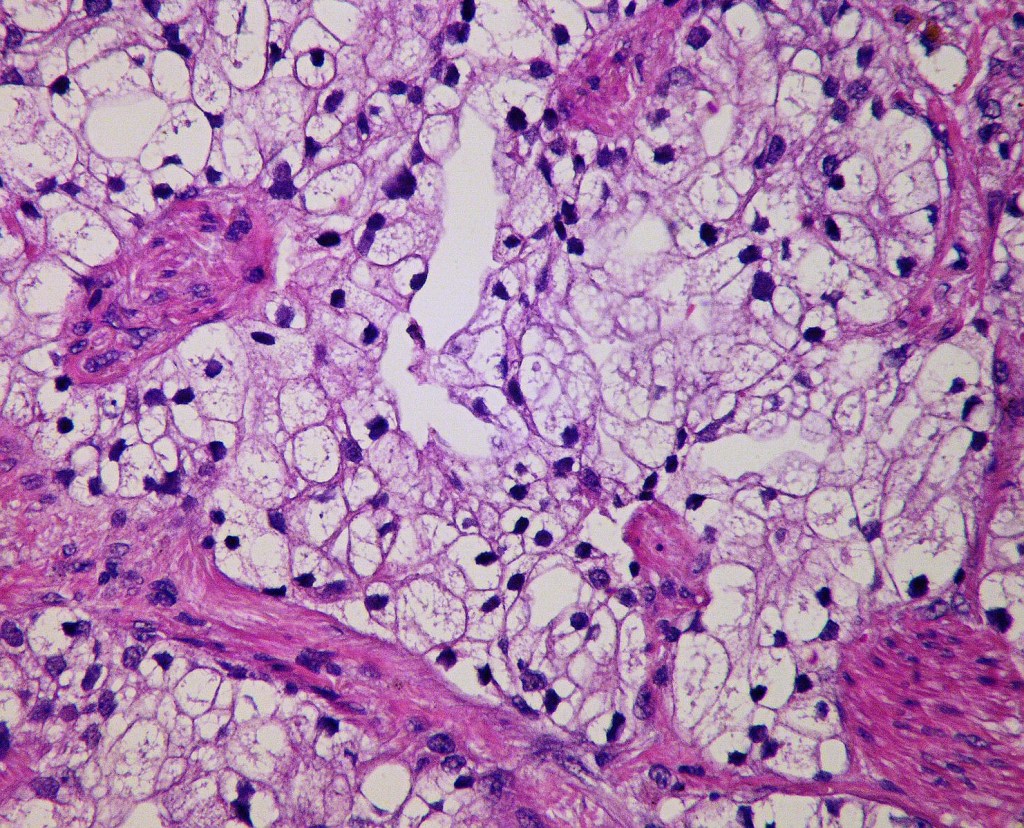
Immunotherapy makes advanced head and neck cancer patients live longer

Immunotherapy has revolutionised the care of many patients with kidney, bladder, skin and various other cancers.

Now a UK led study has shown that given the immunotherapy drug- pembrolizumab – before and after surgery– makes people live substantially longer.

Pembrolizumab is a very costly drug with limited affordability in developing countries.

In western countries, only people with private medical insurance or people having a publicly funded health systems such as NHS can afford it.

The fascinating immunotherapy data was presented at the prestigious annual meeting of the American Society of Clinical Oncology (ASCO) at Chicago.

Dr Sundar is a member of American Society of Clinical Oncology (ASCO) for more than 25 years.

References

  1. BBC News. Breakthrough cancer drug doubles survival in trial. Philippa Roxby
    Heath Reporter. May 2025.
  2. American Society of Clinical Oncology (ASCO) 2025: Neoadjuvant and adjuvant pembrolizumab plus standard of care (SOC) in resectable
    locally advanced head and neck squamous cell carcinoma (LA HNSCC): Exploratory
    efficacy analyses of the phase 3 KEYNOTE-689 study
    . ( Distant Metastasis-Free Survival (DMFS) data:
    Median DMFS was 51.8 months with pembrolizumab + SOC versus 35.7 months with SOC (HR 0.71, 95% CI 0.56–0.90).
    Estimated DMFS rate at 36 months was 59.1% versus 49.0%, respectively. )
  3. American Association for Cancer Research (AACR) Annual Meeting. 2025. Addition of Perioperative Pembrolizumab to Standard of Care in Newly Diagnosed Locally Advanced Head and Neck Cancer.
  4. Pembrolizumab With or Without Chemotherapy in Recurrent or Metastatic Head and Neck Squamous Cell Carcinoma: Updated Results of the Phase III KEYNOTE-048 Study.

Disclaimer: Please note – This blog is NOT medical advice. This blog is NOT a expert medical opinion on various topics. This blog is purely for information research only and do check the sources where cited. Please DO consult your own doctor to discuss concerns and options, which are relevant and specific to you. The views expressed in this blog are NOT, in any way whatsoever, intended to be a substitute for professional advice. The blog is NOT previewed, commissioned or otherwise endorsed, in any way, by any organisation that the author is associated with. The views expressed in this blog likely represents some of the author’s personal views held at the time of drafting the blog and MAY CHANGE overtime, particularly when new evidence comes to light.

Can vitamins increase risk of cancer ?

Yes

Vitamins are absolutely essential nutrients and vitamin deficiency causes various illness.

But a high dose of vitamin, far too much than needed by the body, is also bad.

Everything in moderation is good. Even an abundance of a good thing is bad.

It is similar to food. Lack of food would cause starvation and even death in the extreme. But too much of food causes obesity and other health problems. Same principle applies to vitamins.

A Cochrane review looked at the ability of vitamins to prevent lung cancer. The review concluded that there is “no beneficial effect of supplements for the prevention of lung cancer and lung cancer mortality in healthy people”

Worryingly, the review also found that the following:

Vitamin A supplements increase lung cancer incidence and mortality in smokers or persons exposed to asbestos”.

Vitamin C increases lung cancer incidence in women.

Vitamin E increases the risk of haemorrhagic strokes.

So if you are having a healthy balanced diet, be careful with vitamin supplements.

Drugs for preventing lung cancer in healthy people
Marcela Cortés-Jofré et al. Cochrane Database Syst Rev. 2020.
Free PMC article

Disclaimer: Please note- This blog is NOT medical advice. This blog is NOT a expert medical opinion on various topics. This blog is purely for information only and do check the sources where cited. Please DO consult your own doctor to discuss concerns and options relevant to you. The views expressed in this blog represent the author’s views held at the time of drafting the blog and may change overtime, particularly when new evidence comes to light. The blog is not previewed, commissioned or otherwise endorsed by any organisation that the author is associated with. The views expressed in this blog are not, in way whatsoever, intended to be a substitute for professional advice.

Immunotherapy improves survival of patients with Advanced Cervical cancer

Advanced Cervical cancer, that cannot be cured by surgery or radiotherpy, is usually treated with chemotherapy.

A study assessed the effectiveness of immunotherapy in combination with standard chemotherapy.

The results were presented at the ESMO (European Medical Oncology Conference) on 18th Sept 2021.

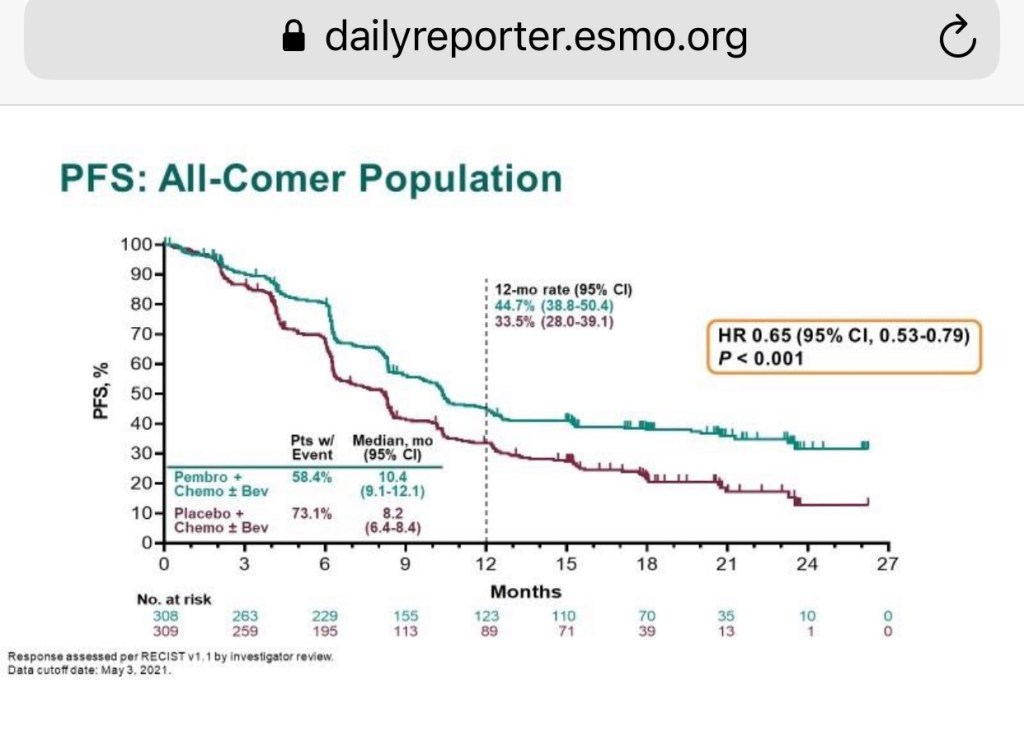
The combination of immunotherapy and chemotherapy is remarkably better and makes patients live longer.

This is likely to become the standard of care now.

References

Presidential Symposium 1 (ESMO Congress 2021). KEYNOTE-826 trial met its dual primary endpoints.

Disclaimer: Please note – This blog is NOT medical advice. This blog is NOT a expert medical opinion on various topics. This blog is purely for information only and do check the sources where cited. Please DO consult your own doctor to discuss concerns and options relevant to you. The views expressed in this blog are NOT, in way whatsoever, intended to be a substitute for professional advice. The blog is NOT previewed, commissioned or otherwise endorsed, in any way, by any organisation that the author is associated with. The views expressed in this blog likely represents some of the author’s personal views held at the time of drafting the blog and MAY CHANGE overtime, particularly when new evidence comes to light.

A new blood test for cancer

Cancer cells can float in a person’s blood. But finding them, in the past, used to be like “looking for a needle in a haystack”.

But new smart technology promises to detect these cancer cells easily and much early before a person develops symptoms. Detection of cancer cells at an early stage may be helpful for some patients.

A recently published study in the journal “Annals of Oncology” reports exciting results.

A Californian company called Grail has developed a blood test which seems to have a high degree of accuracy for detection of multiple cancers.

Times newspaper reports that “The NHS will begin a pilot scheme of the test with 140,000 people this year. If that is successful it will be used for millions of patients by 2025”

A word of caution though.

Just because something could be diagnosed early does not always mean that it is a good thing.

The most important thing is whether the early diagnosis can lead to better cure rates and a better quality of life.

If a test detects a cancer early but has no meaningful effect on quantity or quality of life, then it is not a good thing.

For example. Up to 80% of men have prostate cancer which can now be detected by a simple blood test called PSA. There is a good reason why we are NOT using the simple PSA test in every 80 year old.

Most 80 year old men die WITH prostate cancer rather than DUE to prostate cancer.

So why diagnose a cancer that is not causing symptoms if it is not going to make person live longer !

REFERENCES

Times. New blood test, created by Californian company Grail, detects cancers among over-50s. Kat Lay, Health Editor. Friday June 25 2021, 12.01am, The Times.

Clinical validation of a targeted methylation-based multi-cancer early detection test using an independent validation set. E A Klein et al. Ann Oncol. 2021.

Guardian. Blood test that finds 50 types of cancer is accurate enough to be rolled out.
Diagnostic tool being piloted by NHS England shows ‘impressive results’ in spotting tumours in early stages
Blood tests’ development could help the NHS further.
Nadeem Badshah and agency
Fri 25 Jun 2021 06.00 BST

Daily Mail. NHS trials ‘holy grail’ blood test that can spot 50 kinds of cancer: Ground-breaking check that can accurately detect two thirds of deadly cancers early in healthy people could save thousands of lives a year. By Victoria Allen Science Correspondent For The Daily Mail
00:00, 25 Jun 2021 , updated 10:04, 25 Jun 2021

NHS. Should I have a PSA test?

Disclaimer: Please note- This blog is NOT medical advice. This blog is NOT a expert medical opinion on various topics. This blog is purely for information only and do check the sources where cited. Please DO consult your own doctor to discuss concerns and options relevant to you. The views expressed in this blog represent the author’s views held at the time of drafting the blog and may change overtime, particularly when new evidence comes to light. The blog is not previewed, commissioned or otherwise endorsed by any organisation that the author is associated with. The views expressed in this blog are not, in way whatsoever, intended to be a substitute for professional advice.

Are many NHS staff reluctant to have COVID-19 vaccines?

No !

Vast majority of health care workers already had the COVID vaccine. Only a small minority have vaccine hestitancy.

A recent study found that about 90% of staff had at least one dose of the vaccine within 2 months of vaccine roll out. That is very impressive.

This study ( published in Lancet Journal) found that vaccines are very effective in reducing infections.

But the study also showed what we know already. Vaccination does not give 100% protection.

Everyone, in particular, health care staff need to continue with other COVID precautions such as masks, distancing and regular washing as advised by Government.

Reference: COVID-19 vaccine coverage in health-care workers in England and effectiveness of BNT162b2 mRNA vaccine against infection (SIREN): a prospective, multicentre, cohort study. Published:April 23, 2021 DOI: https://doi.org/10.1016/S0140-6736(21)00790-X

Disclaimer: Please note- This blog is NOT medical advice. This blog is NOT a expert medical opinion on various topics. This blog is purely for information only and do check the sources where cited. Please DO consult your own doctor to discuss concerns and options relevant to you. The views expressed in this blog represent the author’s views held at the time of drafting the blog and may change overtime, particularly when new evidence comes to light. The blog is not previewed, commissioned or otherwise endorsed by any organisation that the author is associated with. The views expressed in this blog are not, in way whatsoever, intended to be a substitute for professional advice.