Darolutamide need to used along the standard hormone injections which lower serum Testosterone.
Disclaimer: Please note – This blog is NOT medical advice. This blog is NOT a expert medical opinion on various topics. This blog is purely for information research only and do check the sources where cited. Please DO consult your own doctor to discuss concerns and options, which are relevant and specific to you. The views expressed in this blog are NOT, in any way whatsoever, intended to be a substitute for professional advice. The blog is NOT previewed, commissioned or otherwise endorsed, in any way, by any organisation that the author is associated with. The views expressed in this blog likely represents some of the author’s personal views held at the time of drafting the blog and MAY CHANGE overtime, particularly when new evidence comes to light.
In patients with incurable & widespread prostate cancer, one of the treatment option is a combination of three treatments (“TRIPLET THERAPY”)
This TRIPLET combination involves CHEMOTHERAPY given with HORMONE INJECTIONS and HORMONE TABLETS.
But many prostate cancer patients are frail and elderly with multiple other medical problems. So chemotherapy is not used in those patients and only Hormone tablets and injections are used .
The DOUBLET combination of HORMONE INJECTIONS and HORMONE TABLETS do a good very job indeed and frail patients are spared the nasty side effects from chemotherapy.
A study presented at the annual congress of European Society for Medical Oncology at BERLIN shows that if chemotherapy at a lower dose and is given every 2 weeks rather the typical every 3 weeks , then chemotherapy is better tolerated. The 2 weekly schedule resulted in statistically significant and clinically meaningful reduction in the incidence of severe side effects.
ESMO . LBA92 – 3-weekly docetaxel 75 mg/m2 vs 2-weekly docetaxel 50 mg/m2 in combination with darolutamide + ADT in patients with mHSPC: Results from the randomised phase III ARASAFE trial
Disclaimer: Please note – This blog is NOT medical advice. This blog is NOT a expert medical opinion on various topics. This blog is purely for information research only and do check the sources where cited. Please DO consult your own doctor to discuss concerns and options, which are relevant and specific to you. The views expressed in this blog are NOT, in any way whatsoever, intended to be a substitute for professional advice. The blog is NOT previewed, commissioned or otherwise endorsed, in any way, by any organisation that the author is associated with. The views expressed in this blog likely represents some of the author’s personal views held at the time of drafting the blog and MAY CHANGE overtime, particularly when new evidence comes to light.
Yes, it can be helpful but only in certain circumstances.
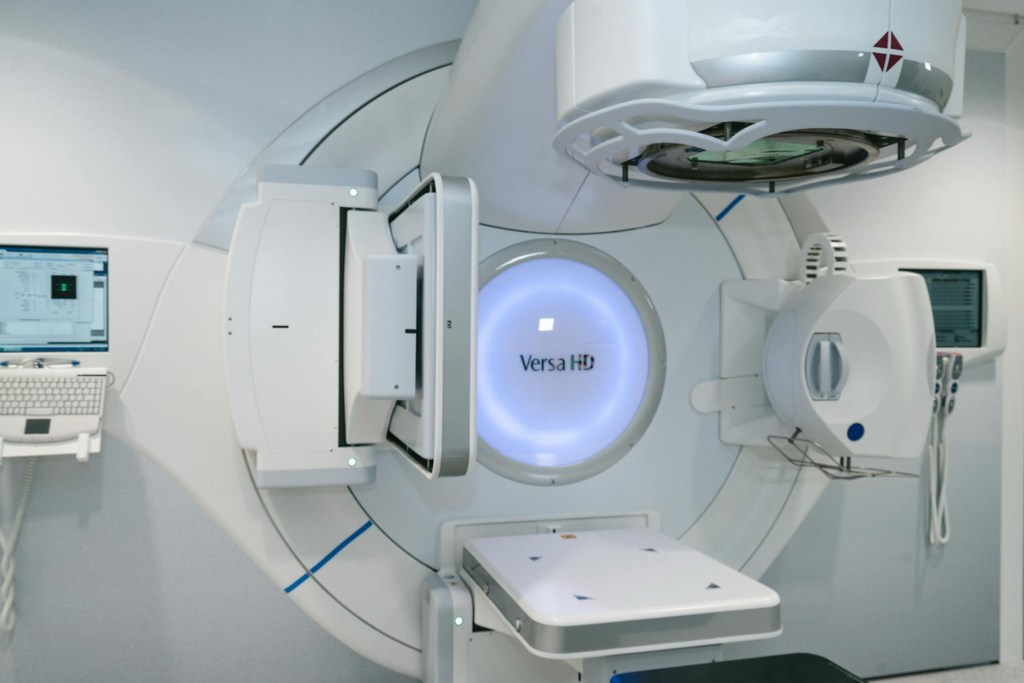
Former US President Biden is in the news this week and multiple media outlets reports that Biden is having radiation therapy to prostate along with hormone therapy.
The news outlets also indicate that Biden has aggressive prostate cancer which has spread to the bones.
Any spread of prostate cancer to bones is classified as stage 4 prostate cancer.
If cancer has NOT spread outside the prostate, the combination of radiation and hormones could be curative .
But, with stage 4 prostate cancer, radiation is generally not curative. This is because once the cancer cells have spread, it is extremely difficult to eradicate those cancer cells permanently.
A large UK trial ( STAMPEDE trials) found that “Radiotherapy to the prostate did NOT improve overall survival for unselected patients with newly diagnosed metastatic prostate cancer”
So if radiation does not improve survival, why did the oncologists offer radiation therapy to Biden?
Full medical details are not available and so it is difficult to give a definitive answer in Biden’s case.
There are few possibilities.
In the above mentioned STAMPEDE trial , in a smaller select group of patients, Radiation therapy did improve overall survival in men with a low metastatic burden. ( ie fewer cells have spread).
One can only speculate whether that’s been the case with regards to Mr Biden.
Disclaimer: Please note – This blog is NOT medical advice. This blog is NOT a expert medical opinion on various topics. This blog is purely for information research only and do check the sources where cited. Please DO consult your own doctor to discuss concerns and options, which are relevant and specific to you. The views expressed in this blog are NOT, in any way whatsoever, intended to be a substitute for professional advice. The blog is NOT previewed, commissioned or otherwise endorsed, in any way, by any organisation that the author is associated with. The views expressed in this blog likely represents some of the author’s personal views held at the time of drafting the blog and MAY CHANGE overtime, particularly when new evidence comes to light.
Many people were shocked by the news that president Joe Biden, aged 82, has been diagnosed with aggressive prostate cancer.
Prostate cancer is quite common in men in their eighties. Nearly two third of men in eighties would have prostate cancer and most of these men do not die of prostate cancer! This is because lot of the cancers in elderly men are low to medium risk.
But men who develop aggressive prostate cancer are at higher risk of death from prostate cancer. Aggressive prostate cancer can spread to bone and other organs.
It has to be pointed out that aggressive prostate cancer is not immediately terminal in vast majority of men, even if the cancer has spread to bone.
Disclaimer: Please note – This blog is NOT medical advice. This blog is NOT a expert medical opinion on various topics. This blog is purely for information research only and do check the sources where cited. Please DO consult your own doctor to discuss concerns and options, which are relevant and specific to you. The views expressed in this blog are NOT, in any way whatsoever, intended to be a substitute for professional advice. The blog is NOT previewed, commissioned or otherwise endorsed, in any way, by any organisation that the author is associated with. The views expressed in this blog likely represents some of the author’s personal views held at the time of drafting the blog and MAY CHANGE overtime, particularly when new evidence comes to light.
Low risk prostate cancers are sometimes managed by a “wait and watch” approach and frequent monitoring rather than immediate prostate surgery.
Is this approach safe? Yes
A recent report after 10 year follow-up , from a Canadian trial shows that this approach can be safely done with an active monitoring protocol.
In this study, 10 years after diagnosis, half the men were fine without any worsening of their prostate cancer. Reassuringly only less than 2% developed metastatic disease, and less than 1% died of their disease.
These results confirm that “active surveillance” can be an effective management strategy for patients diagnosed with favorable-risk prostate cancer.
Disclaimer: Please note – This blog is NOT medical advice. This blog is NOT a expert medical opinion on various topics. This blog is purely for information only and do check the sources where cited. Please DO consult your own doctor to discuss concerns and options relevant to you. The views expressed in this blog are NOT, in any way whatsoever, intended to be a substitute for professional advice. The blog is NOT previewed, commissioned or otherwise endorsed, in any way, by any organisation that the author is associated with. The views expressed in this blog likely represents some of the author’s personal views held at the time of drafting the blog and MAY CHANGE overtime, particularly when new evidence comes to light.
Combination therapy with Hormone therapy and Radiotherapy is used with curative intent for treatment of prostate cancer.
There is some debate which treatment should be started first. At present, the hormone therapy is started first and radiotherpy is started second at a later date.
This is because many previous clinical trials, which found beneficial effects for the combination therapy, involved starting hormones first.
One advantage of starting hormone therapy immediately and delaying the start date of radiotherpy is that hormone therapy shrinks the size of prostate before radiotherpy . This greatly helps when image-guided Radiotherpy is planned later on.
A group of high Calibre researchers and authors from Canada and USA have published paper arguing in favour of radiotherpy starting first and starting hormones afterwards.
Some of the authors behind this paper in Journal of Clinical oncology have previously published seminal, practice changing, papers in field of prostate cancer.
My personal view, is that we have to wait for confirmatory evidence before changing the current practice.
I have to resort to the megaphone of a provocative headline grabbing title so that oncologists won’t uncritically accept the conclusion of the paper
Disclaimer: Please note- This blog is NOT medical advice. This blog is NOT a expert medical opinion on various topics. This blog is purely for information only and do check the the sources where cited. Please DO consult your own doctor to discuss concerns and options relevant to you. The views expressed in this blog represent the author’s views held at the time of drafting the blog and may change overtime, particularly when new evidence comes to light. The blog is not previewed, commissioned or otherwise endorsed by any organisation the author is associated with. The views expressed in this blog are not in way intended to be a substitute for professional advice.










 Dr S Sundar