Can some advanced kidney cancer patients be managed by wait and watch only ?

Yes !

When the cancer is advanced , the natural inclination of doctors and patients is chose immediate therapy .

This is the logical and correct thing to do in many cancer patients.

But there are exceptions!

For example, it is well known that some advanced kidney cancer patients can be managed by “active surveillance” or “wait and watch policy” ONLY without any immediate cancer treatment.

A study presented at a Cancer meeting in Chicago confirms that this approach is safe and feasible in “carefully selected” patients.

The study patients who were managed by “active surveillance” or “wait and watch policy” ONLY had preservation of quality of life compared to patients on cancer treatments.

This approach is reassuring but this approach is not for everyone; the study is about kidney cancer patients only. Not other cancers. Patients do need to make an informed choice after discussing the option with their oncologists.

The study data was presented at the prestigious annual meeting of the American Society of Clinical Oncology (ASCO) at Chicago.

Dr Sundar is a member of American Society of Clinical Oncology (ASCO) and has been a member for more than 25 years.

References

American Society of Clinical Oncology (ASCO) 2025. Real-world quality of life (QOL) in patients (pts) with metastatic renal cell carcinoma (mRCC) on active surveillance (AS) in the ODYSSEY prospective observational study. Publication: Journal of Clinical Oncology.

Disclaimer: Please note – This blog is NOT medical advice. This blog is NOT a expert medical opinion on various topics. This blog is purely for information research only and do check the sources where cited. Please DO consult your own doctor to discuss concerns and options, which are relevant and specific to you. The views expressed in this blog are NOT, in any way whatsoever, intended to be a substitute for professional advice. The blog is NOT previewed, commissioned or otherwise endorsed, in any way, by any organisation that the author is associated with. The views expressed in this blog likely represents some of the author’s personal views held at the time of drafting the blog and MAY CHANGE overtime, particularly when new evidence comes to light.
New drug for and 2nd and 3rd line treatment of Kidney cancer

Advanced Kidney cancer can be kept under control for long periods with current treatments.

Combination of immunotherapy and agents targeting VEGF are commonly used in 1st line treatment of advanced Kidney cancers.

For those patients who cancers stop responding to these above treatments, there is good news.

A new agent targeting cancers in a different way has become available recently and updated results are very encouraging.

This new drug called Belzutifan targets a different weak spot in the cancer. Belzutifan has shown better cancer control rates when compared to another drug called Everolimus.

Belzutifan results are being presented at ESMO congress in Barcelona

Belzutifan will become a standard of care in this setting now

Reference

ESMO news. Belzutifan Shows a Significant Benefit Over Everolimus in Patients with Advanced Clear Cell RCC After Both ICI and Antiangiogenic Therapies

NEJM Belzutifan versus Everolimus for Advanced Renal-Cell Carcinoma

Disclaimer: Please note – This blog is NOT medical advice. This blog is NOT a expert medical opinion on various topics. This blog is purely for information only and do check the sources where cited. Please DO consult your own doctor to discuss concerns and options relevant to you. The views expressed in this blog are NOT, in any way whatsoever, intended to be a substitute for professional advice. The blog is NOT previewed, commissioned or otherwise endorsed, in any way, by any organisation that the author is associated with. The views expressed in this blog likely represents some of the author’s personal views held at the time of drafting the blog and MAY CHANGE overtime, particularly when new evidence comes to light.

Why advanced cancer patients choose to have chemotherapy!

Many people would be surprised to learn that cancer patients with advanced incurable cancer actively choose chemotherapy for relatively small benefits.

Chemotherapy has the potential to relieve cancer related symptoms but in many advanced cancers, Chemotherapy prolongs survival ( on average ) only by a few months . Yet, lot of patients do opt to try chemotherapy which can be sometimes quite toxic.

Even in countries such as U.K. where oncologists are NOT on a fee for service contract (such as NHS), lot of patients do opt for Chemotherapy.

Perhaps, Chemotherapy gives hope for people not ready to face death.

Read my views in BMJ and contribute your thoughts on this topic through the rapid response section of online BMJ.

BMJ Article: Death, futility, and oncology

Free to access link: http://bmj.com/cgi/content/full/bmj.o1785?ijkey=Du1yaSA5KhkGz23&keytype=ref

Disclaimer: Please note – This blog is NOT medical advice. This blog is NOT a expert medical opinion on various topics. This blog is purely for information only and do check the sources where cited. Please DO consult your own doctor to discuss concerns and options relevant to you. The views expressed in this blog are NOT, in any way whatsoever, intended to be a substitute for professional advice. The blog is NOT previewed, commissioned or otherwise endorsed, in any way, by any organisation that the author is associated with. The views expressed in this blog likely represents some of the author’s personal views held at the time of drafting the blog and MAY CHANGE overtime, particularly when new evidence comes to light.

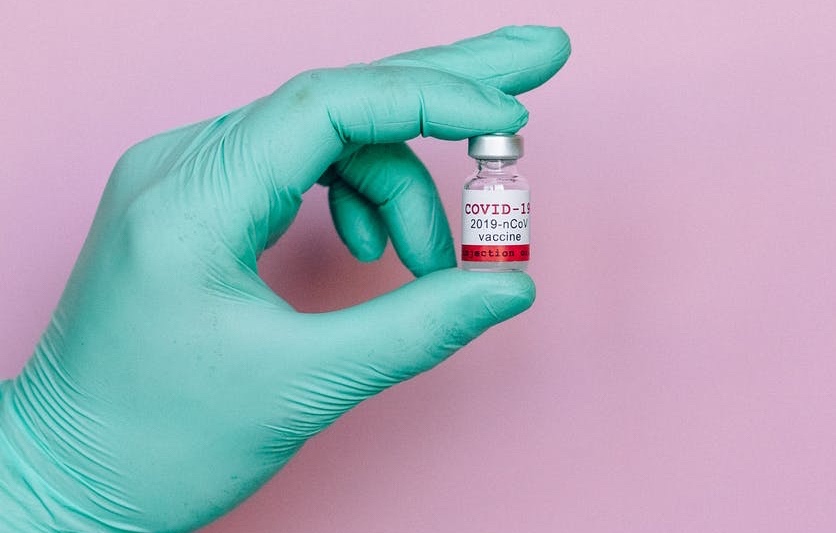
COVID vaccination of 12-15 year olds: benefits vs risks

Should young teenagers have the COVID vaccine?

At present, this is a difficult question to give a straightforward answer.

For most of “middle to old age” people, the benefits of COVID vaccines are far greater than potential side effects from vaccines.

On the other hand, in case of 12-15 year olds, the benefits are marginally better than risks and individual circumstances need to be taken into account.

UK’s vaccine advisory body is called JCVI. ( Joint Committee on Vaccination and Immunisation ).

JCVI on Friday declined to recommend universal vaccination of all 12-15 year olds. This is because the chances of children becoming seriously ill from COVID-19 is very small. This needs to be balanced against a tiny risk of myocarditis, or inflammation of the heart in young people due to the vaccines. It is a matter of weighing up disease versus vaccine.

But, this does not mean COVID vaccines are not being given to 12-15 year olds.

USA, France, Italy, Israel and Ireland are offering vaccines to this group.

In U.K., vulnerable children with heart and lung problems, blood disorders, diabetes and various other diseases are eligible for the COVID vaccine. Children living with extremely vulnerable adults are also eligible.

Parents with healthy 12-15 year olds have a difficult choice to make in the coming weeks.

References

BMJ news. Covid-19: JCVI opts not to recommend universal vaccination of 12-15 year olds
BMJ 2021; 374 doi: https://doi.org/10.1136/bmj.n2180 (Published 03 September 2021)
Cite this as: BMJ 2021;374:n2180

BBC news. Covid: What do parents think about vaccinating children?
By Jennifer Meierhans & Kris Bramwell
BBC News

BBC news. Scientists not backing Covid jabs for 12 to 15-year-olds
By Philippa Roxby and Nick Triggle
BBC News

BBC news. Why vaccinating all teens is a difficult decision
By Philippa Roxby
Health reporter

Gov.U.K. Guidance
Coronavirus (COVID-19): antibody testing

Updated 22 August 2021

NHS. Antibody testing to check if you’ve had coronavirus (COVID-19)

Disclaimer: Please note – This blog is NOT medical advice. This blog is NOT a expert medical opinion on various topics. This blog is purely for information only and do check the sources where cited. Please DO consult your own doctor to discuss concerns and options relevant to you. The views expressed in this blog are NOT, in way whatsoever, intended to be a substitute for professional advice. The blog is NOT previewed, commissioned or otherwise endorsed, in any way, by any organisation that the author is associated with. The views expressed in this blog likely represents some of the author’s personal views held at the time of drafting the blog and MAY CHANGE overtime, particularly when new evidence comes to light.

A new blood test for cancer

Cancer cells can float in a person’s blood. But finding them, in the past, used to be like “looking for a needle in a haystack”.

But new smart technology promises to detect these cancer cells easily and much early before a person develops symptoms. Detection of cancer cells at an early stage may be helpful for some patients.

A recently published study in the journal “Annals of Oncology” reports exciting results.

A Californian company called Grail has developed a blood test which seems to have a high degree of accuracy for detection of multiple cancers.

Times newspaper reports that “The NHS will begin a pilot scheme of the test with 140,000 people this year. If that is successful it will be used for millions of patients by 2025”

A word of caution though.

Just because something could be diagnosed early does not always mean that it is a good thing.

The most important thing is whether the early diagnosis can lead to better cure rates and a better quality of life.

If a test detects a cancer early but has no meaningful effect on quantity or quality of life, then it is not a good thing.

For example. Up to 80% of men have prostate cancer which can now be detected by a simple blood test called PSA. There is a good reason why we are NOT using the simple PSA test in every 80 year old.

Most 80 year old men die WITH prostate cancer rather than DUE to prostate cancer.

So why diagnose a cancer that is not causing symptoms if it is not going to make person live longer !

REFERENCES

Times. New blood test, created by Californian company Grail, detects cancers among over-50s. Kat Lay, Health Editor. Friday June 25 2021, 12.01am, The Times.

Clinical validation of a targeted methylation-based multi-cancer early detection test using an independent validation set. E A Klein et al. Ann Oncol. 2021.

Guardian. Blood test that finds 50 types of cancer is accurate enough to be rolled out.
Diagnostic tool being piloted by NHS England shows ‘impressive results’ in spotting tumours in early stages
Blood tests’ development could help the NHS further.
Nadeem Badshah and agency
Fri 25 Jun 2021 06.00 BST

Daily Mail. NHS trials ‘holy grail’ blood test that can spot 50 kinds of cancer: Ground-breaking check that can accurately detect two thirds of deadly cancers early in healthy people could save thousands of lives a year. By Victoria Allen Science Correspondent For The Daily Mail
00:00, 25 Jun 2021 , updated 10:04, 25 Jun 2021

NHS. Should I have a PSA test?

Disclaimer: Please note- This blog is NOT medical advice. This blog is NOT a expert medical opinion on various topics. This blog is purely for information only and do check the sources where cited. Please DO consult your own doctor to discuss concerns and options relevant to you. The views expressed in this blog represent the author’s views held at the time of drafting the blog and may change overtime, particularly when new evidence comes to light. The blog is not previewed, commissioned or otherwise endorsed by any organisation that the author is associated with. The views expressed in this blog are not, in way whatsoever, intended to be a substitute for professional advice.

Is drinking alcohol within guideline amount safe ?

No !

It would be a shock for many to hear that “No amount of alcohol is absolutely safe”.

A team at Imperial College London analysed MRI scans of heart, brain and liver of people who drink alcohol. They found that higher alcohol consumption was related to smaller brain, weaker heart and fatty liver.

They reported that “there is no ‘safe threshold’ below which there were no toxic effects of alcohol.

Previously other studies have also reported that there is no safe limit for alcohol!

In 2018, a Lancet study reported that the risk of death and risk of cancers increased substantially with increasing levels of alcohol consumption; and there was no safe limit below which there was no risk.

The message is “Avoid alcohol”

If you can’t, then atleast drink as little as possible.

References:

Alcohol consumption in the general population is associated with structural changes in multiple organ systems. Evangelos Evangelou, Hideaki Suzuki, Wenjia Bai, Raha Pazoki, He Gao, Paul M Matthews MD, PhD, Paul Elliott. https://doi.org/10.7554/eLife.65325

Does Drinking Within Low-Risk Guidelines Prevent Harm? Implications for High-Income Countries Using the International Model of Alcohol Harms and Policies
Adam Sherk et al. J Stud Alcohol Drugs. 2020 May

Lancet. GBD 2016 Alcohol Collaborators
Alcohol use and burden for 195 countries and territories, 1990–2016: a systematic analysis for the Global Burden of Disease Study 2016.
Lancet. 2018; (published online Aug 23.)
http://dx.doi.org/10.1016/S0140-6736(18)31310-2

Disclaimer: Please note- This blog is NOT medical advice. This blog is NOT a expert medical opinion on various topics. This blog is purely for information only and do check the sources where cited. Please DO consult your own doctor to discuss concerns and options relevant to you. The views expressed in this blog represent the author’s views held at the time of drafting the blog and may change overtime, particularly when new evidence comes to light. The blog is not previewed, commissioned or otherwise endorsed by any organisation that the author is associated with. The views expressed in this blog are not, in way whatsoever, intended to be a substitute for professional advice.

Are COVID-19 vaccines safe in cancer patients having immunotherapy?

Yes, Pfizer vaccine is safe.

A recent study published in the esteemed Lancet Oncology Journal shows that the vaccine is well tolerated in patients having immunotherapy.

Unlike cancer chemotherapy, immunotherapy works differently. It works by releasing the in-built brakes holding down the immune system thereby boosting the body’s immune system against cancer.

There has been some theoretical concerns whether this might lead to COVID vaccine causing more side effects.

Reassuringly, the Vaccine side effects were NO different from those seen in people not having immunotherapy. The Vaccine also did NOT increase the immunotherapy side effects.

Immunotherapy is increasingly used widely in treatment of cancer are often better tolerated than chemotherapy.

So the study is good news for tens of thousands of patients on immunotherapy and any cancer patient who has hesitated before, should seriously consider having the vaccine now

COVID infection could be very nasty in cancer patients and all evidence points to the benefits of vaccine far outweighing any risks from the Vaccine.

References

Short-term safety of the BNT162b2 mRNA COVID-19 vaccine in patients with cancer treated with immune checkpoint inhibitors
The Lancet Oncology. Published: April 1, 2021
Barliz Waissengrin et al. DOI:https://doi.org/10.1016/S1470-2045(21)00155-8

Disclaimer: Please note- This blog is NOT medical advice. This blog is NOT a expert medical opinion on various topics. This blog is purely for information only and do check the the sources where cited. Please DO consult your own doctor to discuss concerns and options relevant to you. The views expressed in this blog represent the author’s views held at the time of drafting the blog and may change overtime, particularly when new evidence comes to light. The blog is not previewed, commissioned or otherwise endorsed by any organisation the author is associated with. The authors views are not in way intended to be a substitute for professional advice.

Anything potentially good from this COVID-19 pandemic?

It might seem foolish to ask the question “Anything good from this COVID-19 pandemic?” when so many people across the world has been so badly affected by the coronavirus pandemic.

There is some truth in the proverb that “every dark cloud has a silver lining” and no matter how bad the current pandemic is now, human spirit and endeavour would get something positive out of it.

One possible good thing that has come out of the pandemic is the “mRNA technology”.

Of the three vaccines so far, two of them the Pfizer vaccine and the Moderna vaccine are based on RNA technology.

The successful use of RNA technology for Coronavirus Vaccines would hopefully enable the versatile RNA technology to be further developed and successfully used a cancer treatment in near future.

Further clinical trials in cancer patients would be done to provide proof of their potential.

References:

Bloomberg. Technology & Ideas. mRNA Vaccines Could Vanquish Covid Today, Cancer Tomorrow.
The best news about the mRNA shots from BioNTech and Moderna is that the same technique could also defeat many other diseases.

MSKCC. In a Twist, Scientists Find Cancer Drivers Hiding in RNA, Not DNA.

Jerusalem Post Health & Science. Israeli scientists use mRNA COVID-19 vaccine technology to fight cancer. By MAAYAN JAFFE-HOFFMAN NOVEMBER 24, 2020 20:08

Disclaimer: Please note- This blog is NOT medical advice. This blog is purely for information only and do check the the sources where cited. Please DO consult your own doctor to discuss concerns and options relevant to you.

The views expressed in this blog represent the author’s views held at the time of drafting the blog and may change overtime, particularly when new evidence comes to light. The blog is not necessarily endorsed by any organisation the author is associated with and the authors views are not in way intended to be a substitute for professional advice.

Does smoking cause Body pain ?

Yes. Smoking can cause body pain and make you miserable.

Smoking is bad for various obvious reasons including the risk of developing of cancer. As smoking can make you miserable with pain, it’s time to make a new year resolution to stop smoking.

A large study done in UK shows that current and ex-smokers have a higher degree of bodily pain.

The study involved 223,537 people who were surveyed between 2009 and 2013 by the British Broadcasting Corporation (BBC) Lab UK Study.

As it is such a big study, the conclusions do need to be taken seriously.

Definitely another reason for quitting smoking this new year !

Reference:

Associations between smoking status and bodily pain in a cross-sectional survey of UK respondents. Addictive Behaviors 102:106229 · December 2019. DOI: 10.1016/j.addbeh.2019.106229

Smokers past and present ‘live in more pain’ – BBC News

Disclaimer: Please note- This blog is NOT medical advice. This blog is purely for information only and do check the the sources where cited. Please DO consult your own doctor to discuss concerns and options relevant to you.

The views expressed in this blog represent the author’s views held at the time of drafting the blog and may change overtime, particularly when new evidence comes to light. The blog is not necessarily endorsed by any organisation the author is associated with and views are not substitute for professional advice.

Is the COVID-19 Coronavirus vaccine safe for use in patients having chemotherapy and immunotherapy?

Yes, the available indirect evidence indicates that the anticipated benefits overweigh the potential risks.

Cancer patients, particularly those on chemotherapy have compromised immune systems and hence more vulnerable to COVID-19 Coronavirus complications.

The guidelines indicate that anticipated benefits of vaccine are greater than unknown risks from the Coronavirus vaccines.

The Vaccine trials deliberately included lot of healthy people. Very few people with cancer, particularly cancer patients on active treatment, were included in the COVID-19 trials. So there is not much direct evidence regarding efficacy and safety of Vaccines in cancer patients. But indirect evidence significantly favours Coronavirus vaccination in cancer patients.

Flu vaccines are regularly used in cancer patients without any major side effects specific to cancer patients. No increase in incidence or severity of drug side effects were seen in immunotherapy patients having flu vaccines.

On balance, Vaccination is most likely to be of utmost benefit for most advanced cancer patients on active treatment.

References:

ESMO STATEMENTS FOR VACCINATION AGAINST COVID-19 IN PATIENTS WITH CANCER.

Guidance: COVID-19: the green book, chapter 14a
Coronavirus (COVID-19) vaccination information
for public health professionals. (UK),

Cochrane: Influenza (flu) vaccination for preventing influenza in adults with cancer

Safety of Inactivated Influenza Vaccine in Cancer Patients Receiving Immune Checkpoint Inhibitors
Curtis R Chong et al. Clin Infect Dis. 2020.

ESMO: CANCER PATIENT MANAGEMENT DURING THE COVID-19 PANDEMIC.

Kuderer NM Choueiri TK Shah DP et al.
Clinical impact of COVID-19 on patients with cancer (CCC19): a cohort study. Lancet. 2020; 395: 1907-1918

Disclaimer: Please note- This blog is NOT medical advice. This blog is purely for information only and do check the the sources where cited. Please consult your own doctor to discuss concerns and options relevant to you.
The views expressed in this blog represent the author’s views held at the time of drafting the blog and is likely to change overtime, particularly when new evidence comes to light. The blog is not necessarily endorsed by any organisation the author is associated with and views are not substitute for professional advice.

Cancer treatment delays during the pandemic

The Staff at National Health Service in UK are doing an admirable job during the pandemic. In the particular, the frontline staff (“patient-facing”) are showing great courage in face of great difficulties and are primarily driven by altruism.

But the pressures of pandemic means many routine scans and hospital clinic appointments have been cancelled particularly during the first wave. There is a great worry about delayed diagnosis of cancer and delayed treatment of cancer.

A paper in BMJ reports that cancer patients survival can be significantly compromised.

But, as with everything else in life, things are not always what they look like at first impression. Even things that are logical and common sense at first glance do not turn out to be simple and clear.

Firstly, delays and cancellations of scans paradoxically could have psychologically benefited some cancer patients . This might seem counterintuitive or even an outrageous statement.

But there are some cancers which are being over diagnosed. A Cancer diagnosis does not always mean a death sentence. Some cancers do not cause problems for a long time or never in the life time of a person. These cancers do not need to be diagnosed promptly. Not being diagnosed with these cancers prevents the psychological burden of a cancer diagnosis. This “over diagnosis” would be expectedly less during pandemic.

Secondly, treatment delays could be caused by a cancer that is advanced and the need for time consuming additional investigations and procedures. Sometimes delays are caused by patients needing to see many medical specialists for the treatment. So it’s the aggressive cancer and the complex patient care that would cause the delay and is responsible for poor outcome rather than the delay by itself.

Read the BMJ article and make your views known.

Mortality due to cancer treatment delay: systematic review and meta-analysis
BMJ 2020; 371 doi: https://doi.org/10.1136/bmj.m4087 (Published 04 November 2020)
Cite this as: BMJ 2020;371:m4087

Overdiagnosis in Cancer
H. Gilbert Welch, William C. Black
JNCI: Journal of the National Cancer Institute, Volume 102, Issue 9, 5 May 2010, Pages 605–613, https://doi.org/10.1093/jnci/djq099

Disparities in head and neck cancer: assessing delay in treatment initiation
Urjeet A Patel et al. Laryngoscope. 2012 Aug.

Khorana AA, Tullio K, Elson P, Pennell NA, Grobmyer SR, Kalady MF, et al. (2019) . Time to initial cancer treatment in the United States and association with survival over time: An observational study. PLoS ONE 14(4): e0215108. doi:10.1371/journal.pone.0215108

New treatment combination for advanced Kidney cancers

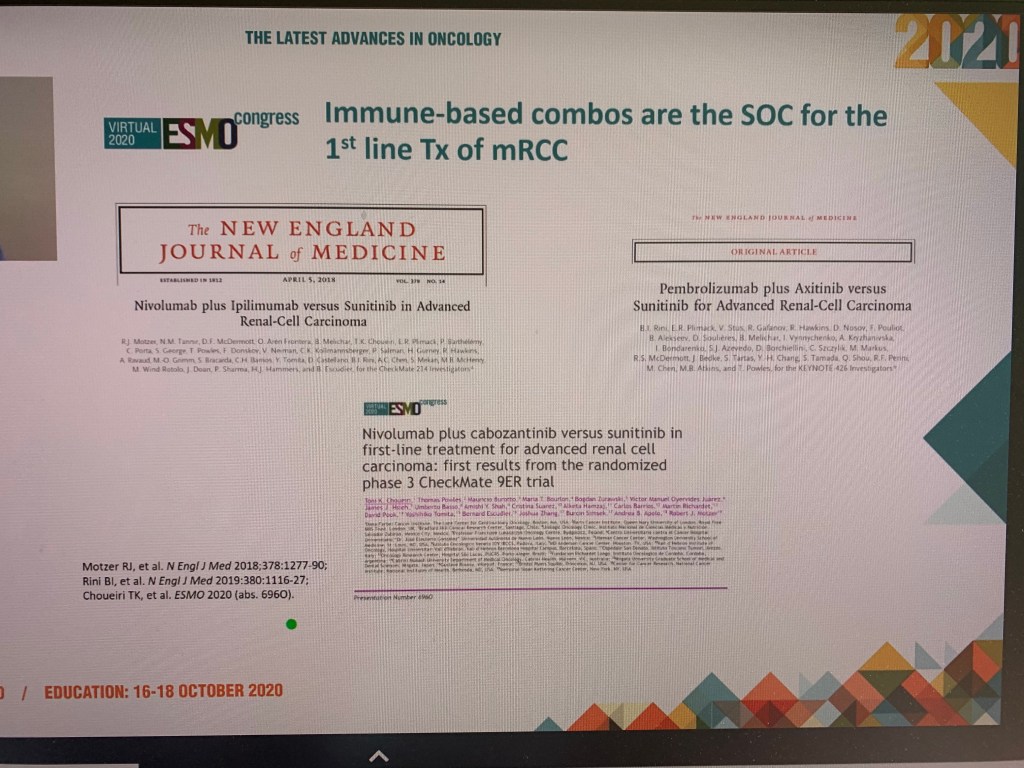
The treatment of kidney cancer has dramatically changed in the last decade. More treatments are in pipeline and there was more exciting news this week.

Upfront immunotherapy in combination with other agents is very promising in 1st line treatment of advanced kidney cancers.

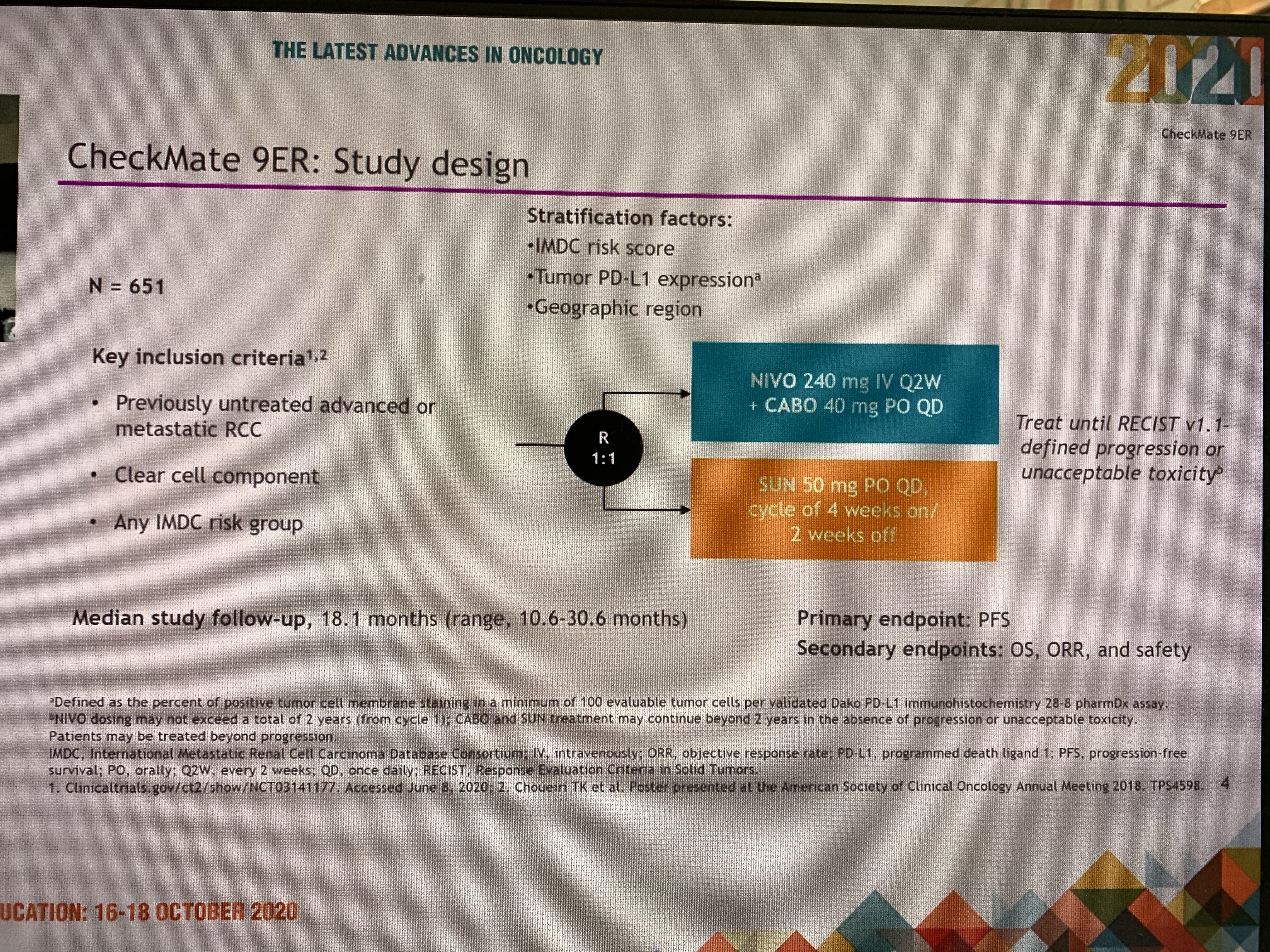
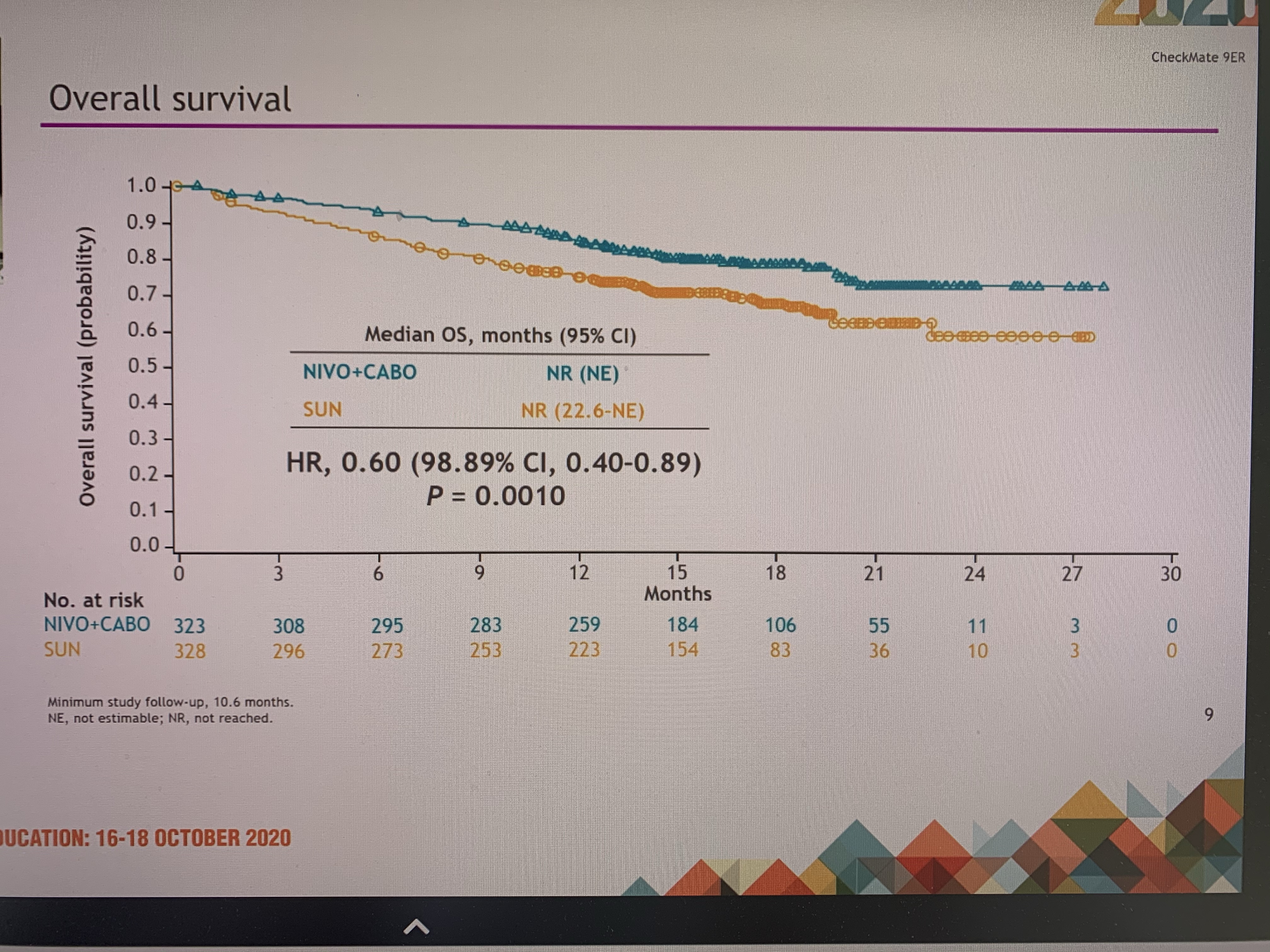
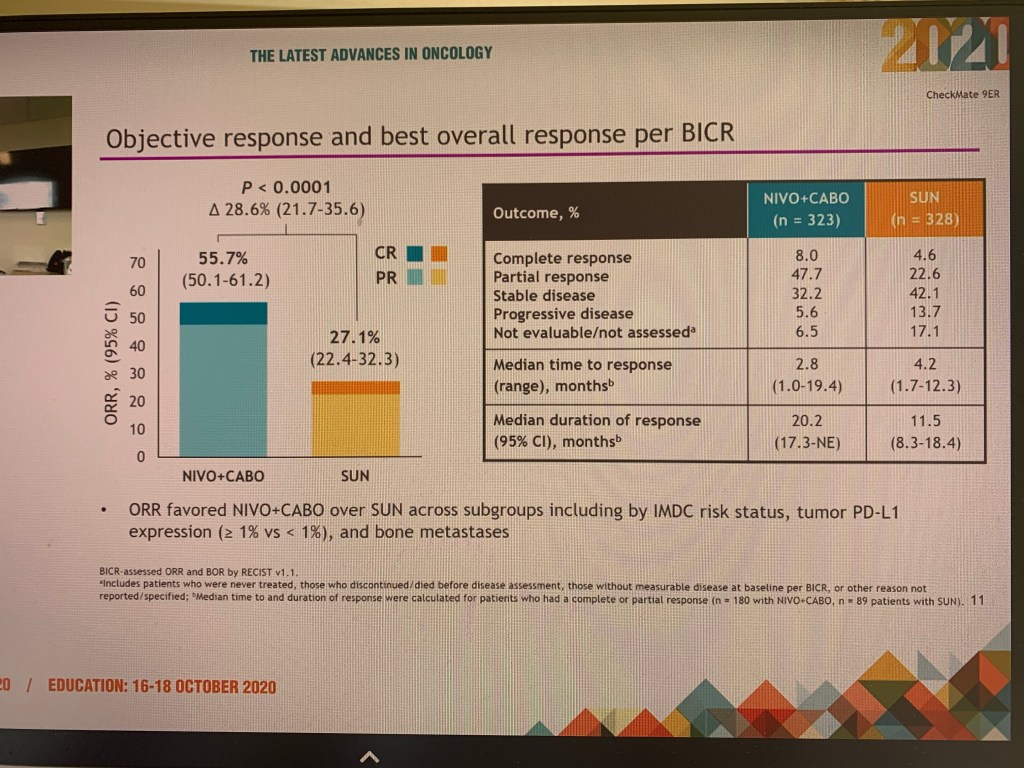
Data presented at ESMO ( European Society of Medical Oncology) shows that the combination of Nivolumab and Cabozantinib is better than Sunitinib alone.

Nivolumab and Cabozantinib” combo joins the other combos “Nivolumab and Ipililumab” and “Pembrolizumab and Axitinib “ as 1st line options

Disclaimer: Please note- This blog is NOT medical advice. This blog is purely for information only and do check the the sources where cited. Please consult your own doctor to discuss concerns and options relevant to you.

The views expressed in this blog represent the author’s views held at the time of drafting the blog and is likely to change overtime, particularly when new evidence comes to light. The blog is not necessarily endorsed by any organisation the author is associated with and views are not substitute for professional advice.