Is radiotherapy to prostate useful even after the cancer has escaped from prostate?

Yes, it can be helpful but only in certain circumstances.

Former US President Biden is in the news this week and multiple media outlets reports that Biden is having  radiation therapy to prostate along with hormone therapy.

The news outlets also indicate that Biden has aggressive prostate cancer which has spread to the bones.

Any spread of prostate cancer to bones is classified as stage 4 prostate cancer.

If cancer has NOT spread outside the prostate, the combination of radiation and hormones could be curative .

But, with stage 4 prostate cancer, radiation is generally not curative. This is because once the cancer cells have spread, it is extremely difficult to eradicate those cancer cells permanently. 

A large UK trial ( STAMPEDE trials) found that “Radiotherapy to the prostate did NOT improve overall survival for unselected patients with newly diagnosed metastatic prostate cancer”

So if radiation does not improve survival, why did the oncologists offer radiation therapy to Biden?

Full medical details are not available and so it is difficult to give a definitive answer in Biden’s case.

There are few possibilities.

In the above mentioned STAMPEDE trial , in a smaller select group of patients, Radiation therapy did improve overall survival in men with a low metastatic burden. ( ie fewer cells have spread).

One can only speculate whether that’s been the case with regards to Mr Biden.

References

  1. CNN. Biden starts radiation therapy for aggressive form of prostate cancer. By Kevin Liptak, Fadel Allassa. UPDATED OCT 11, 2025, 11:28 AM PUBLISHED OCT 11, 2025, 10:01 AM
  2. BBC news. Biden receiving radiation therapy for prostate cancer. By Jaroslav Lukiv. Published 11 October 2025.
  3. Lancet. Stampede trial. Radiotherapy to the primary tumour for newly diagnosed, metastatic prostate cancer (STAMPEDE): a randomised controlled phase 3 trial.

Disclaimer: Please note – This blog is NOT medical advice. This blog is NOT a expert medical opinion on various topics. This blog is purely for information research only and do check the sources where cited. Please DO consult your own doctor to discuss concerns and options, which are relevant and specific to you. The views expressed in this blog are NOT, in any way whatsoever, intended to be a substitute for professional advice. The blog is NOT previewed, commissioned or otherwise endorsed, in any way, by any organisation that the author is associated with. The views expressed in this blog likely represents some of the author’s personal views held at the time of drafting the blog and MAY CHANGE overtime, particularly when new evidence comes to light.

Prostate cancer : Surgery versus Radiotherapy

The question of whether to chose surgery or radiotherapy is a difficult decision for most patients with early prostate cancer.

Adding to this confusion is the option of wait and watch policy followed by delayed treatment (if needed) as supported by PROTECT trial.

A high quality UK trial called PACE-A compared surgery versus Radiation in men with low- to intermediate-risk localised prostate cancer.

At 2 years , the study found more people in surgery group reported using more urinary pads and also more sexual problems than radiotherapy group. But the surgery group reported fewer bowel problems than radiotherapy group.

At present, efficacy is expected to be equivalent between two modalities and long term results in term of efficacy is eagerly awaited

Further more, long term data needed in terms of toxicity . This is because some surgery related side effects tend to remain stable whereas some radiotherapy side effects can increase over time. Particularly relevant is the risk of radiation induced cancers can increase over time time . This would be relevant for slightly younger people (eg 60s) who have longer life expectancy compared to elderly people ( eg 80s) .

Also radiation could be used as salvage therapy ( kept as reserve just in case if cancer comes back after surgery ). Whereas if radiation is given upfront, then surgery as second option is usually not a viable option. The caveat is the most intermediate risk cancer patients do not have a relapse after 1st line therapy.

Reference

European Urology Journal: Radical Prostatectomy Versus Stereotactic Radiotherapy for Clinically Localised Prostate Cancer: Results of the PACE-A Randomised Trial.

NEJM Protect trial . Fifteen-Year Outcomes after Monitoring, Surgery, or Radiotherapy for Prostate Cancer.

Disclaimer: Please note – This blog is NOT medical advice. This blog is NOT a expert medical opinion on various topics. This blog is purely for information only and do check the sources where cited. Please DO consult your own doctor to discuss concerns and options relevant to you. The views expressed in this blog are NOT, in any way whatsoever, intended to be a substitute for professional advice. The blog is NOT previewed, commissioned or otherwise endorsed, in any way, by any organisation that the author is associated with. The views expressed in this blog likely represents some of the author’s personal views held at the time of drafting the blog and MAY CHANGE overtime, particularly when new evidence comes to light.

Immunotherapy for curative treatment of Cervical cancer

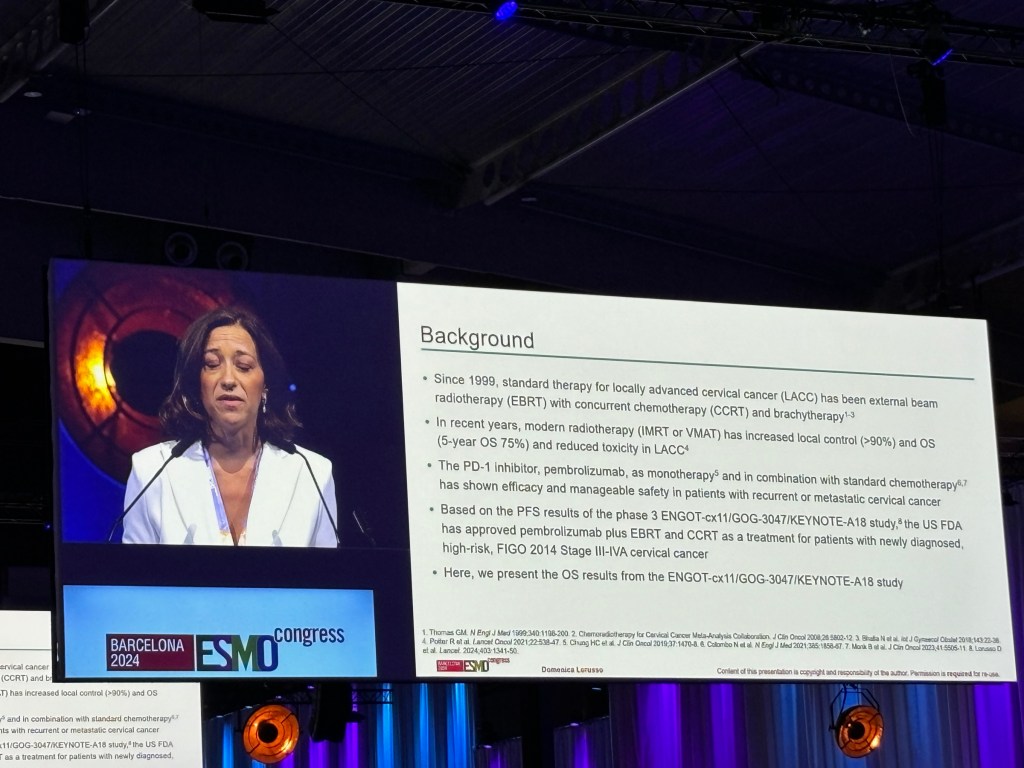
Updated Data presented at the ESMO Congress 2024( Barcelona, 13–17 September) confirms benefit of adding immunotherapy to combination of chemotherapy and radiotherapy for treatment of cervical cancer.

For nearly twenty years, chemo- radiation, which is the practice of giving chemotherapy at the same time as radiotherapy, was the standard of care.

Last year, early results from a large trial suggested that adding immunotherapy to chemo-radiation would improve outcome .

Updated results confirm that the additional immunotherapy is of significant benefit.

Reference

Lancet. Pembrolizumab or placebo with chemoradiotherapy followed by pembrolizumab or placebo for newly diagnosed, high-risk, locally advanced cervical cancer (ENGOT-cx11/GOG-3047/KEYNOTE-A18): overall survival results from a randomised, double-blind, placebo-controlled, phase 3 trial.

Disclaimer: Please note – This blog is NOT medical advice. This blog is NOT a expert medical opinion on various topics. This blog is purely for information only and do check the sources where cited. Please DO consult your own doctor to discuss concerns and options relevant to you. The views expressed in this blog are NOT, in any way whatsoever, intended to be a substitute for professional advice. The blog is NOT previewed, commissioned or otherwise endorsed, in any way, by any organisation that the author is associated with. The views expressed in this blog likely represents some of the author’s personal views held at the time of drafting the blog and MAY CHANGE overtime, particularly when new evidence comes to light.
ESMO update on Thymus tumours

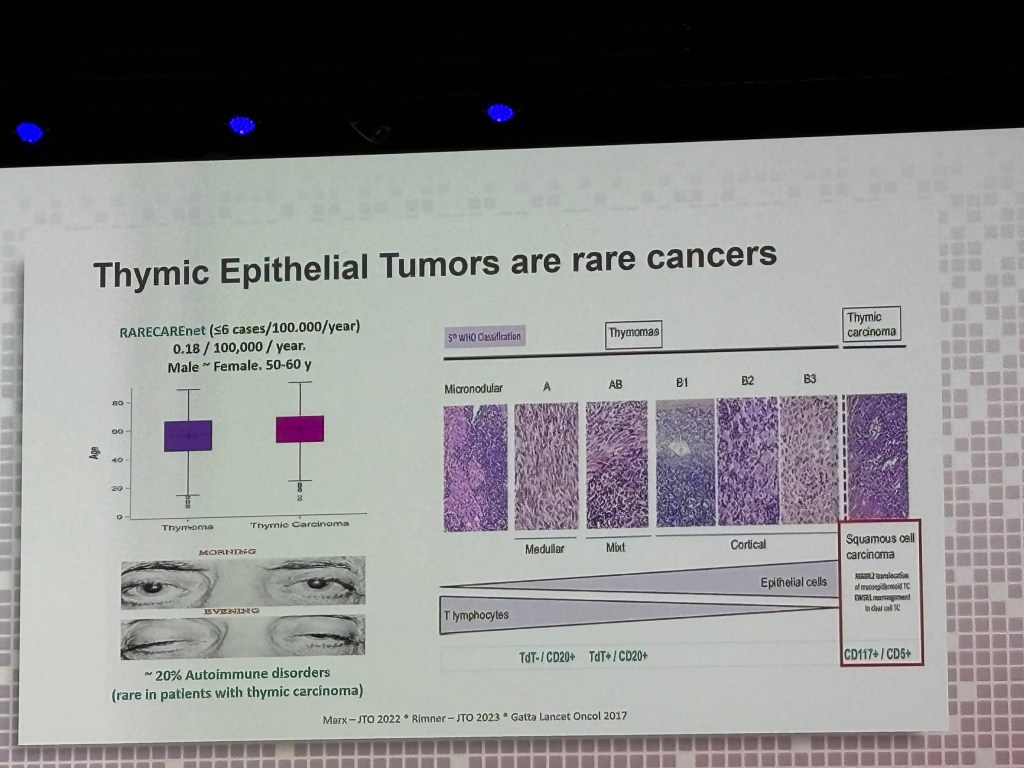
Tumours of Thymus are rare. So clinical data is usually spare. Hence they do not feature prominently in International conferences.

So it is interesting and a welcome gesture that ESMO dedicated a morning session to Thymic tumours. (ESMO European Society of Medical Oncology Congress-2024, Fira Barcelona).

Understandably, in a conference hall meant for thousands of delegates only a few hundreds turned up for the rare thymic tumours ( as delegates attended the 12 other massive halls with simultaneous sessions for common cancers such as prostate, breast , bowel etc).

The relevant updates from this session are: 

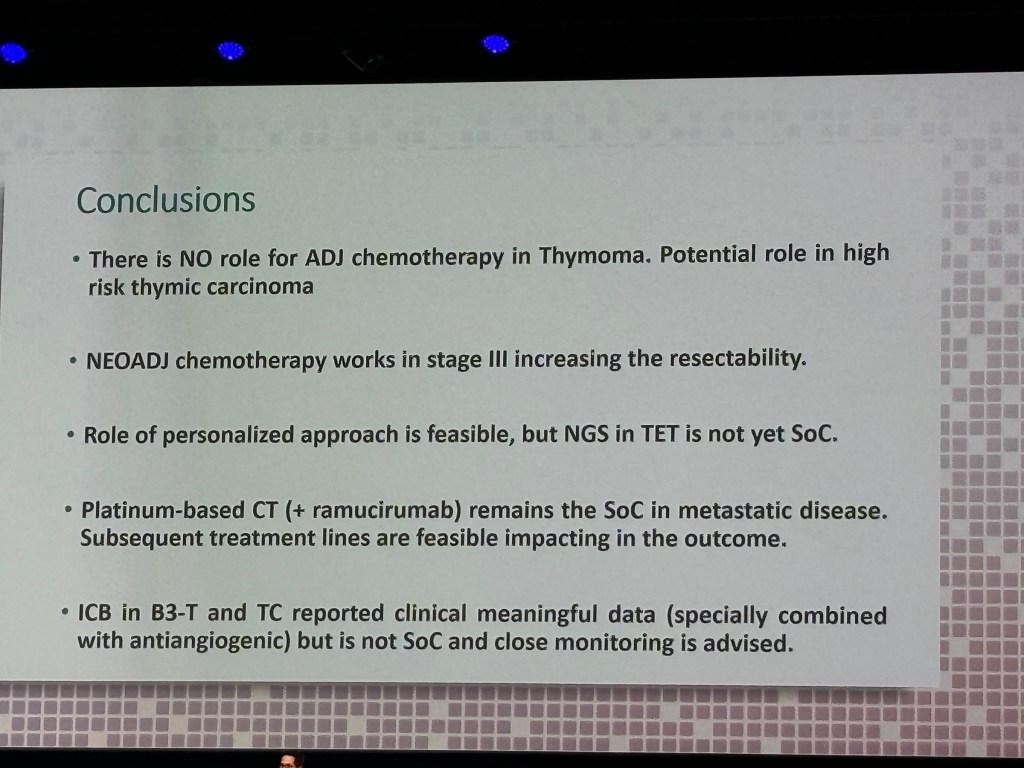
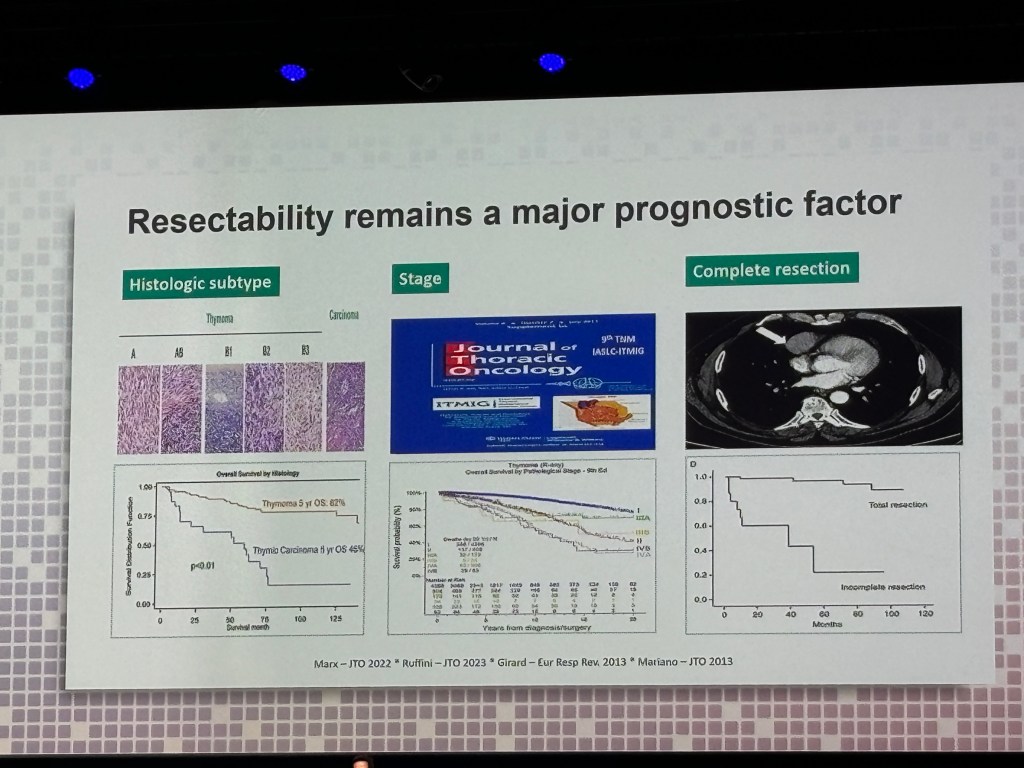
  1. Surgical resection where feasible is the best treatment.
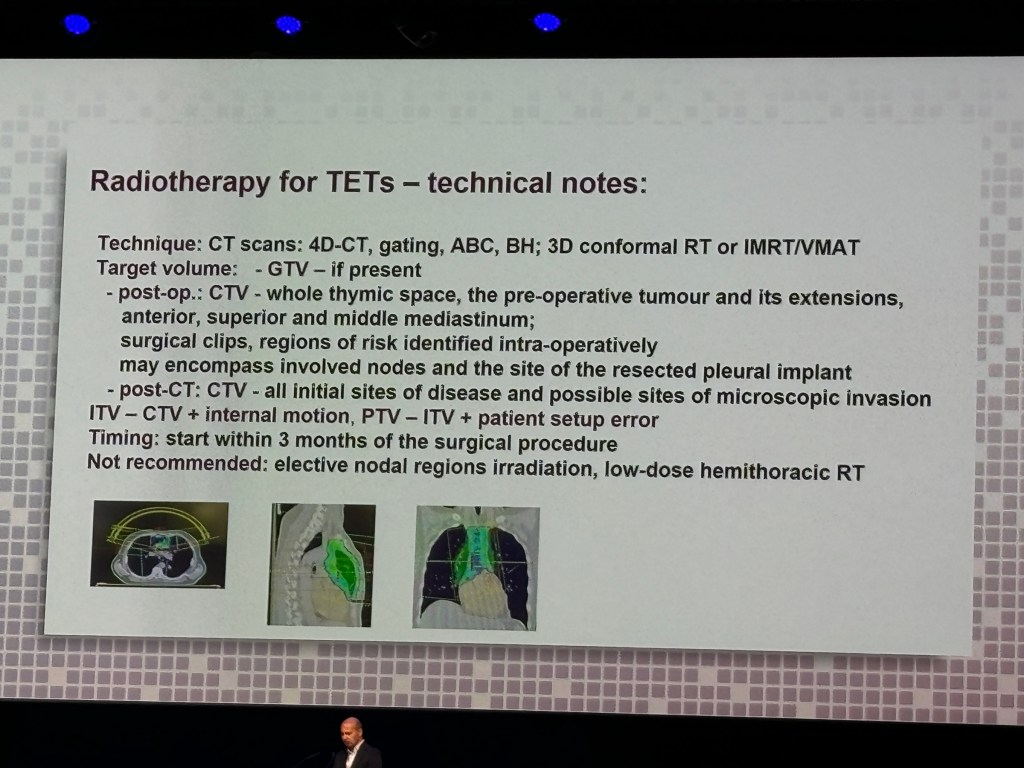
  2. in selected cases , post-operative radiotherapy can be considered 
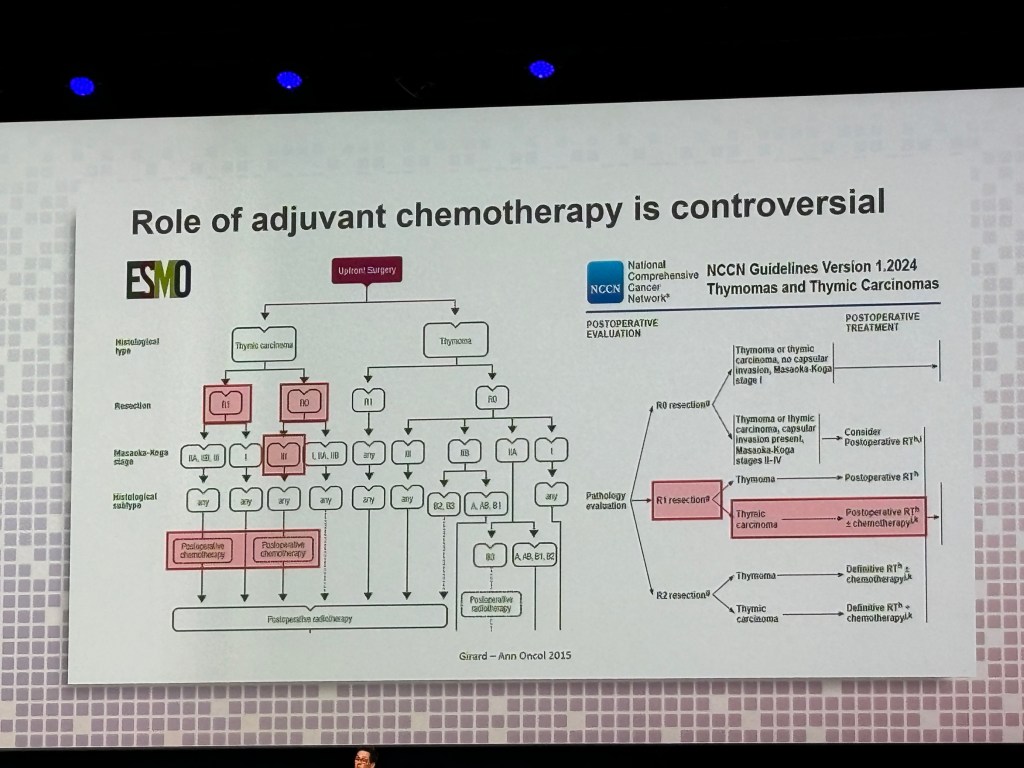
  3. Routine adjuvant chemotherapy after complete surgical excision for early cancers is NOT indicated 
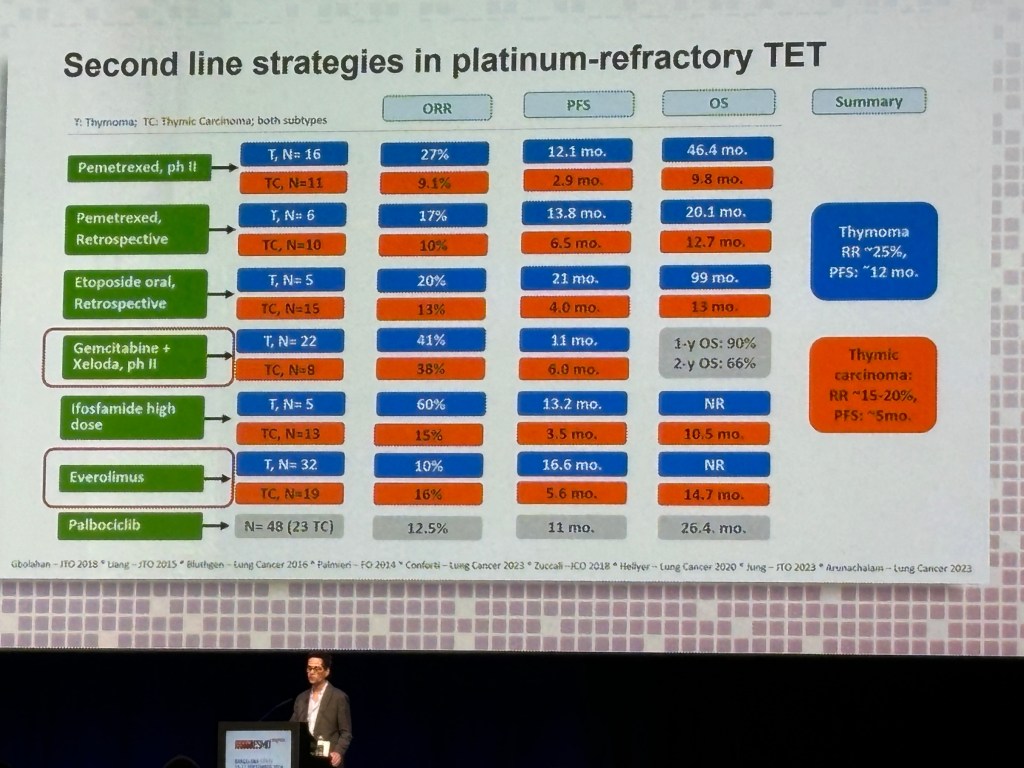
  4. Thymic cancers are chemo-sensitive and they have the potential to turn inoperable cancers to operable cancers.
  5. Platinum and Anthracycline combination chemo regimens have the best response rates.
  6. Immunotherapy and Molecular targeted therapy are possible options in those resistant to platinum drugs in addition to other non-platinum chemotherapy drugs .

Disclaimer: Please note – This blog is NOT medical advice. This blog is NOT a expert medical opinion on various topics. This blog is purely for information only and do check the sources where cited. Please DO consult your own doctor to discuss concerns and options relevant to you. The views expressed in this blog are NOT, in any way whatsoever, intended to be a substitute for professional advice. The blog is NOT previewed, commissioned or otherwise endorsed, in any way, by any organisation that the author is associated with. The views expressed in this blog likely represents some of the author’s personal views held at the time of drafting the blog and MAY CHANGE overtime, particularly when new evidence comes to light.

Is radiotherapy needed for all lymphoma patients after completing a course of chemotherapy?

In previous decades, radiotherapy was routinely used to consolidate remission after completion of chemotherapy in Lymphoma patients.

Chemotherapy alone can cure a lot of these patients. Radiotherapy can be associated with long term side effects even 10 years after completion of treatment.

So increasingly there is a tendency to omit radiotherapy in those lymphoma patients who had responded extremely well to chemotherapy alone.

Long term trial results, in a group of lymphoma patients who had mediastinal (chest) lymphoma, confirms that radiotherapy can be safely omitted in those patients who had excellent response to chemotherapy alone.

Reference

Omission of Radiotherapy in Primary Mediastinal B-Cell Lymphoma: IELSG37 Trial Results | Journal of Clinical Oncology

Disclaimer: Please note – This blog is NOT medical advice. This blog is NOT a expert medical opinion on various topics. This blog is purely for information only and do check the sources where cited. Please DO consult your own doctor to discuss concerns and options relevant to you. The views expressed in this blog are NOT, in any way whatsoever, intended to be a substitute for professional advice. The blog is NOT previewed, commissioned or otherwise endorsed, in any way, by any organisation that the author is associated with. The views expressed in this blog likely represents some of the author’s personal views held at the time of drafting the blog and MAY CHANGE overtime, particularly when new evidence comes to light.
Is it safe to delay treatment in low risk prostate cancer?

Low risk prostate cancers are sometimes managed by a “wait and watch” approach and frequent monitoring rather than immediate prostate surgery.

Is this approach safe? Yes

A recent report after 10 year follow-up , from a Canadian trial shows that this approach can be safely done with an active monitoring protocol.

In this study, 10 years after diagnosis, half the men were fine without any worsening of their prostate cancer. Reassuringly only less than 2% developed metastatic disease, and less than 1% died of their disease.

These results confirm that “active surveillance” can be an effective management strategy for patients diagnosed with favorable-risk prostate cancer.

References

Long-Term Outcomes in Patients Using Protocol-Directed Active Surveillance for Prostate Cancer
JAMA. Published online May 3, 2024

Disclaimer: Please note – This blog is NOT medical advice. This blog is NOT a expert medical opinion on various topics. This blog is purely for information only and do check the sources where cited. Please DO consult your own doctor to discuss concerns and options relevant to you. The views expressed in this blog are NOT, in any way whatsoever, intended to be a substitute for professional advice. The blog is NOT previewed, commissioned or otherwise endorsed, in any way, by any organisation that the author is associated with. The views expressed in this blog likely represents some of the author’s personal views held at the time of drafting the blog and MAY CHANGE overtime, particularly when new evidence comes to light.
Should chemotherapy be used before radiotherpy for bladder cancer?

Yes, chemotherapy given before surgery or radiotherapy for invasive bladder cancer improves cure rates and survival rates.

But there is also strong U.K. data to show that Chemotherapy given along with Radiotherapy is useful because it makes radiotherapy work better .

Should chemotherapy be given before radiotherapy and then followed by more chemotherapy along with radiotherapy ?

There is lot of scientific debate on this question and well known U.K. experts are favouring this “double chemo” approach in-spite of inconclusive new data published in the European Urology journal.

The NICE guidelines on bladder cancer also favours this approach of “double” chemotherapy ( before as well as along radiotherapy).

It is a question that ideally needs to addressed in clinical trials .

Read my views expressed in a letter published in the Journal European Urology

Reference: Re: Syed A. Hussain,
Nuria Porta, Emma Hall, et al. Outcomes in Patients with Muscle-invasive Bladder Cancer Treated with Neoadjuvant Chemotherapy
Followed by (Chemo)radiotherapy in the BC2001 Trial. Eur Urol 2021;79:307–15

Disclaimer: Please note- This blog is NOT medical advice. This blog is NOT a expert medical opinion on various topics. This blog is purely for information only and do check the sources where cited. Please DO consult your own doctor to discuss concerns and options relevant to you. The views expressed in this blog represent the author’s views held at the time of drafting the blog and may change overtime, particularly when new evidence comes to light. The blog is not previewed, commissioned or otherwise endorsed by any organisation that the author is associated with. The views expressed in this blog are not, in way whatsoever, intended to be a substitute for professional advice.

Should hormone therapy be used before or after prostate radiotherpy?

Combination therapy with Hormone therapy and Radiotherapy is used with curative intent for treatment of prostate cancer.

There is some debate which treatment should be started first. At present, the hormone therapy is started first and radiotherpy is started second at a later date.

This is because many previous clinical trials, which found beneficial effects for the combination therapy, involved starting hormones first.

One advantage of starting hormone therapy immediately and delaying the start date of radiotherpy is that hormone therapy shrinks the size of prostate before radiotherpy . This greatly helps when image-guided Radiotherpy is planned later on.

A group of high Calibre researchers and authors from Canada and USA have published paper arguing in favour of radiotherpy starting first and starting hormones afterwards.

Some of the authors behind this paper in Journal of Clinical oncology have previously published seminal, practice changing, papers in field of prostate cancer.

My personal view, is that we have to wait for confirmatory evidence before changing the current practice.

I have to resort to the megaphone of a provocative headline grabbing title so that oncologists won’t uncritically accept the conclusion of the paper

Read the original paper and my published response .

Adjuvant Hormone Therapy After Prostate Radiation: Is This Data Torture?

, MD and , MD. Nottingham University Hospital NHS Trust, Nottingham, United Kingdom

Disclaimer: Please note- This blog is NOT medical advice. This blog is NOT a expert medical opinion on various topics. This blog is purely for information only and do check the the sources where cited. Please DO consult your own doctor to discuss concerns and options relevant to you. The views expressed in this blog represent the author’s views held at the time of drafting the blog and may change overtime, particularly when new evidence comes to light. The blog is not previewed, commissioned or otherwise endorsed by any organisation the author is associated with. The views expressed in this blog are not in way intended to be a substitute for professional advice.
How long does it take for taste sensation to recover after Radiotherpy to Head and Neck region ?

Curative Radiotherpy to Tongue, Mouth , Throat and other parts of head and Neck can lead to dry mouth, sticky saliva, difficulty in swallowing solid foods, and loss of taste sensation.

Loss of taste sensation affects food intake and affects quality of life.

A group from Tel Aviv studied the effect of radiotherapy on taste sensation in head and neck cancer patients.

They found that “taste recovery started to occur 1 month after treatment completion

References:

The effect of radiotherapy on taste sensation in head and neck cancer patients – a prospective study. Michal Asif et al. Radiat Oncol. 2020. Radiat Oncol. 2020 Jun 5;15(1):144. doi: 10.1186/s13014-020-01578-4. Authors: Michal Asif, Assaf Moore, Noam Yarom, Aron Popovtzer.

Oral complications at 6 months after radiation therapy for head and neck cancer. R V Lalla et al. Oral Dis. 2017 Nov. Oral Dis. 2017 Nov;23(8):1134-1143. doi: 10.1111/odi.12710. Epub 2017 Aug 3.

Prospective assessment of taste impairment and nausea during radiotherapy for head and neck cancer. Stefania Martini et al. Med Oncol. 2019 Apr 9;36(5):44. doi: 10.1007/s12032-019-1269-x.

Disclaimer: Please note- This blog is NOT medical advice. This blog is purely for information only and do check the the sources where cited. Please DO consult your own doctor to discuss concerns and options relevant to you.

The views expressed in this blog represent the author’s views held at the time of drafting the blog and may change overtime, particularly when new evidence comes to light. The blog is not necessarily endorsed by any organisation the author is associated with and views are not substitute for professional advice.