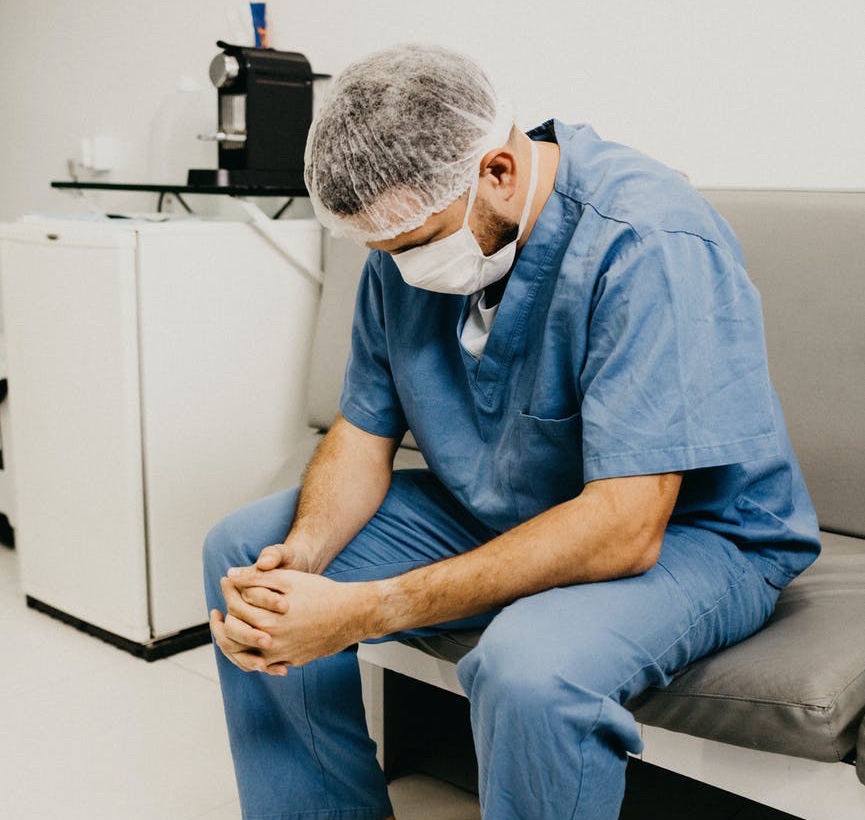
Should one-off errors by honest doctors need to be punished harshly?

Patients trust their doctors to do their job competently with due diligence each and every time, without any exception.

In an ideal world, doctors should do their utmost to justify their patients trust and confidence.

Doctors who persistently underperform need to be punished. Doctors who willfully and knowingly harm their patients should be punished harshly.

But doctors are human beings. Human beings are never perfect in whatever work they do.

Furthermore, the “Practice of Medicine” is more of an art balancing probabilities rather than an exact science with discrete answers all the time to every problem.

So unintentional medical errors happen all the time.

There are extremely few doctors who haven’t done an honest mistake or error in their entire career. So if all doctors are punished harshly each and every-time an honest error occurs , there will be few doctors left who won’t practice defensively.

Defensive medicine has a cost. Defensive Medicine would push up the cost of medical care further. And fewer and fewer people would be able to afford medical care.

Read my personal views on BMJ website and submit your views on the BMJ rapid response section

Article: GMC: harsh punishment is a sword of Damocles 
Free to access link: http://bmj.com/cgi/content/full/bmj.o1828?ijkey=1NzgQpzG45Vgi7U&keytype=ref

Disclaimer: Please note – This blog is NOT medical advice. This blog is NOT a expert medical opinion on various topics. This blog is purely for information only and do check the sources where cited. Please DO consult your own doctor to discuss concerns and options relevant to you. The views expressed in this blog are NOT, in any way whatsoever, intended to be a substitute for professional advice. The blog is NOT previewed, commissioned or otherwise endorsed, in any way, by any organisation that the author is associated with. The views expressed in this blog likely represents some of the author’s personal views held at the time of drafting the blog and MAY CHANGE overtime, particularly when new evidence comes to light.

GP suspension for failure to refer fast track. GMC: harsh punishment is a sword of Damocles. BMJ 2022; 378 doi: https://doi.org/10.1136/bmj.o1828 (Published 26 July 2022)Cite this as: BMJ 2022;378:o1828

Are takeaway deliveries risky during Coronavirus pandemic?

Possibly yes, if food is not properly handled during preparation, packaging and delivery.

It is likely the risks from properly prepared food and food packaging itself are minimal. There is more risk from interaction with the delivery person.

If you are shielding or a very old person, there is a chance the food delivery person might pass on the infection to you. Stay at safe distance, use gloves and masks, and advice the delivery to be left at door for collection. Wipe Clean outside packaging and transfer contents to your own containers.

But for young adults the risk is likely to be very small.

Most importantly, it has to pointed out that everything in life has some risks. If you are not buying a takeaway, you might have to go shops or supermarkets to buy food for cooking and eating. There is a risk of catching cornovirus from other people while shopping !

There is a good article in BBC titled “ Coronavirus: How safe are takeaways and supermarket deliveries?

A previous blog post also gives information about survival of coronavirus in artificial surfaces

References: Can you catch Coronavirus infection from Soft drink cans, Sandwich wrapper and Amazon Parcels?

Coronavirus: How safe are takeaways and supermarket deliveries? By Victoria Gill
Science correspondent, BBC News

Disclaimer: Please note- This blog is NOT medical advice. This blog is purely for information only and do check the the sources where cited. Please DO consult your own doctor to discuss concerns and options relevant to you.

The views expressed in this blog represent the author’s views held at the time of drafting the blog and may change overtime, particularly when new evidence comes to light. The blog is not necessarily endorsed by any organisation the author is associated with and the authors views are not in way intended to be a substitute for professional advice.

Cancer treatment delays during the pandemic

The Staff at National Health Service in UK are doing an admirable job during the pandemic. In the particular, the frontline staff (“patient-facing”) are showing great courage in face of great difficulties and are primarily driven by altruism.

But the pressures of pandemic means many routine scans and hospital clinic appointments have been cancelled particularly during the first wave. There is a great worry about delayed diagnosis of cancer and delayed treatment of cancer.

A paper in BMJ reports that cancer patients survival can be significantly compromised.

But, as with everything else in life, things are not always what they look like at first impression. Even things that are logical and common sense at first glance do not turn out to be simple and clear.

Firstly, delays and cancellations of scans paradoxically could have psychologically benefited some cancer patients . This might seem counterintuitive or even an outrageous statement.

But there are some cancers which are being over diagnosed. A Cancer diagnosis does not always mean a death sentence. Some cancers do not cause problems for a long time or never in the life time of a person. These cancers do not need to be diagnosed promptly. Not being diagnosed with these cancers prevents the psychological burden of a cancer diagnosis. This “over diagnosis” would be expectedly less during pandemic.

Secondly, treatment delays could be caused by a cancer that is advanced and the need for time consuming additional investigations and procedures. Sometimes delays are caused by patients needing to see many medical specialists for the treatment. So it’s the aggressive cancer and the complex patient care that would cause the delay and is responsible for poor outcome rather than the delay by itself.

Read the BMJ article and make your views known.

Mortality due to cancer treatment delay: systematic review and meta-analysis
BMJ 2020; 371 doi: https://doi.org/10.1136/bmj.m4087 (Published 04 November 2020)
Cite this as: BMJ 2020;371:m4087

Overdiagnosis in Cancer
H. Gilbert Welch, William C. Black
JNCI: Journal of the National Cancer Institute, Volume 102, Issue 9, 5 May 2010, Pages 605–613, https://doi.org/10.1093/jnci/djq099

Disparities in head and neck cancer: assessing delay in treatment initiation
Urjeet A Patel et al. Laryngoscope. 2012 Aug.

Khorana AA, Tullio K, Elson P, Pennell NA, Grobmyer SR, Kalady MF, et al. (2019) . Time to initial cancer treatment in the United States and association with survival over time: An observational study. PLoS ONE 14(4): e0215108. doi:10.1371/journal.pone.0215108

Crowdfunding expensive stem cell therapies

Crowd fund metaphor

If you have come across a desperate request to crowdfund an expensive stem cell therapy, read this well researched BBC article before you contribute.

Hope is a powerful driver particularly when someone is facing immense difficulties in life. Human beings have a natural inclination to fight against all odds and it seems to be inbuilt in our DNA and psyche.

But not all promising treatments do help desperate people searching for a cure.

Reference.

BBC news. The unwarranted hype of stem cell therapies. By Jules Montague. 21 August 2019

Disclaimer: Please note- This blog is NOT medical advice. This blog is purely for information only. See your own doctor to discuss concerns and options relevant for you.