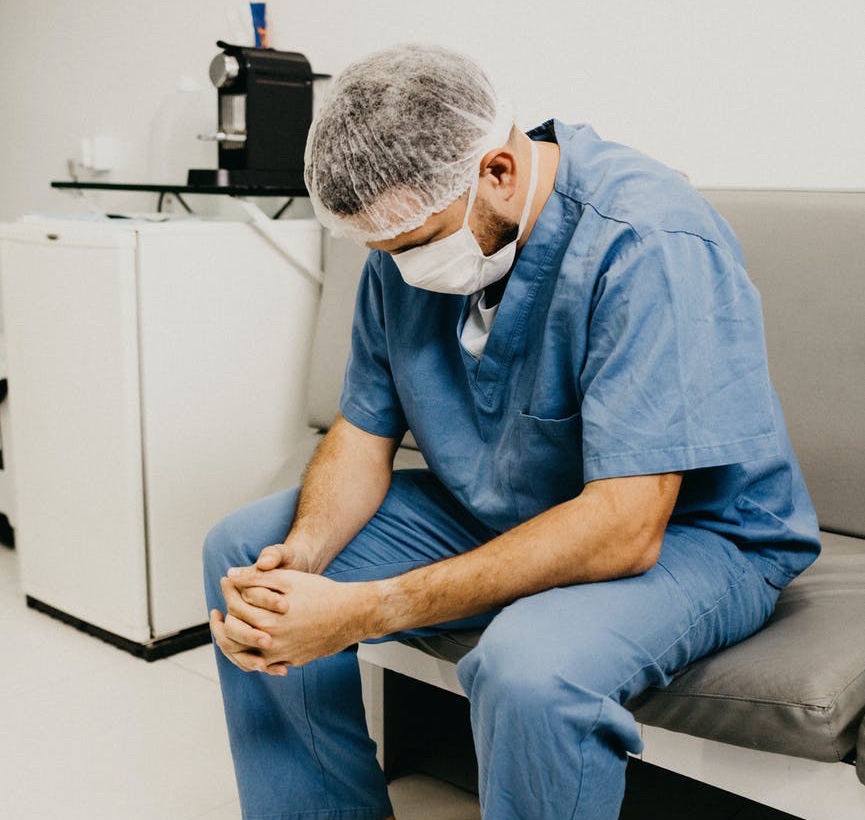
Should one-off errors by honest doctors need to be punished harshly?

Patients trust their doctors to do their job competently with due diligence each and every time, without any exception.

In an ideal world, doctors should do their utmost to justify their patients trust and confidence.

Doctors who persistently underperform need to be punished. Doctors who willfully and knowingly harm their patients should be punished harshly.

But doctors are human beings. Human beings are never perfect in whatever work they do.

Furthermore, the “Practice of Medicine” is more of an art balancing probabilities rather than an exact science with discrete answers all the time to every problem.

So unintentional medical errors happen all the time.

There are extremely few doctors who haven’t done an honest mistake or error in their entire career. So if all doctors are punished harshly each and every-time an honest error occurs , there will be few doctors left who won’t practice defensively.

Defensive medicine has a cost. Defensive Medicine would push up the cost of medical care further. And fewer and fewer people would be able to afford medical care.

Read my personal views on BMJ website and submit your views on the BMJ rapid response section

Article: GMC: harsh punishment is a sword of Damocles 
Free to access link: http://bmj.com/cgi/content/full/bmj.o1828?ijkey=1NzgQpzG45Vgi7U&keytype=ref

Disclaimer: Please note – This blog is NOT medical advice. This blog is NOT a expert medical opinion on various topics. This blog is purely for information only and do check the sources where cited. Please DO consult your own doctor to discuss concerns and options relevant to you. The views expressed in this blog are NOT, in any way whatsoever, intended to be a substitute for professional advice. The blog is NOT previewed, commissioned or otherwise endorsed, in any way, by any organisation that the author is associated with. The views expressed in this blog likely represents some of the author’s personal views held at the time of drafting the blog and MAY CHANGE overtime, particularly when new evidence comes to light.

GP suspension for failure to refer fast track. GMC: harsh punishment is a sword of Damocles. BMJ 2022; 378 doi: https://doi.org/10.1136/bmj.o1828 (Published 26 July 2022)Cite this as: BMJ 2022;378:o1828


Medical Negligence Jackpot

Modern Medicine is not without risks.

Practically all interventions or even non-interventions can cause harm. For example, a doctor simply encouraging a patient to drink more water or recommending bed rest can be harmful in certain medical circumstances.

Many medical harms ( side effects and complications) are certainly not due to significant clinical negligence.

But in the small minority where harm is due to clinical negligence ( albeit un-intentional ), getting compensation is not straightforward.

It is a shame that not everyone who suffers medical harm is able to seek compensation.

Patients usually have to prove medical negligence to get compensation and only a small fraction of people do have the time, money and drive to pursue a negligence claim through legal process. It seems like a jack-pot where a few win big amounts while others receive nothing.

A recent hotly debated case about a doctor who did not strongly recommend folic acid to a mother, has re-opened the discussion on no-fault compensation.

Read the articles in the BMJ and respond if you can.

References

S Sundar. “Wrongful conception” case: “Wrongful conception”: the case for no-fault compensation. BMJ 2022; 376 doi: https://doi.org/10.1136/bmj.o153 (Published 21 January 2022) Cite this as: BMJ 2022;376:o153. Free to access link: http://bmj.com/cgi/content/full/bmj.o153?ijkey=tVbj8XpptPFTQES&keytype=ref

Folic acid supplementation and the complexities of blame. BMJ 2022; 376 doi: https://doi.org/10.1136/bmj.o144 (Published 20 January 2022)Cite this as: BMJ 2022;376:o144

Papanikitas A, Spicer J, Hayhoe B. “Wrongful conception” ruling against UK general practitioner. BMJ2022;376:o79. doi:10.1136/bmj.o79 pmid:35031556. FREE Full TextGoogle Scholar

Dyer C. Show jumper wins case against mother’s GP for “wrongful conception” that resulted in her disability. BMJ2021;375:n2999. doi:10.1136/bmj.n2999. pmid:34862168. FREE Full TextGoogle Scholar

Toombes v Mitchell T. [2021] EWHC 3234. https://1f2ca7mxjow42e65q49871m1-wpengine.netdna-ssl.com/wp-content/uploads/2021/12/Toombes-v-Mitchell-Approved-Judgment.pdf.

BMJ. What implications does the Toombes vs Mitchell case have for other healthcare professionals?
BMJ 2022; 376 doi: https://doi.org/10.1136/bmj.o162 (Published 20 January 2022)
Cite this as: BMJ 2022;376:o162

Dollimore L. Spina bifida showjumper wins landmark legal case over her “wrongful conception”: Evie Toombes, 20, who sued her mother’s GP claiming she “should never have been born” could win millions in damages. Daily Mail 2021 Dec 1. https://www.dailymail.co.uk/news/article-10262911/Para-showjumper-sued-mothers-GP-claiming-never-born-wins-landmark-case.html

Disclaimer: Please note – This blog is NOT medical advice. This blog is NOT a expert medical opinion on various topics. This blog is purely for information only and do check the sources where cited. Please DO consult your own doctor to discuss concerns and options relevant to you. The views expressed in this blog are NOT, in any way whatsoever, intended to be a substitute for professional advice. The blog is NOT previewed, commissioned or otherwise endorsed, in any way, by any organisation that the author is associated with. The views expressed in this blog likely represents some of the author’s personal views held at the time of drafting the blog and MAY CHANGE overtime, particularly when new evidence comes to light.

Cancer treatment delays during the pandemic

The Staff at National Health Service in UK are doing an admirable job during the pandemic. In the particular, the frontline staff (“patient-facing”) are showing great courage in face of great difficulties and are primarily driven by altruism.

But the pressures of pandemic means many routine scans and hospital clinic appointments have been cancelled particularly during the first wave. There is a great worry about delayed diagnosis of cancer and delayed treatment of cancer.

A paper in BMJ reports that cancer patients survival can be significantly compromised.

But, as with everything else in life, things are not always what they look like at first impression. Even things that are logical and common sense at first glance do not turn out to be simple and clear.

Firstly, delays and cancellations of scans paradoxically could have psychologically benefited some cancer patients . This might seem counterintuitive or even an outrageous statement.

But there are some cancers which are being over diagnosed. A Cancer diagnosis does not always mean a death sentence. Some cancers do not cause problems for a long time or never in the life time of a person. These cancers do not need to be diagnosed promptly. Not being diagnosed with these cancers prevents the psychological burden of a cancer diagnosis. This “over diagnosis” would be expectedly less during pandemic.

Secondly, treatment delays could be caused by a cancer that is advanced and the need for time consuming additional investigations and procedures. Sometimes delays are caused by patients needing to see many medical specialists for the treatment. So it’s the aggressive cancer and the complex patient care that would cause the delay and is responsible for poor outcome rather than the delay by itself.

Read the BMJ article and make your views known.

Mortality due to cancer treatment delay: systematic review and meta-analysis
BMJ 2020; 371 doi: https://doi.org/10.1136/bmj.m4087 (Published 04 November 2020)
Cite this as: BMJ 2020;371:m4087

Overdiagnosis in Cancer
H. Gilbert Welch, William C. Black
JNCI: Journal of the National Cancer Institute, Volume 102, Issue 9, 5 May 2010, Pages 605–613, https://doi.org/10.1093/jnci/djq099

Disparities in head and neck cancer: assessing delay in treatment initiation
Urjeet A Patel et al. Laryngoscope. 2012 Aug.

Khorana AA, Tullio K, Elson P, Pennell NA, Grobmyer SR, Kalady MF, et al. (2019) . Time to initial cancer treatment in the United States and association with survival over time: An observational study. PLoS ONE 14(4): e0215108. doi:10.1371/journal.pone.0215108

Does intensive follow benefit Bowel cancer patients?

Photo by rawpixel.com on Pexels.com

The old adage “prevention is better than cure” is mostly true with regards to cancer if you can do it.

If you can’t prevent it , at least catch it early, has been the prime motive behind screening tests for breast, cervical, bowel, lung and prostate cancers. (“early is better”). Cancers that are detected at an early stage can offer a better chance of curative treatment.

So one might logically expect that intensive monitoring and early diagnosis of a cancer relapse or a secondary cancer after initial treatment can be immensely helpful.

But the evidence for intensive hospital follow-up visits and investigations is weak for most cancers except for some cancers such as Testicular Cancers which are highly curable.

Intensive monitoring after bowel cancer treatment can detect treatable cancers. To confirm the benefit of early detection of relapse by intensive monitoring , a trial was conducted comparing intensive follow up versus routine follow up ( in France and Belgium).

Data presented at ESMO ( European Society of Medical Oncology) shows that the intensive follow with scans can detect cancer recurrences which can be treated by further surgery. But unfortunately the intensive follow up did NOT lead to longer life expectancy.

The results might be counterintuitive but after an average follow up more than six years, this trial demonstrates that intensive follow is NOT always best. Scans might be done for psychological reassurance but they could end up causing significant anxiety.

When there are resource constraints (e.g low economic countries) , one has to be careful about frequents routine scans for those without symptoms.

During COVID-19, even in rich countries such as UK where there might be huge waiting lists, one has to consider prioritising scans for those who need most.

References

1. ESMO Daily reporter: INTENSIVE FOLLOW-UP INCREASES FREQUENCY OF CURATIVE INTENT SECONDARY SURGERY IN COLORECTAL CANCER.

2. DRE is useless for follow up of prostate cancer patients. https://www.bmj.com/rapid-response/2011/11/03/dre-useless-follow-prostate-cancer-patients

3. Cancer patients follow up and a new role for GPs. https://www.bmj.com/rapid-response/2011/11/03/cancer-patients-follow-and-new-role-gps

Disclaimer: Please note- This blog is NOT medical advice. This blog is purely for information only and do check the the sources where cited. Please consult your own doctor to discuss concerns and options relevant to you.

The views expressed in this blog represent the author’s views held at the time of drafting the blog and is likely to change overtime, particularly when new evidence comes to light. The blog is not necessarily endorsed by any organisation the author is associated with and views are not substitute for professional advice.

Blaming the tools

Tools

Any one from any trade would be expected to use the tools of the trade appropriately.

Tweaking the tools unnecessarily or blaming the tools if things do not pan out as planned is generally frowned upon .

Same with medical professionals !

Please contribute your thoughts at BMJ rapid response page.

Interpreting test results: dont blame the tools

Access the article at: http://bmj.com/cgi/content/full/bmj.m1162

Toll-free link:
http://bmj.com/cgi/content/full/bmj.m1162?ijkey=sZarWS4YlJf9NS0&keytype=ref

Disclaimer: Please note- This blog is NOT medical advice. This blog is purely for information only. See your own doctor to discuss concerns and options relevant for you.