A large study looked at people born across England, Scotland and Wales in 1970 and followed-up throughout childhood and adulthood
A report of the study with 4481participants (52% female) found that moderate and vigorous physical activity helps cognition compared to light intensity physical activity.
But a word of caution though !
People with sedentary behaviour in this study had better brain sharpness than doing light intensity physical activity !
It seems bizarre to suggest Sedentary activities are good for brain !
We don’t know why this study showed this particularly unexpected finding. It could be that the study missed to collect some important information that influences brain.
This fact about sedentary behaviour is counterintuitive but science does sometimes show unexpected results. Sometimes unexpected findings are true and Sometimes they are false due to data collection issues or convoluted statistical tests.
That’s why it is important that information from multiple studies is taken together rather than relying on one study to make any scientific conclusion on any topic !
Minerva. BMJ. Physical activity and cognition in middle age.
Disclaimer: Please note – This blog is NOT medical advice. This blog is NOT a expert medical opinion on various topics. This blog is purely for information only and do check the sources where cited. Please DO consult your own doctor to discuss concerns and options relevant to you. The views expressed in this blog are NOT, in any way whatsoever, intended to be a substitute for professional advice. The blog is NOT previewed, commissioned or otherwise endorsed, in any way, by any organisation that the author is associated with. The views expressed in this blog likely represents some of the author’s personal views held at the time of drafting the blog and MAY CHANGE overtime, particularly when new evidence comes to light.
A recent study conducted in U.K. later looked at the problem of smoking in pregnant women.
The study gave money to pregnant women if women stopped smoking.
The study found that giving money up to 400 pounds made some women stop smoking but sadly, the women stopped smoking only for a short period. After six months, there was NO significant difference between women given money and women given only usual advice about smoking.
The first issue with this study is the principle of “inducing / bribing” people with money to give up unhealthy habits. Shouldn’t the healthcare staff educate women rather than giving money for bad behaviour?
The second issue is no one knows whether the money was used wisely. Pregnant women who smoke are likely to have other vices such as unhealthy diet, physical inactivity, alcohol misuse, use of recreational drugs etc. Unhealthy behaviours cluster.
Giving money may have encouraged the women to stop smoking temporarily but the money could have used by women to replace smoking with other unhealthy behaviours. Unfortunately, the study doesn’t seem to looked at this problem.
In the study, two thirds of adverse events occurred in women given money vouchers. The authors have naively dismissed them as unrelated. The increase in adverse events suggests that women, who were given money, may have used the money unwisely. Perversely this well intentioned attempt to encourage good behaviour seem to have caused harm !
Finally, most women who smoke during pregnancy are likely to be from lower socioeconomic group. Poverty is the underlying reason for most of their problems in life including unhealthy habits.
The Healthcare staff in UK are dealing with multiple crisis at present. It is beyond the ability of NHS staff to deal with poverty. The government through social services and public-health team should deal with poverty.
Effect of financial voucher incentives provided with UK stop smoking services on the cessation of smoking in pregnant women (CPIT III): pragmatic, multicentre, single blinded, phase 3, randomised controlled trial. BMJ 2022; 379 doi: https://doi.org/10.1136/bmj-2022-071522 (Published 19 October 2022)
Disclaimer: Please note – This blog is NOT medical advice. This blog is NOT a expert medical opinion on various topics. This blog is purely for information only and do check the sources where cited. Please DO consult your own doctor to discuss concerns and options relevant to you. The views expressed in this blog are NOT, in any way whatsoever, intended to be a substitute for professional advice. The blog is NOT previewed, commissioned or otherwise endorsed, in any way, by any organisation that the author is associated with. The views expressed in this blog likely represents some of the author’s personal views held at the time of drafting the blog and MAY CHANGE overtime, particularly when new evidence comes to light.
Patients trust their doctors to do their job competently with due diligence each and every time, without any exception.
In an ideal world, doctors should do their utmost to justify their patients trust and confidence.
Doctors who persistently underperform need to be punished. Doctors who willfully and knowingly harm their patients should be punished harshly.
But doctors are human beings. Human beings are never perfect in whatever work they do.
Furthermore, the “Practice of Medicine” is more of an art balancing probabilities rather than an exact science with discrete answers all the time to every problem.
So unintentional medical errors happen all the time.
There are extremely few doctors who haven’t done an honest mistake or error in their entire career. So if all doctors are punished harshly each and every-time an honest error occurs , there will be few doctors left who won’t practice defensively.
Defensive medicine has a cost. Defensive Medicine would push up the cost of medical care further. And fewer and fewer people would be able to afford medical care.
Read my personal views on BMJ website and submit your views on the BMJ rapid response section
Disclaimer: Please note – This blog is NOT medical advice. This blog is NOT a expert medical opinion on various topics. This blog is purely for information only and do check the sources where cited. Please DO consult your own doctor to discuss concerns and options relevant to you. The views expressed in this blog are NOT, in any way whatsoever, intended to be a substitute for professional advice. The blog is NOT previewed, commissioned or otherwise endorsed, in any way, by any organisation that the author is associated with. The views expressed in this blog likely represents some of the author’s personal views held at the time of drafting the blog and MAY CHANGE overtime, particularly when new evidence comes to light.
GP suspension for failure to refer fast track. GMC: harsh punishment is a sword of Damocles. BMJ 2022; 378 doi: https://doi.org/10.1136/bmj.o1828 (Published 26 July 2022)Cite this as: BMJ 2022;378:o1828
Vitamins are absolutely essential nutrients and vitamin deficiency causes various illness.
But a high dose of vitamin, far too much than needed by the body, is also bad.
Everything in moderation is good. Even an abundance of a good thing is bad.
It is similar to food. Lack of food would cause starvation and even death in the extreme. But too much of food causes obesity and other health problems. Same principle applies to vitamins.
A Cochrane review looked at the ability of vitamins to prevent lung cancer. The review concluded that there is “no beneficial effect of supplements for the prevention of lung cancer and lung cancer mortality in healthy people”
Worryingly, the review also found that the following:
– Vitamin A supplements increase lung cancer incidence and mortality in smokers or persons exposed to asbestos”.
– Vitamin C increases lung cancer incidence in women.
– Vitamin E increases the risk of haemorrhagic strokes.
So if you are having a healthy balanced diet, be careful with vitamin supplements.
Disclaimer: Please note- This blog is NOT medical advice. This blog is NOT a expert medical opinion on various topics. This blog is purely for information only and do check the sources where cited. Please DO consult your own doctor to discuss concerns and options relevant to you. The views expressed in this blog represent the author’s views held at the time of drafting the blog and may change overtime, particularly when new evidence comes to light. The blog is not previewed, commissioned or otherwise endorsed by any organisation that the author is associated with. The views expressed in this blog are not, in way whatsoever, intended to be a substitute for professional advice.
Disclaimer: Please note – This blog is NOT medical advice. This blog is NOT a expert medical opinion on various topics. This blog is purely for information only and do check the sources where cited. Please DO consult your own doctor to discuss concerns and options relevant to you. The views expressed in this blog are NOT, in way whatsoever, intended to be a substitute for professional advice. The blog is NOT previewed, commissioned or otherwise endorsed, in any way, by any organisation that the author is associated with. The views expressed in this blog likely represents some of the author’s personal views held at the time of drafting the blog and MAY CHANGE overtime, particularly when new evidence comes to light.
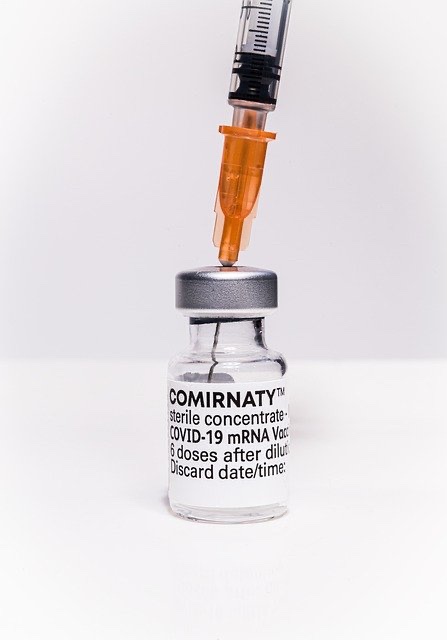
Lot of Vaccinated people do get infected and the only good news is that “the vaccines offer strong protection against severe disease”
China fights to contain a new outbreak in Wuhan now. There is a possibility of further outbreaks elsewhere as well. That can create favourable conditions for new variants to emerge .
So don’t be surprised if new variants emerge in winter and COVID is still the headline news early next year !
BMJ News Covid-19: What new variants are emerging and how are they being investigated? BMJ 2021; 372 doi: https://doi.org/10.1136/bmj.n158 (Published 18 January 2021) Cite this as: BMJ 2021;372:n158
Disclaimer: Please note – This blog is NOT medical advice. This blog is NOT a expert medical opinion on various topics. This blog is purely for information only and do check the sources where cited. Please DO consult your own doctor to discuss concerns and options relevant to you. The views expressed in this blog are NOT, in way whatsoever, intended to be a substitute for professional advice. The blog is NOT previewed, commissioned or otherwise endorsed, in any way, by any organisation that the author is associated with. The views expressed in this blog likely represents some of the author’s personal views held at the time of drafting the blog and MAY CHANGE overtime, particularly when new evidence comes to light.
As the world battles the COVID-19 pandemic , there is another pandemic that been going on for decades without any end in sight.
The other pandemic is obesity !
Obesity has caused far more deaths than the COVID-19 pandemic.
The Vaccines promise to end the COVID-19 pandemic.
Wouldn’t it be wonderful if a vaccine can sort the obesity pandemic ? It does not need to be rhetorical question or wishful thinking.
An article in Science magazine reports an association between obesity and a type of body immune cell called macrophages. This raises the possibility of using immunotherapy for obesity.
There is also another tantalising possibility. Behaviours, emotions and eating wrong type of food are often blamed for obesity. What if the entire scientific thinking about obesity is wrong?
In the past, another widespread condition used to be blamed on wrong food and stress. Stomach ulcers used to be very common and very distressing. Modern stressful life, emotions and wrong type of food were universally blamed for stomach ulcers. Then an Australian team proved stomach ulcers were due to an infection. Now stomach ulcers are routinely treated by antibiotics!
Obesity is common among the disadvantaged people in society. All types of infections are common in disadvantaged people. So it is not beyond the realms of plausiblity to hypothesise (suggest) that obesity could be caused by an infectious agent that affects food intake in some way, by possibly affecting sense of taste or smell of smell or feeling of fullness after eating (satiety).
If an infectious agent (e.g bacteria, virus or prion) is indeed found to be responsible for development of obesity, then the vaccines would provide a very easy way to prevent obesity.
Please note: The science magazine article on immunotherapy is based on excellent, high quality scientific work. But the possibility of an infection being responsible for obesity is merely a scientific hypothesis or scientific suggestion. It is based on a personal hunch. It is NOT based on any direct high quality scientific data at this stage !
Disclaimer: Please note- This blog is NOT medical advice. This blog is NOT a expert medical opinion on various topics. This blog is purely for information only and do check the sources where cited. Please DO consult your own doctor to discuss concerns and options relevant to you. The views expressed in this blog represent the author’s personal views held at the time of drafting the blog and may change overtime, particularly when new evidence comes to light. The blog is NOT previewed, commissioned or otherwise endorsed by any organisation that the author is associated with. The views expressed in this blog are NOT, in way whatsoever, intended to be a substitute for professional advice.
U.K. is on course to lift almost all COVID restrictions in mid July 2021.
A U.K. minister has said that “wearing masks” would become a personal choice.
Just because there is a choice, it does not mean it is always good for you.
Government decisions are often made not only with scientific facts but also with economic and political considerations. Compulsory masks may not be liked by a section of society and Government has to take that into account in a democratic society.
Personally electing to wear masks in crowded public places could be sensible for the following reasons.
– There is some debate about the extent of protection a person gets wearing masks following the Danish mask study. But no robust scientific study has shown significant harm from wearing masks. So it is better to be safe and wear masks even if the extent of protection is debatable.
– Infections are rising now and luckily, vaccines seem to have protected most people from getting severe COVID. But Vaccines are not 100% effective. Moreover, when infection rates go up further and society opens up more, there is a risk of variants emerging that may be partially vaccine resistant. So wearing masks may provide some protection.
– Not all people get poorly when they get COVID. But these people with COVID can still pass infection to other vulnerable family members and people who don’t have the protection from vaccines. So wearing a mask can stop people with mild COVID from spreading the infection to others.
– Some people do not want to wear masks because they think they are not at risk of death or hospitalisation. Remember, COVID related problems affect different people in different ways. Lot of people do recover from COVID without major problems. But some people do develop long-term symptoms from COVID. So it is better to wear masks for COVID protection.
Disclaimer: Please note- This blog is NOT medical advice. This blog is NOT a expert medical opinion on various topics. This blog is purely for information only and do check the sources where cited. Please DO consult your own doctor to discuss concerns and options relevant to you. The views expressed in this blog represent the author’s views held at the time of drafting the blog and may change overtime, particularly when new evidence comes to light. The blog is not previewed, commissioned or otherwise endorsed by any organisation that the author is associated with. The views expressed in this blog are not, in way whatsoever, intended to be a substitute for professional advice.
Yes, good masks may help to reduce infections that are spread by airborne particles.
But not all masks are the same.
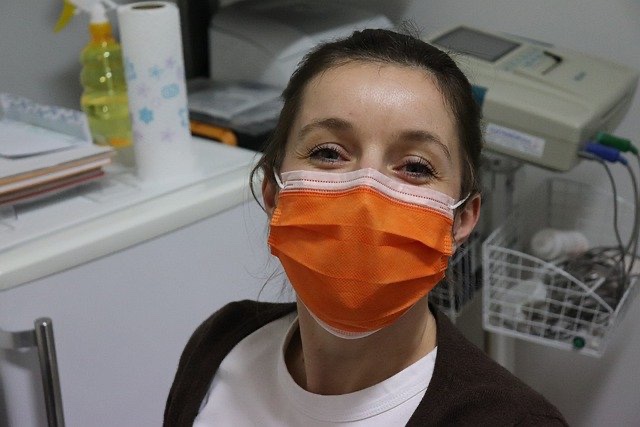
Cloth masks were promoted during 2020 when the proper surgical masks were in short supply . The effectiveness of cloth masks are not well studied and they are of varying quality depending who made them and how well they were made.
Properly manufactured surgical masks are better than home made cloth masks. But how much protection they can offer is a matter of scientific debate. Surgical masks have been found to give some protection against other respiratory viruses in past. But a recent Danish study found no significant benefit against COVID among the general public.
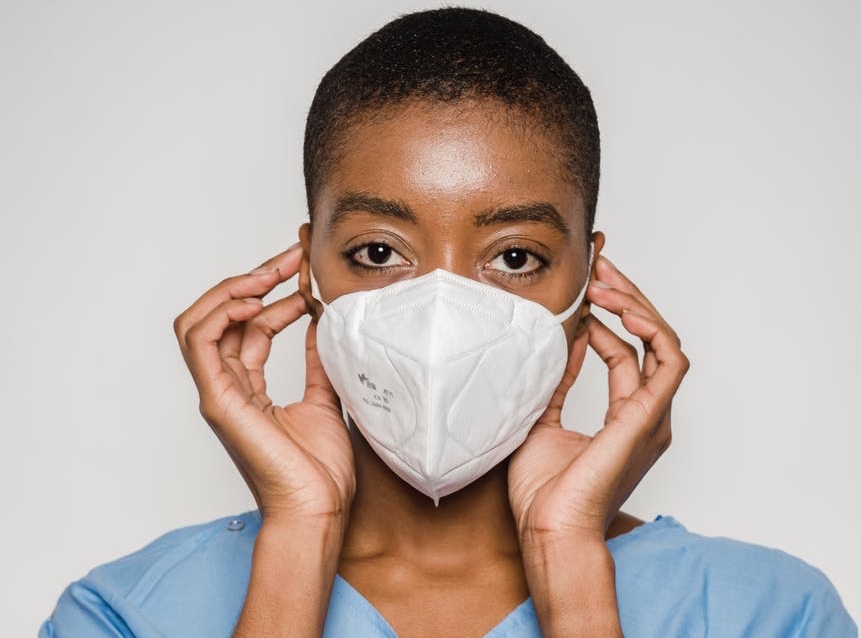
The high quality FFP3 masks which filter most of the inhaled air is superior to normal surgical masks. A recent study from Cambridge found that Heath care workers who used FFP3 masks had better protection from COVID compared to normal surgical masks in the Hospital.
Overall, clean, well manufactured masks are likely to of some benefit to the public rather than wearing no masks at all. In the hospital setting, FFP3 masks seem to provide superior protection to Health care staff working with COVID patients.
And most importantly people have to understand that masks are not to be used alone. Masks got to be used along with protective measures such as social distancing and Hand-washing.
Disclaimer: Please note- This blog is NOT medical advice. This blog is NOT a expert medical opinion on various topics. This blog is purely for information only and do check the sources where cited. Please DO consult your own doctor to discuss concerns and options relevant to you. The views expressed in this blog represent the author’s views held at the time of drafting the blog and may change overtime, particularly when new evidence comes to light. The blog is not previewed, commissioned or otherwise endorsed by any organisation that the author is associated with. The views expressed in this blog are not, in way whatsoever, intended to be a substitute for professional advice.
But the study also showed what we know already. Vaccination does not give 100% protection.
Everyone, in particular, health care staff need to continue with other COVID precautions such as masks, distancing and regular washing as advised by Government.
Disclaimer: Please note- This blog is NOT medical advice. This blog is NOT a expert medical opinion on various topics. This blog is purely for information only and do check the sources where cited. Please DO consult your own doctor to discuss concerns and options relevant to you. The views expressed in this blog represent the author’s views held at the time of drafting the blog and may change overtime, particularly when new evidence comes to light. The blog is not previewed, commissioned or otherwise endorsed by any organisation that the author is associated with. The views expressed in this blog are not, in way whatsoever, intended to be a substitute for professional advice.
UK government wanted as manypeople have “some” degree of protection against the COVID-19 rather a only few people having “full” protection against COVID-19.
A recent paper published in BMJ validates the U.K. approach even though it was initially criticised by WHO ( world health organisation)..
Is it Luck or Foresight that U.K. Govt got it right? Probably both but more foresight than luck. Perhaps a cappuccino cup of foresight sprinkled with chocolate of luck.
Disclaimer: Please note- This blog is NOT medical advice. This blog is NOT a expert medical opinion on various topics. This blog is purely for information only and do check the the sources where cited. Please DO consult your own doctor to discuss concerns and options relevant to you. The views expressed in this blog represent the author’s views held at the time of drafting the blog and may change overtime, particularly when new evidence comes to light. The blog is not previewed, commissioned or otherwise endorsed by any organisation the author is associated with. The views expressed in this blog are not in way intended to be a substitute for professional advice.
An apple a day might not keep the doctor away. But a good public health team can keep the doctors away for many people!
Public health is about prevention and promotion of health in the society.
Public health is largely responsible for the significant improvements in life expectancy over the last 150 years.
Providing people with clean drinking water, removal of rubbish from houses and streets, good sewage system, and vaccination has saved many millions of lives over the years.
The recent smoking ban in work-places, public places and indoor venues is a modern example of public health activity.
The one area where public health has not been hugely successful is obesity. It may be because of the reliance on nudging the individual to change rather than dealing with underlying structural problems.
BMJ. Lifestyle and socioeconomic group on health Public health needs to go back to basics, not rely on nudge theory BMJ 2021; 373 doi: https://doi.org/10.1136/bmj.n1153 (Published 06 May 2021) Cite this as: BMJ 2021;373:n1153
BMJ. Short term impact of smoke-free legislation in England: retrospective analysis of hospital admissions for myocardial infarction BMJ 2010; 340 doi: https://doi.org/10.1136/bmj.c2161 (Published 08 June 2010) Cite this as: BMJ 2010;340:c2161
BMJ. Associations of healthy lifestyle and socioeconomic status with mortality and incident cardiovascular disease: two prospective cohort studies BMJ 2021; 373 doi: https://doi.org/10.1136/bmj.n604 (Published 14 April 2021) Cite this as: BMJ 2021;373:n604
Disclaimer: Please note- This blog is NOT medical advice. This blog is NOT a expert medical opinion on various topics. This blog is purely for information only and do check the the sources where cited. Please DO consult your own doctor to discuss concerns and options relevant to you. The views expressed in this blog represent the author’s views held at the time of drafting the blog and may change overtime, particularly when new evidence comes to light. The blog is not previewed, commissioned or otherwise endorsed by any organisation the author is associated with. The views expressed in this blog are not in way intended to be a substitute for professional advice.























 Dr S Sundar